
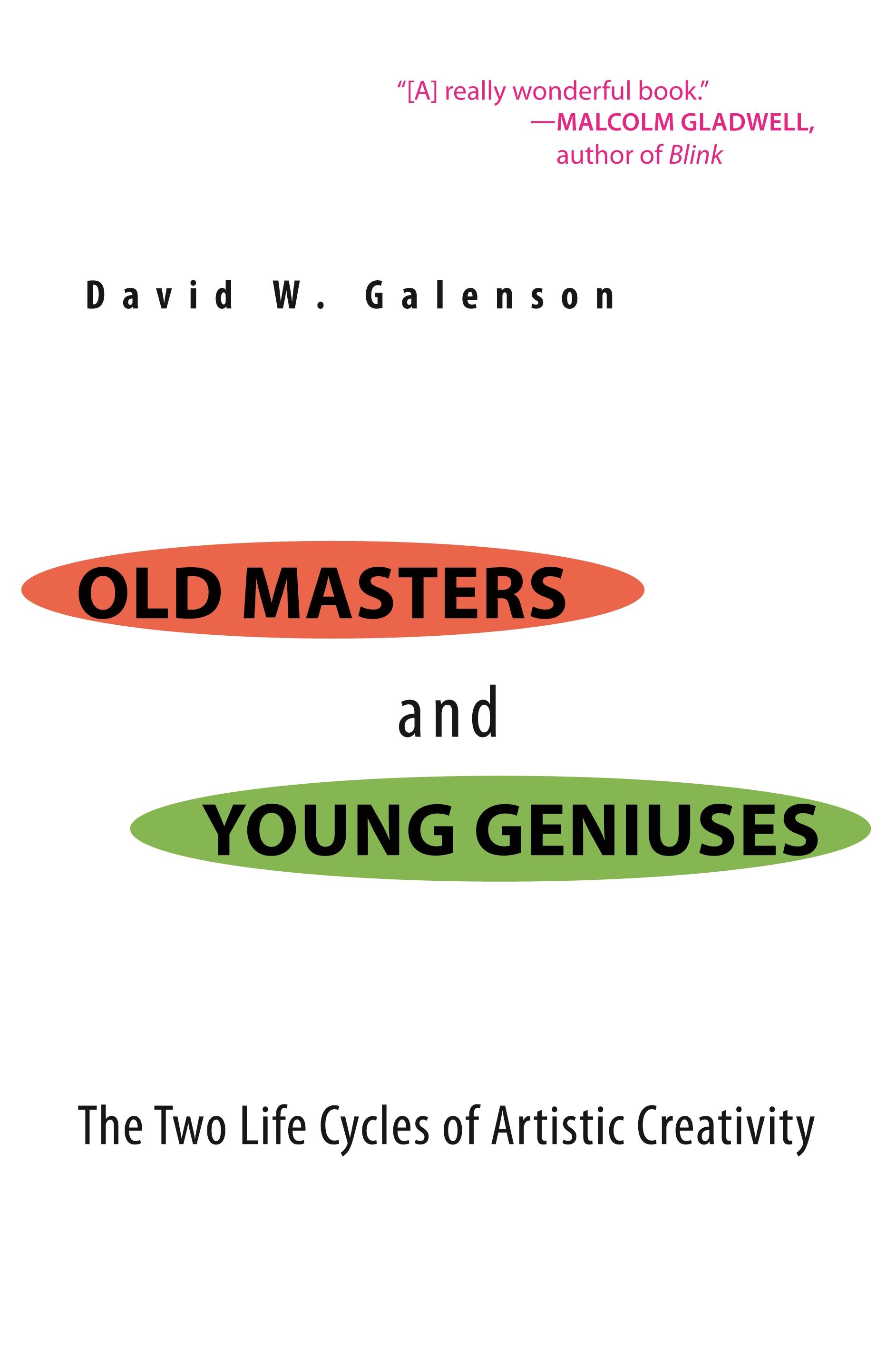
When in their lives do great artists produce their greatest art? Do they strive for creative perfection throughout decades of painstaking and frustrating experimentation, or do they achieve it confidently and decisively, through meticulous planning that yields masterpieces early in their lives?
By examining the careers not only of great painters but also of important sculptors, poets, novelists, and movie directors, Old Masters and Young Geniuses offers a profound new understanding of artistic creativity. Using a wide range of evidence, David Galenson demonstrates that there are two fundamentally different approaches to innovation, and that each is associated with a distinct pattern of discovery over a lifetime.
Experimental innovators work by trial and error, and arrive at their major contributions gradually, late in life. In contrast, conceptual innovators make sudden breakthroughs by formulating new ideas, usually at an early age. Galenson shows why such artists as Michelangelo, Rembrandt, Cézanne, Jackson Pollock, Virginia Woolf, Robert Frost, and Alfred Hitchcock were experimental old masters, and why Vermeer, van Gogh, Picasso, Herman Melville, James Joyce, Sylvia Plath, and Orson Welles were conceptual young geniuses. He also explains how this changes our understanding of art and its past.
Experimental innovators seek, and conceptual innovators find. By illuminating the differences between them, this pioneering book provides vivid new insights into the mysterious processes of human creativity.
Płać wygodnie kartą, Klarną, Apple Pay lub Google Pay. Nie jesteś zadowolony? Zawsze masz 14-dniową gwarancję zwrotu pieniędzy. Więcej przeczytasz w naszych warunkach. Masz pytania? Napisz do nas na hello@memmo.org.
Memmo ułatwia naukę – gdziekolwiek jesteś na świecie. U nas znajdziesz podręczniki i sprytne narzędzia do nauki w jednym miejscu: streszczenia, quizy, podcasty i fiszki. A do tego Ted, Twój kumpel do nauki, który odpowie na wszystko, co Cię nurtuje. Ponad 50 000 studentów już tu się uczy – stworzone, byś uczył się szybciej i mniej stresował.