
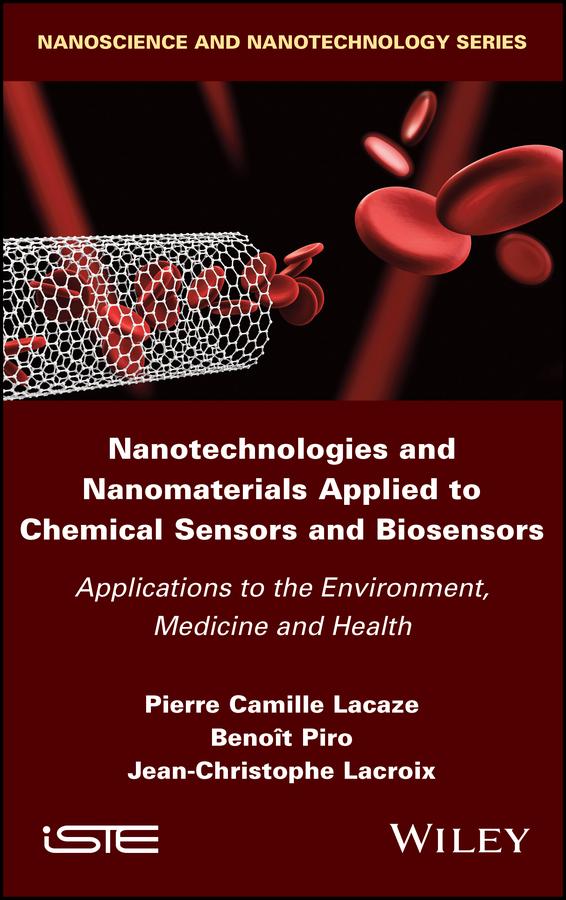
The key social issues of health, medicine, the environment, food and safety cannot be addressed without the support of chemical sensors and biosensors, whose performance is constantly improving in terms of reliability and cost, particularly in the production of autonomous devices connected to the Internet.
Obtaining high-intensity transduction signals arising from the interaction of an analyte and a sensor, enabling the identification and dosage of a given compound, requires the selection of suitable physical measurement methods and the creation of structures that react specifically to different types of analyte.
Nanotechnologies and Nanomaterials Applied to Chemical Sensors and Biosensors details recent advances in the field of sensor design using carbon-based nanomaterials (graphene, carbon nanotubes, carbon quantum dots, etc.) and inorganic nanomaterials (metallic nanoparticles, nanocrystals, transition metal dichalcogenides, etc.), as well as a variety of physical sensing methods (electrochemical, piezoelectric, electromagnetic, optic, optoelectronic, etc.).
Płać wygodnie kartą, Klarną, Apple Pay lub Google Pay. Nie jesteś zadowolony? Zawsze masz 14-dniową gwarancję zwrotu pieniędzy. Więcej przeczytasz w naszych warunkach. Masz pytania? Napisz do nas na hello@memmo.org.
Memmo ułatwia naukę – gdziekolwiek jesteś na świecie. U nas znajdziesz podręczniki i sprytne narzędzia do nauki w jednym miejscu: streszczenia, quizy, podcasty i fiszki. A do tego Ted, Twój kumpel do nauki, który odpowie na wszystko, co Cię nurtuje. Ponad 50 000 studentów już tu się uczy – stworzone, byś uczył się szybciej i mniej stresował.