
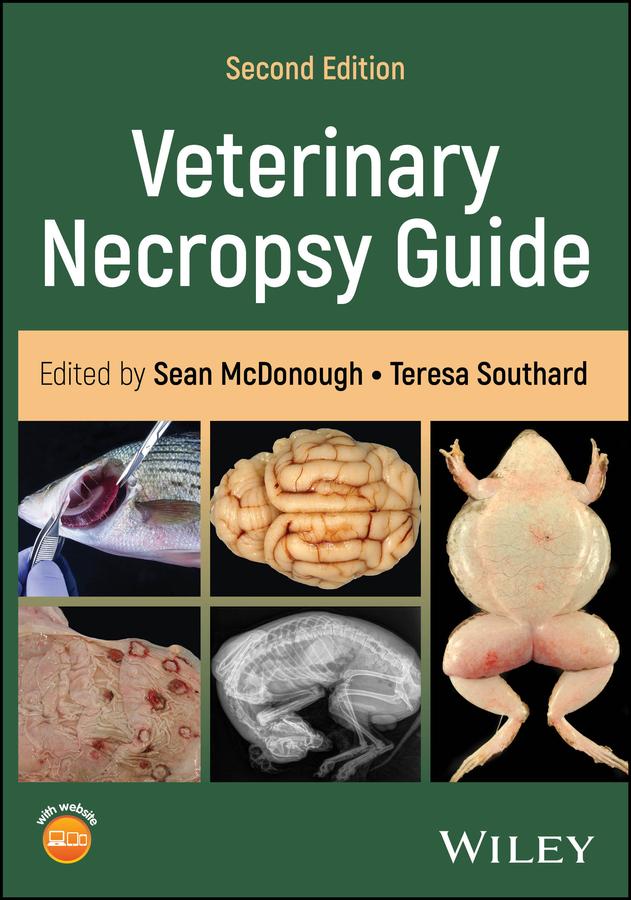
An updated and expanded guide to performing necropsies on veterinary patients, now covering farm animals and exotics in addition to dogs, cats, and small mammals
Veterinary Necropsy Guide, Second Edition delivers practical guidance on how to perform a postmortem examination in animals. The book includes expanded and updated species coverage, now including cattle, horses, sheep, goats, alpacas, llamas, pigs, and exotics, in addition to dogs, cats, and small mammals. It offers detailed descriptions of the necropsy procedure in small animals, comparative anatomy, modified procedures appropriate for various species, and special postmortem species.
Each chapter covers an organ system and explains dissection, examination, and tissue collection. The authors also include guidelines for sample collection for ancillary testing. Veterinary Necropsy Guide provides:
- A thorough introduction to veterinary necropsy, including when, how, and why to perform a postmortem examination
- Comprehensive explorations of canine, feline, small mammal, farm animal, and exotic animal necropsies
- Practical discussions of comparative anatomy, procedural modifications, and special necropsy techniques
- Complete treatments of the necropsy procedure, organ systems, and additional testing
Veterinary Necropsy Guide is an essential reference for veterinary students, veterinary anatomic pathology residents, and veterinary pathologists, laboratory veterinarians, shelter veterinarians, and veterinary practitioners who perform necropsies.
Płać wygodnie kartą, Klarną, Apple Pay lub Google Pay. Nie jesteś zadowolony? Zawsze masz 14-dniową gwarancję zwrotu pieniędzy. Więcej przeczytasz w naszych warunkach. Masz pytania? Napisz do nas na hello@memmo.org.
Memmo ułatwia naukę – gdziekolwiek jesteś na świecie. U nas znajdziesz podręczniki i sprytne narzędzia do nauki w jednym miejscu: streszczenia, quizy, podcasty i fiszki. A do tego Ted, Twój kumpel do nauki, który odpowie na wszystko, co Cię nurtuje. Ponad 50 000 studentów już tu się uczy – stworzone, byś uczył się szybciej i mniej stresował.