
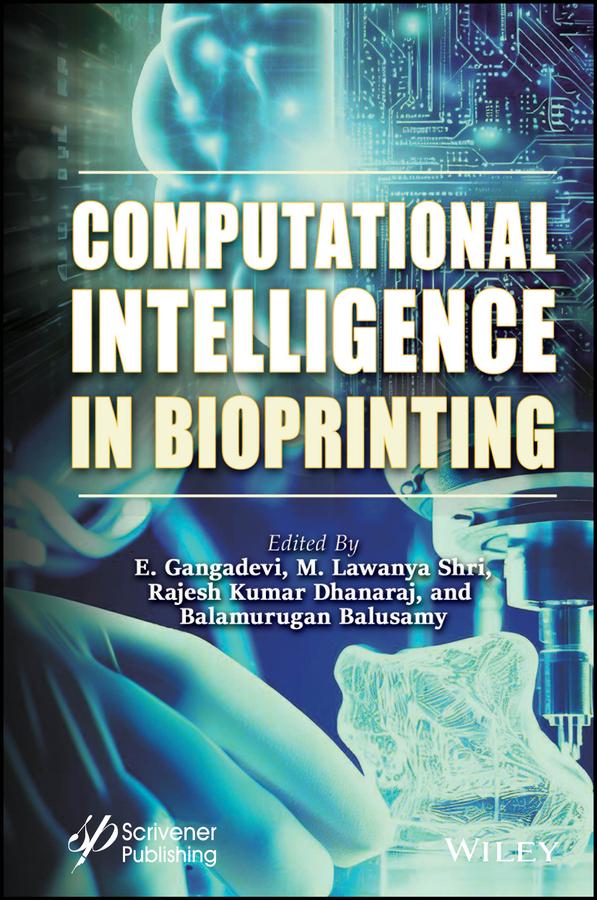
The book provides a comprehensive exploration of the evolving field of bioprinting in regenerative medicine and is an essential guide for professionals seeking a thorough understanding of the field.
Computational Intelligence in Bioprinting provides a comprehensive overview of the evolving field of bioprinting in reformative medicine, defining the process of printing structures using viable cells, biomaterials, and living molecules. The primary goal is to provide substitutes for tissue implants, which might lead to eliminating the requirement for organ donors, as well as to transform animal testing for the learning and analysis of disease and the growth of treatments. The book offers a comprehensive overview of bioprinting technologies and their applications, emphasizing the integration of computation intelligence, artificial intelligence, and other computer science advancements in the field. By harnessing the power of computational intelligence techniques such as AI, machine learning, optimization algorithms, and data analytics, existing hurdles can be overcome and the full potential of bioprinting can be unlocked.
The book covers an extensive range of topics, including bio-ink formulation and characterization, bioprinter hardware and software design, tissue and organ modeling, image analysis, process optimization, and quality control.
Audience
The book is aimed at professionals, practitioners and researchers in the fields of bioprinting, tissue engineering, and computational intelligence in medicine.
Płać wygodnie kartą, Klarną, Apple Pay lub Google Pay. Nie jesteś zadowolony? Zawsze masz 14-dniową gwarancję zwrotu pieniędzy. Więcej przeczytasz w naszych warunkach. Masz pytania? Napisz do nas na hello@memmo.org.
Memmo ułatwia naukę – gdziekolwiek jesteś na świecie. U nas znajdziesz podręczniki i sprytne narzędzia do nauki w jednym miejscu: streszczenia, quizy, podcasty i fiszki. A do tego Ted, Twój kumpel do nauki, który odpowie na wszystko, co Cię nurtuje. Ponad 50 000 studentów już tu się uczy – stworzone, byś uczył się szybciej i mniej stresował.