
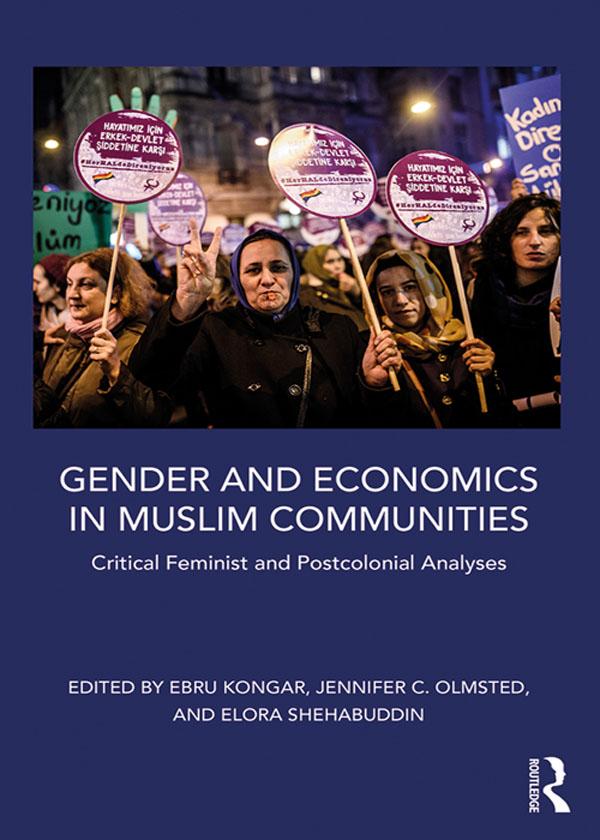
Bringing together feminist analyses of economic processes and outcomes with feminist critiques of Orientalism, this book examines the diverse economic realities facing women in a range of Muslim communities. This approach pays special attention to the role of Islam in economic analyses of gender equality and women’s well-being in Muslim communities, while at the same time challenging biased and inaccurate accounts that essentialize Islam.
Nuanced case studies conducted in Bangladesh, Iran, Israel, Nigeria, and Turkey illustrate the historical and institutional diversity of Muslim communities and draw vivid pictures of the everyday economic lives of Muslim women in these communities. These studies are complemented by quantitative analyses that extend beyond inserting Islam as a dummy variable. The contributions represent a wide range of disciplines, including anthropology, economics, gender studies, political science, psychology, and sociology.
By placing critiques of Orientalist scholarship in direct dialogue with scholarship on economic development in Muslim contexts, this diverse collection illustrates how different methods and frameworks can work together to provide a better understanding of gender equality and women’s well-being in Muslim contexts. In doing so, the authors aim to facilitate conversations among feminist scholars across disciplines in order to provide a more nuanced picture of the situation facing women in Muslim communities.
This book was originally published as a special issue of Feminist Economics.
Płać wygodnie kartą, Klarną, Apple Pay lub Google Pay. Nie jesteś zadowolony? Zawsze masz 14-dniową gwarancję zwrotu pieniędzy. Więcej przeczytasz w naszych warunkach. Masz pytania? Napisz do nas na hello@memmo.org.
Memmo ułatwia naukę – gdziekolwiek jesteś na świecie. U nas znajdziesz podręczniki i sprytne narzędzia do nauki w jednym miejscu: streszczenia, quizy, podcasty i fiszki. A do tego Ted, Twój kumpel do nauki, który odpowie na wszystko, co Cię nurtuje. Ponad 50 000 studentów już tu się uczy – stworzone, byś uczył się szybciej i mniej stresował.