
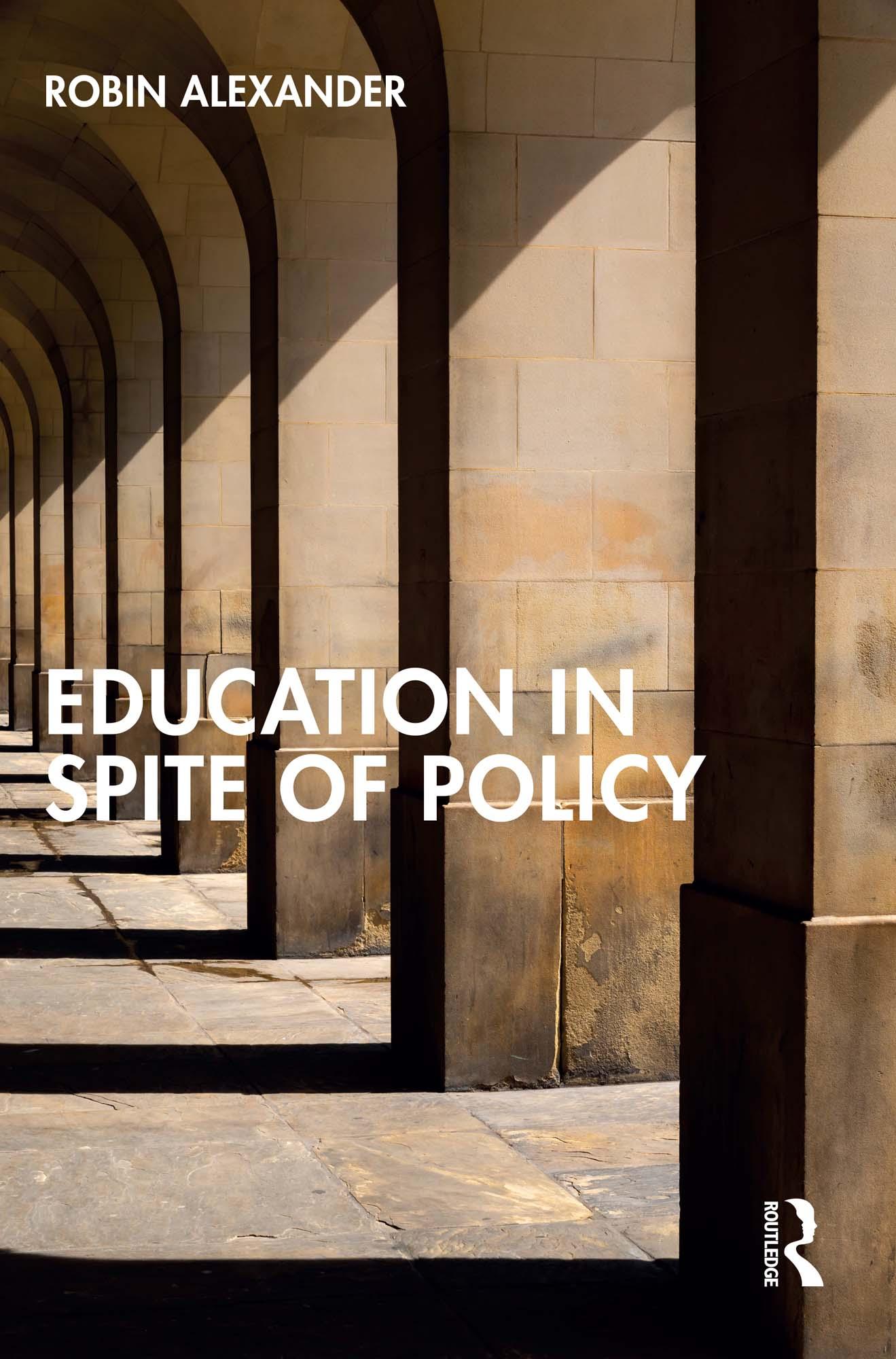
A national system of education cannot function without policy. But the path to practice is seldom smooth, especially when ideology overrules evidence or when ministers seek to micromanage what is best left to teachers. And once the media join the fray the mixture becomes downright combustible.
Drawing on his long experience as teacher, researcher, government adviser, campaigner and international consultant, and on over 600 published sources, Robin Alexander expertly illustrates and illuminates these processes. This selection from his recent writing, some hitherto unpublished, opens windows onto cases and issues that concern every teacher.
Part 1 tackles system-level reform. It revisits the Cambridge Primary Review, an evidence-rich enquiry into the condition and future of primary education in England, which challenged the UK government’s policies on curriculum, testing, standards and more besides. Here the reform narratives and strategies of successive governments are confronted and dissected.
Part 2 follows the development of England’s current National Curriculum, exposing its narrow vision and questionable use of evidence and offering a more generous aims-driven alternative. This section also investigates the expertise and leadership needed if children are to experience a curriculum of the highest quality in all its aspects.
Part 3 reaches the heart of the matter: securing the place in effective pedagogy of well-founded classroom talk, a mission repeatedly frustrated by political intervention. The centrepiece is dialogic teaching, a proven tool for advancing students’ speaking, thinking, learning and arguing, and an essential response to the corrosion of democracy and the nihilism of ‘post-truth’.
Part 4 goes global. It investigates governments’ PISA-fuelled flirtations with what they think can be adapted or copied from education elsewhere, examines the benefits and pitfalls of international comparison, and ends with the ultimate policy initiative: the United Nations mission to ensure ‘inclusive and equitable quality education’ for all the world’s children.
Education in Spite of Policy is for all those teachers, students, school leaders and researchers who value the conversation of policy, evidence and practice, and who wish to explore the parts of education that policy cannot reach.
Płać wygodnie kartą, Klarną, Apple Pay lub Google Pay. Nie jesteś zadowolony? Zawsze masz 14-dniową gwarancję zwrotu pieniędzy. Więcej przeczytasz w naszych warunkach. Masz pytania? Napisz do nas na hello@memmo.org.
Memmo ułatwia naukę – gdziekolwiek jesteś na świecie. U nas znajdziesz podręczniki i sprytne narzędzia do nauki w jednym miejscu: streszczenia, quizy, podcasty i fiszki. A do tego Ted, Twój kumpel do nauki, który odpowie na wszystko, co Cię nurtuje. Ponad 50 000 studentów już tu się uczy – stworzone, byś uczył się szybciej i mniej stresował.