
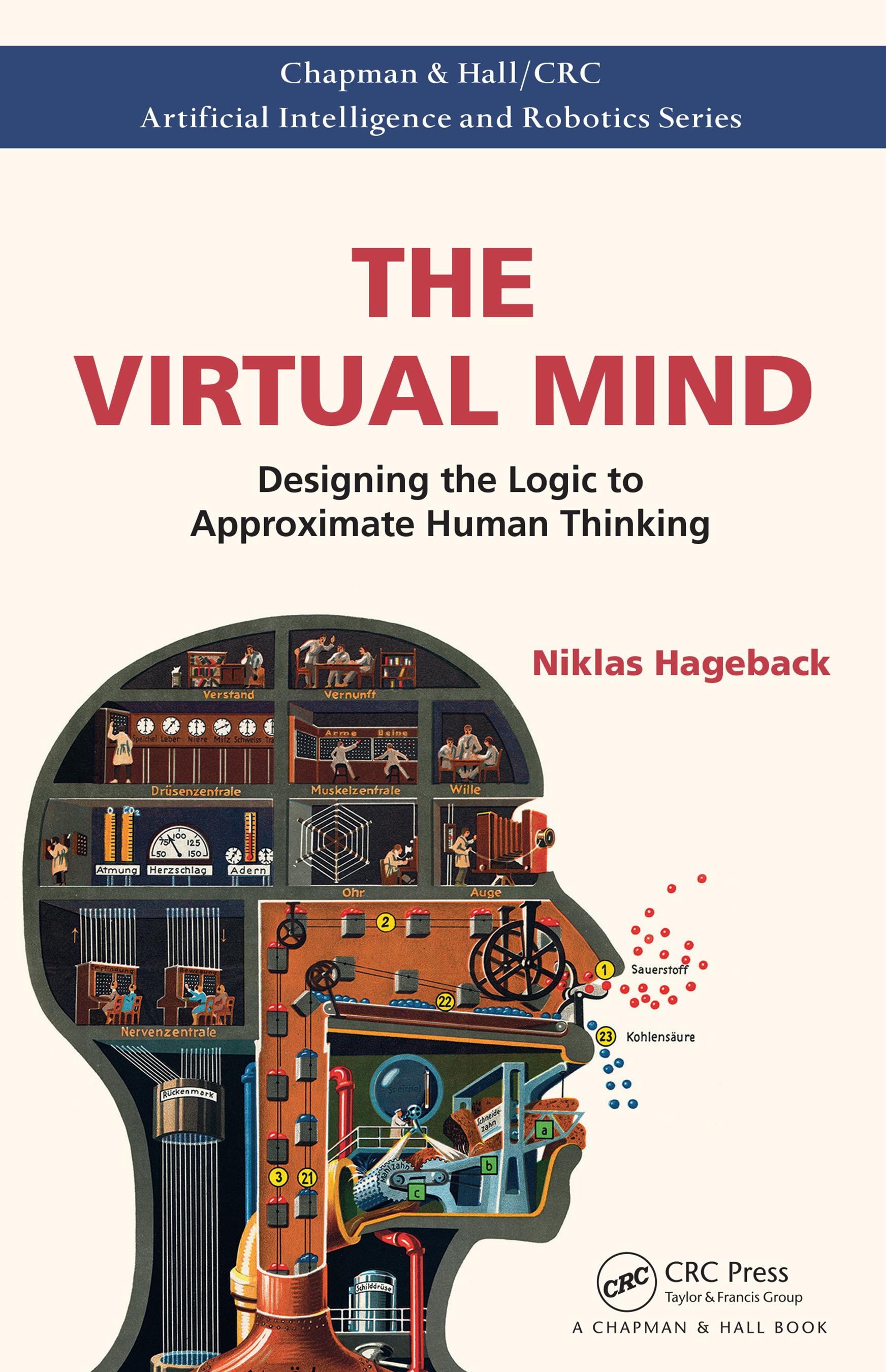
The Virtual Mind: Designing the Logic to Approximate Human Thinking, through an in-depth and multidisciplinary review, outlines and defines the underpinnings for modelling human thinking through
approximating the mind. Whilst there are plenty of efforts underway trying to mimic the brain, its complexities have so far proven insurmountable. But replicating the abstract notion of the mind provides a viable and quicker route. Broadly, the mind consists of a conscious and an unconscious part with separate logic schemes and these absorbs reality in diverging chunks, with the former truncated through narratives and norms and the latter able to amass broader perceptions of reality. These are held together and controlled through a governing mechanism. With the replication and establishment of the mind’s mechanistic rules and dynamic constants, tested through a big data approach from public media, it allows for standardization and machine generated human thinking, a Virtual Mind.
A virtual mind is able to cover a wide array of applications, in particular forecasting of human behavior and decision-making. In essence, the whole socioeconomic spectra can be captured, including politics, financial markets and consumer patterns. Another area of potential application would be to augment various game software and of course, it would be applicable for the man-machine connect.
The book guides the reader on how to develop and produce a machine generated virtual mind in a step-by-step manner. It is a must for anyone with an interest in artificial intelligence, the design and construction of the next generation of computer logic and it provides an enhanced understanding of mankind’s greatest mystery, the workings of the mind.
Niklas Hageback has extensive experience of risk modelling and financial analytics working at tier-one financial institutions and consulting firms, such as Deutsche Bank, KPMG, and Goldman Sachs, where he held regional executive risk management and oversight roles in both Europe and Asia.
Płać wygodnie kartą, Klarną, Apple Pay lub Google Pay. Nie jesteś zadowolony? Zawsze masz 14-dniową gwarancję zwrotu pieniędzy. Więcej przeczytasz w naszych warunkach. Masz pytania? Napisz do nas na hello@memmo.org.
Memmo ułatwia naukę – gdziekolwiek jesteś na świecie. U nas znajdziesz podręczniki i sprytne narzędzia do nauki w jednym miejscu: streszczenia, quizy, podcasty i fiszki. A do tego Ted, Twój kumpel do nauki, który odpowie na wszystko, co Cię nurtuje. Ponad 50 000 studentów już tu się uczy – stworzone, byś uczył się szybciej i mniej stresował.