
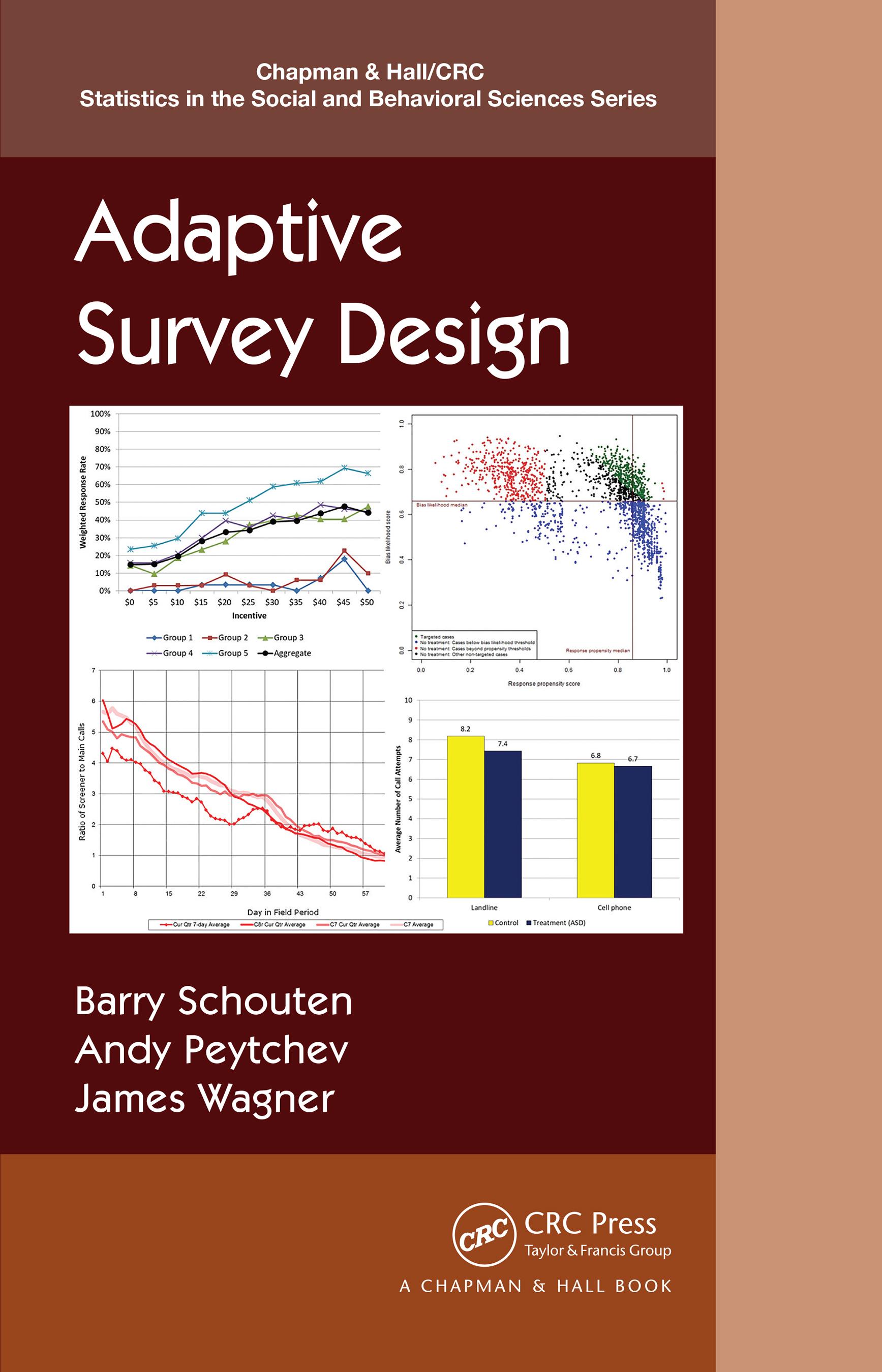
Adaptive survey designs (ASDs) provide a framework for data-driven tailoring of data collection procedures to different sample members, often for cost and bias reduction. People vary in how likely they are to respond and in how they respond. This variation leads to opportunities to selectively deploy design features in order to control both nonresponse and measurement errors. ASD aims at the optimal matching of design features and the characteristics of respondents given the survey budget. Such a goal is sensible, but ASD requires investment in more advanced technical systems and management infrastructure and asks for the collection of relevant auxiliary data. So what are current best practices in ASD? And is ASD worthwhile when the same auxiliary data are employed in the estimation afterwards? In this book, the authors provide answers to these questions, and much more.
Płać wygodnie kartą, Klarną, Apple Pay lub Google Pay. Nie jesteś zadowolony? Zawsze masz 14-dniową gwarancję zwrotu pieniędzy. Więcej przeczytasz w naszych warunkach. Masz pytania? Napisz do nas na hello@memmo.org.
Memmo ułatwia naukę – gdziekolwiek jesteś na świecie. U nas znajdziesz podręczniki i sprytne narzędzia do nauki w jednym miejscu: streszczenia, quizy, podcasty i fiszki. A do tego Ted, Twój kumpel do nauki, który odpowie na wszystko, co Cię nurtuje. Ponad 50 000 studentów już tu się uczy – stworzone, byś uczył się szybciej i mniej stresował.