
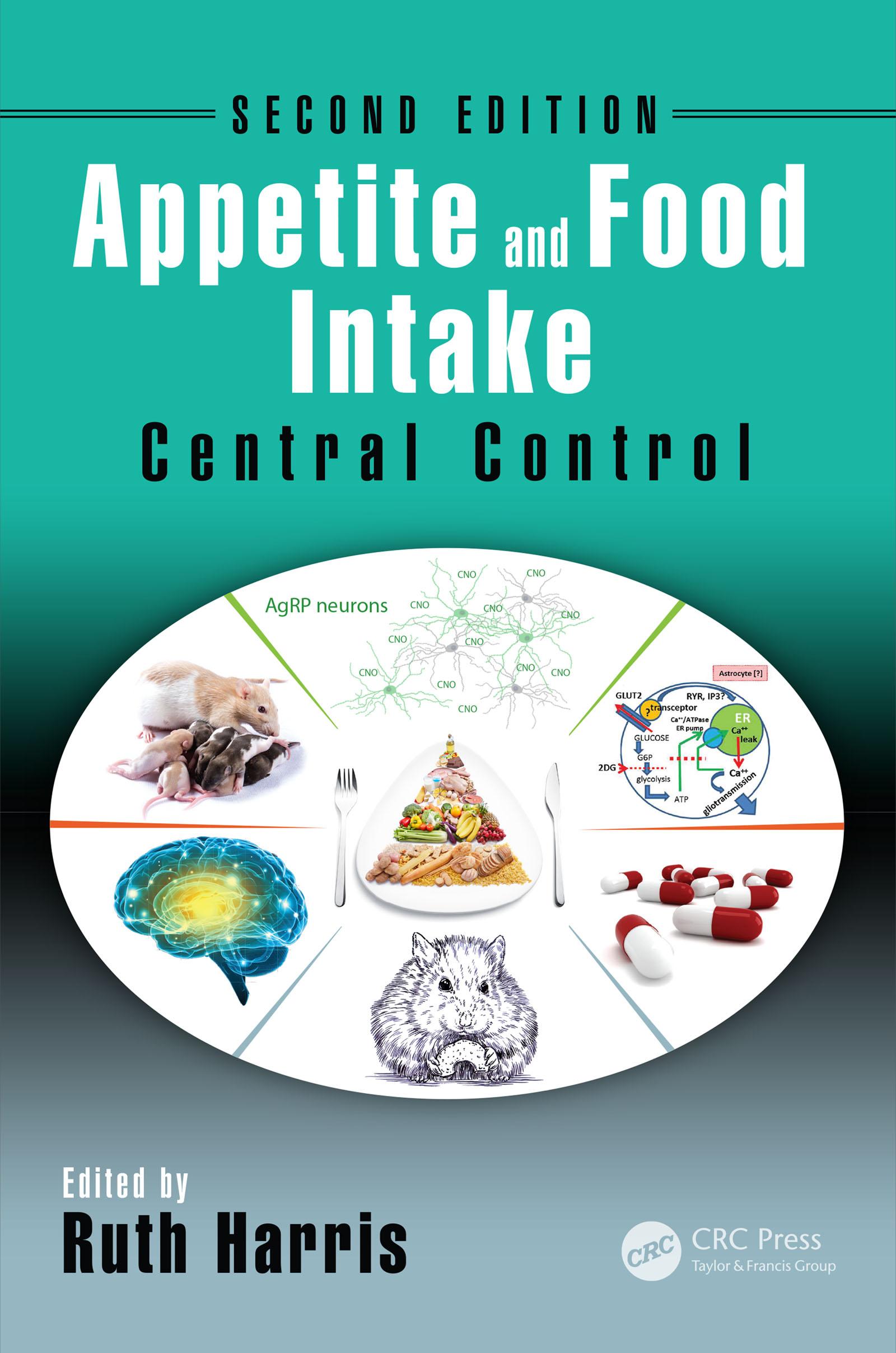
Nearly half of the world’s adult population is either clinically obese or overweight. Excess weight increases risk for multiple other chronic diseases and represents a major global health issue. Weight gain results from an imbalance between energy intake and expenditure, which can only be corrected if the physiologic and neuroendocrine systems that have the potential to control energy balance are identified.
The first edition of this book reviewed knowledge on the intake of micro- and macronutrients, food choice, and opposing views on whether or not there are mechanisms that control food intake. Appetite and Food Intake: Central Control, Second Edition contains all new chapters and serves as a companion to the first by reviewing current knowledge on neuroendocrine mechanisms that influence food intake and glucose metabolism, including environmental influences on their development, with an emphasis on recent progress in understanding forebrain and hindbrain control of ingestive behavior.
In addition, there is a discussion on the benefits derived from novel models for exploring ingestive behavior and the progress that has been achieved due to new technologies. Although major progress is being made in understanding the complex interplay between different control systems, the limits of our knowledge are acknowledged in chapters that review the efficacy of current weight control drugs and the relative importance of fat free mass and body fat in driving food intake.
Płać wygodnie kartą, Klarną, Apple Pay lub Google Pay. Nie jesteś zadowolony? Zawsze masz 14-dniową gwarancję zwrotu pieniędzy. Więcej przeczytasz w naszych warunkach. Masz pytania? Napisz do nas na hello@memmo.org.
Memmo ułatwia naukę – gdziekolwiek jesteś na świecie. U nas znajdziesz podręczniki i sprytne narzędzia do nauki w jednym miejscu: streszczenia, quizy, podcasty i fiszki. A do tego Ted, Twój kumpel do nauki, który odpowie na wszystko, co Cię nurtuje. Ponad 50 000 studentów już tu się uczy – stworzone, byś uczył się szybciej i mniej stresował.