
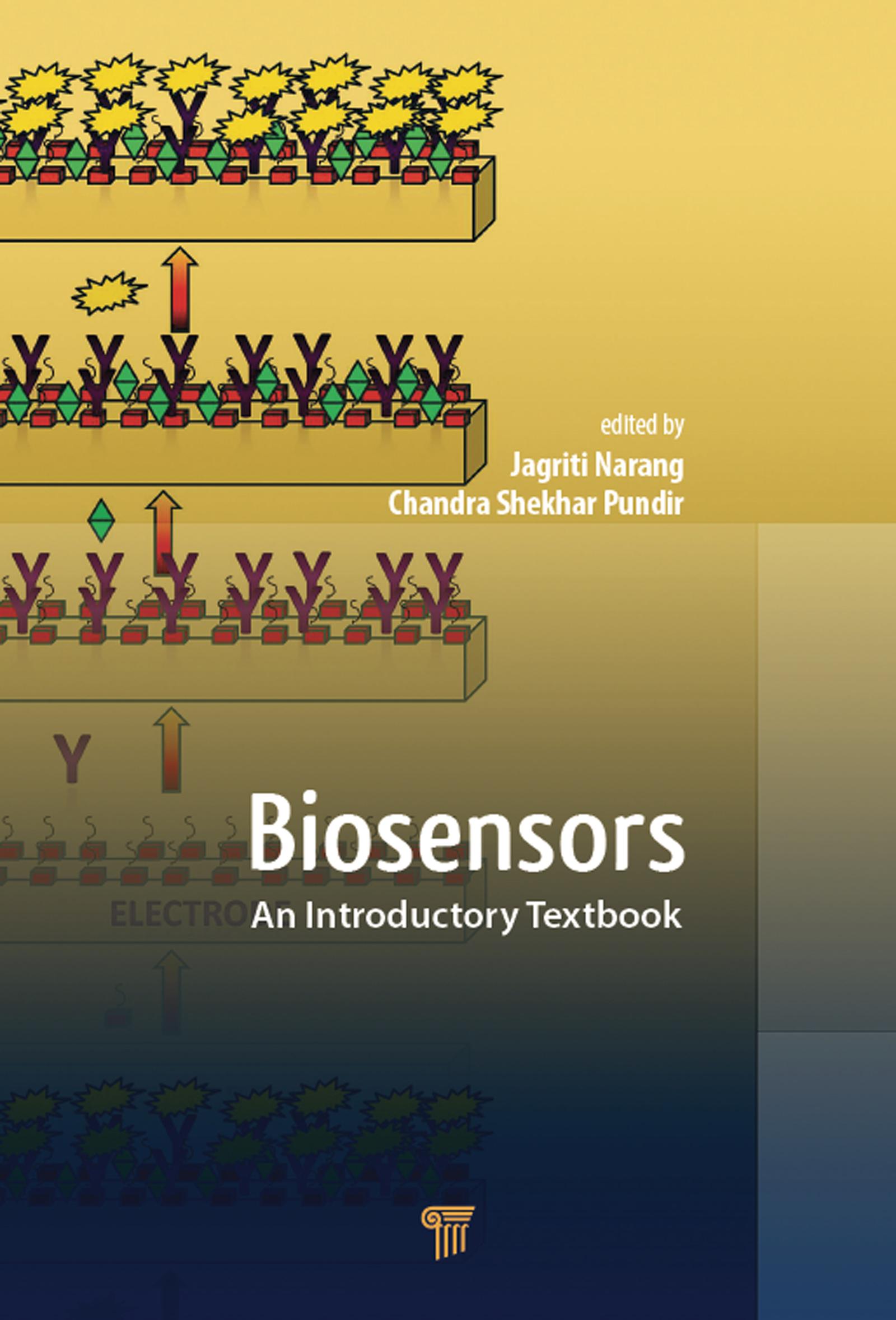
Nanotechnology is a budding field and has a pivotal role in sensing. Nanomaterials exist in various forms such as nanoparticles, nanoclusters, nanobelts, and nanospheres. These nanomaterials act as sensing interfaces and immobilization surfaces for various biomolecules such as enzymes, DNA, and antigens. Therefore, the preparation and characterization of these nanoparticles play an important role in sensing devices.
This handbook has evolved from the authors’ teaching and research experience in the field of nanoparticle biosensing. It encompasses protocols for the synthesis of various forms of metal oxide nanoparticles; study of the various characterizing techniques that help deduce the shape, size, and morphology of these nanoparticles; and applications of these nanoparticles in the field of biosensors. It presents voltammetry techniques such as cyclic, linear wave, wave pulse, and differential pulse voltammetry, throws light on the interactions of nanomaterials and biomolecules, and discusses microfluidic devices, which due to their unique capability of miniaturization fascinate many researchers. It is a practical and user-friendly textbook that introduces the various basic principles and practical information that will help undergraduate and advanced-level students and researchers understand the science behind nanoscale sensing.
Płać wygodnie kartą, Klarną, Apple Pay lub Google Pay. Nie jesteś zadowolony? Zawsze masz 14-dniową gwarancję zwrotu pieniędzy. Więcej przeczytasz w naszych warunkach. Masz pytania? Napisz do nas na hello@memmo.org.
Memmo ułatwia naukę – gdziekolwiek jesteś na świecie. U nas znajdziesz podręczniki i sprytne narzędzia do nauki w jednym miejscu: streszczenia, quizy, podcasty i fiszki. A do tego Ted, Twój kumpel do nauki, który odpowie na wszystko, co Cię nurtuje. Ponad 50 000 studentów już tu się uczy – stworzone, byś uczył się szybciej i mniej stresował.