
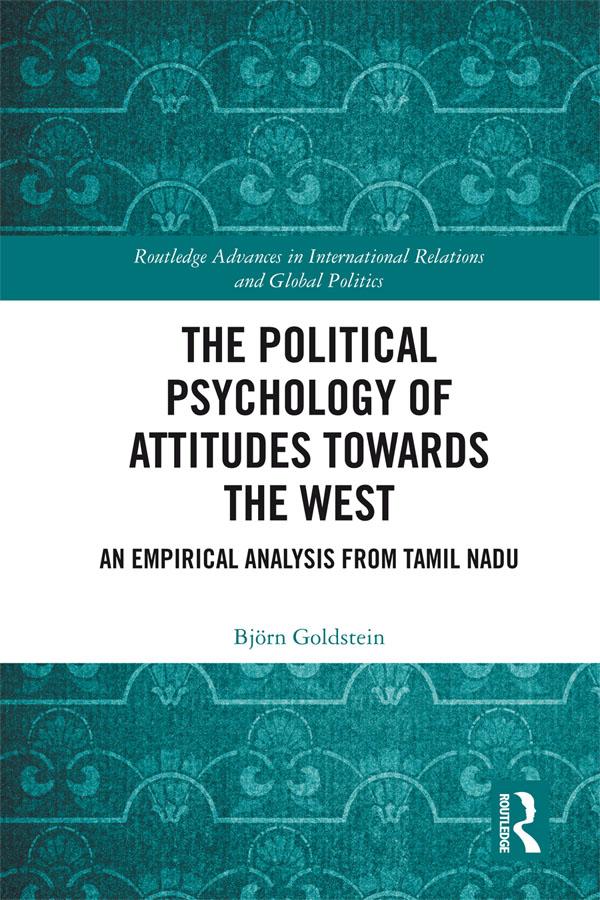
Why do some individuals from the imagined "non-West" view the "West" favorably and others do not?
Grounded in psychological authoritarianism and the psychological reactions to experiences of rejection, Björn Goldstein provides a theoretical model to explain and predict attitude toward the "West." Using accounts from high-ranking politicians from different socioeconomic groups in the Tamil Nadu region of India—a region independent from the often too "emotionalized" discourse regarding (political) Islam—Goldstein challenges the conventional narrative that the most important factors for attitude formation toward the West are experiences of disregard and oppression perpetrated by the West.
Far beyond the personal characteristics of individuals, differences in attitudes follow a regular pattern of variables influencing opinion and attitude formation toward the West in each society. Scoring high on authoritarianism predicts "anti-Western" attitudes far better than socio-economic status, cultural or moral concerns, or normative differences do.
Płać wygodnie kartą, Klarną, Apple Pay lub Google Pay. Nie jesteś zadowolony? Zawsze masz 14-dniową gwarancję zwrotu pieniędzy. Więcej przeczytasz w naszych warunkach. Masz pytania? Napisz do nas na hello@memmo.org.
Memmo ułatwia naukę – gdziekolwiek jesteś na świecie. U nas znajdziesz podręczniki i sprytne narzędzia do nauki w jednym miejscu: streszczenia, quizy, podcasty i fiszki. A do tego Ted, Twój kumpel do nauki, który odpowie na wszystko, co Cię nurtuje. Ponad 50 000 studentów już tu się uczy – stworzone, byś uczył się szybciej i mniej stresował.