
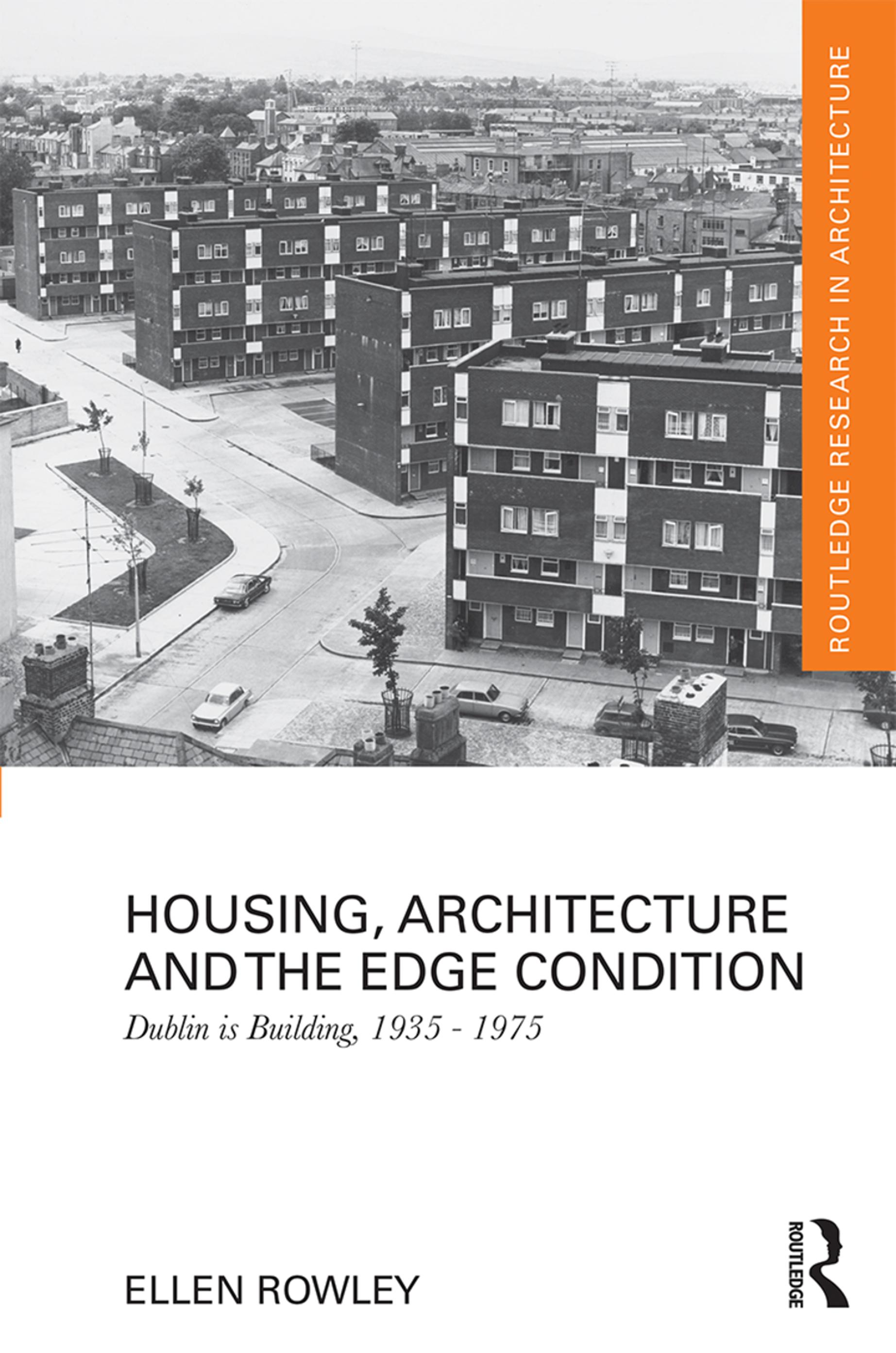
This book presents an architectural overview of Dublin’s mass-housing building boom from the 1930s to the 1970s. During this period, Dublin Corporation built tens of thousands of two-storey houses, developing whole communities from virgin sites and green fields at the city’s edge, while tentatively building four-storey flat blocks in the city centre. Author Ellen Rowley examines how and why this endeavour occurred. Asking questions around architectural and urban obsolescence, she draws on national political and social histories, as well as looking at international architectural histories and the influence of post-war reconstruction programmes in Britain or the symbolisation of the modern dwelling within the formation of the modern nation.
Critically, the book tackles this housing history as an architectural and design narrative. It explores the role of the architectural community in this frenzied provision of housing for the populace. Richly illustrated with architectural drawings and photographs from contemporary journals and the private archives of Dublin-based architectural practices, this book will appeal to academics and researchers interested in the conditions surrounding Dublin’s housing history.
Płać wygodnie kartą, Klarną, Apple Pay lub Google Pay. Nie jesteś zadowolony? Zawsze masz 14-dniową gwarancję zwrotu pieniędzy. Więcej przeczytasz w naszych warunkach. Masz pytania? Napisz do nas na hello@memmo.org.
Memmo ułatwia naukę – gdziekolwiek jesteś na świecie. U nas znajdziesz podręczniki i sprytne narzędzia do nauki w jednym miejscu: streszczenia, quizy, podcasty i fiszki. A do tego Ted, Twój kumpel do nauki, który odpowie na wszystko, co Cię nurtuje. Ponad 50 000 studentów już tu się uczy – stworzone, byś uczył się szybciej i mniej stresował.