
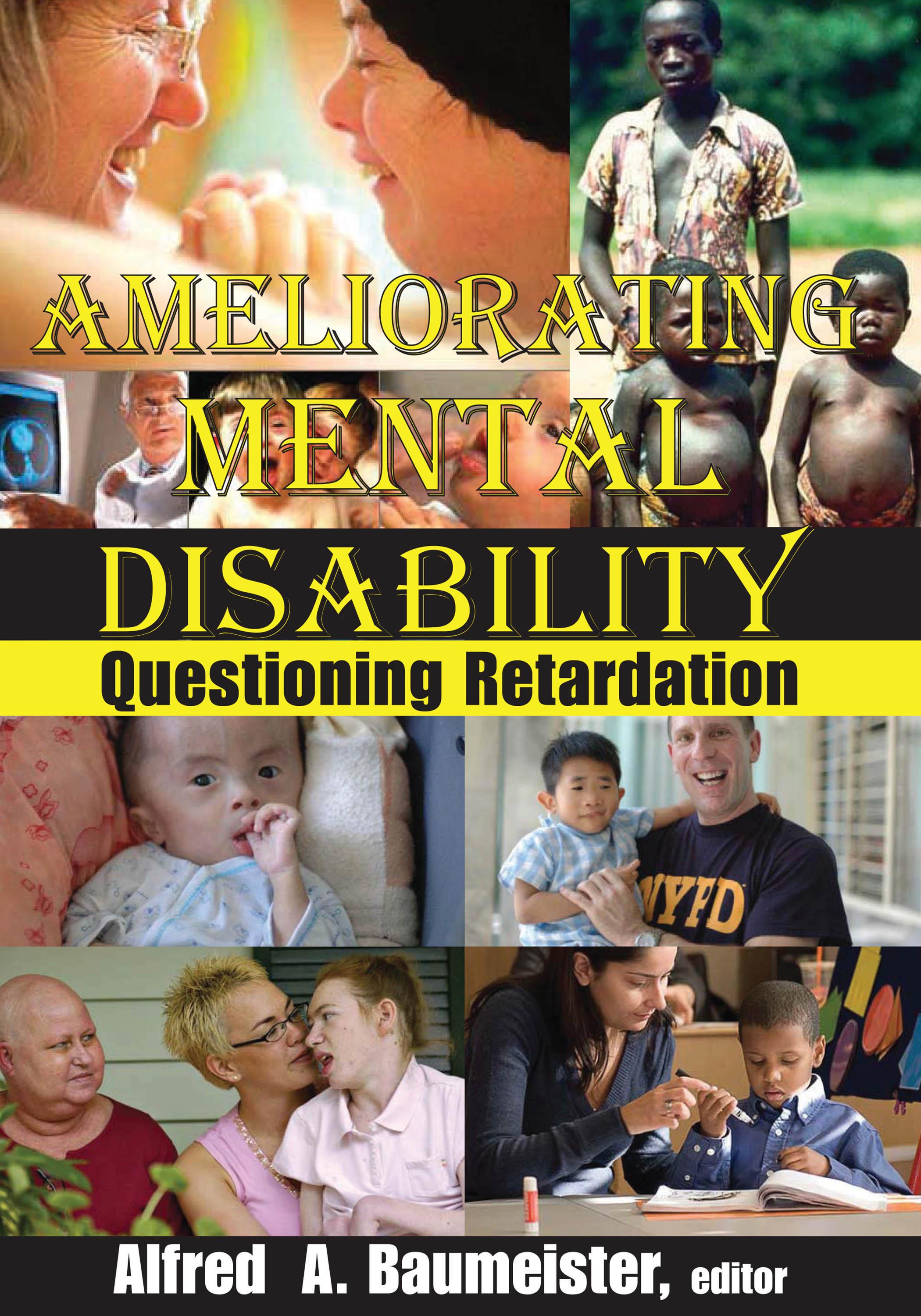
This book grows out of the optimistic view that mental retardation can be treated. It views mental retardation primarily as a behavioral problem. A child is diagnosed as retarded primarily because he behaves in certain maladaptive ways, not simply because he may have a chromosomal anomaly. The contributors view any intervention intended to produce adaptive changes in the behavior of the retarded as "treatment." The authors come from the fields of medicine, special education, and speech and hearing, as well as from psychology.
The book is intended to help students and workers in the field apply research findings and theoretical formulations in their appraisal and treatment of mental retardation. The primary emphasis of the book is empirical. While many of the author's suggestions have not been subjected to rigorous experimental scrutiny, almost all have been derived from close examination of the research literature.
A wide diversity of topics are included in this volume. Criteria employed were the relevance of the topic to the understanding and modifi cation of defective behavior; and the subject's popularity or neglect in other sources. Ameliorating Mental Disability will be of interest to medical officers in institutions for the mentally challenged, lecturers giving courses for teachers of the educationally subnormal, and to psychologists, social workers, and teachers.
Płać wygodnie kartą, Klarną, Apple Pay lub Google Pay. Nie jesteś zadowolony? Zawsze masz 14-dniową gwarancję zwrotu pieniędzy. Więcej przeczytasz w naszych warunkach. Masz pytania? Napisz do nas na hello@memmo.org.
Memmo ułatwia naukę – gdziekolwiek jesteś na świecie. U nas znajdziesz podręczniki i sprytne narzędzia do nauki w jednym miejscu: streszczenia, quizy, podcasty i fiszki. A do tego Ted, Twój kumpel do nauki, który odpowie na wszystko, co Cię nurtuje. Ponad 50 000 studentów już tu się uczy – stworzone, byś uczył się szybciej i mniej stresował.