
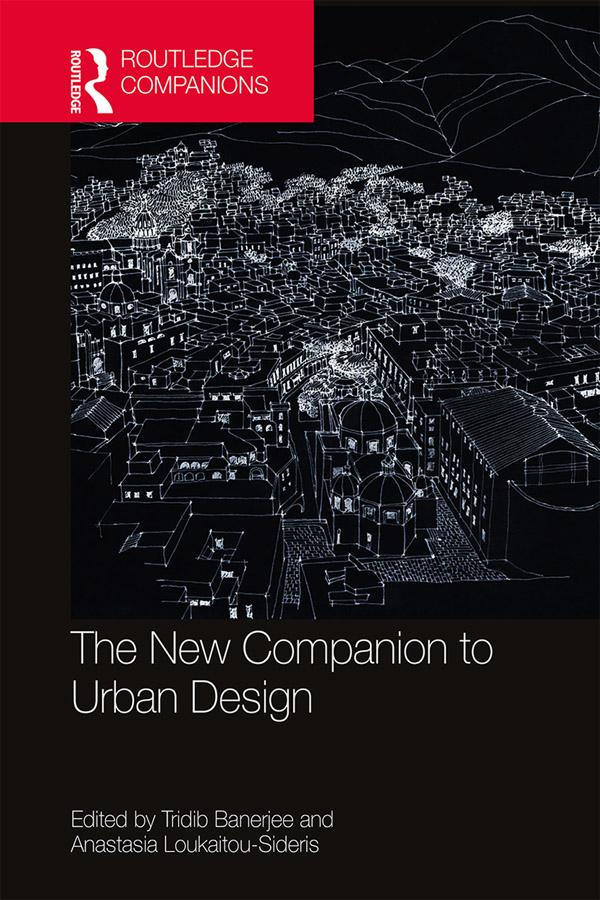
The New Companion to Urban Design continues the assemblage of rich and critical ideas about urban form and design that began with the Companion to Urban Design (Routledge, 2011). With chapters from a new set of contributors, this sequel offers a more comparative perspective representing multiple voices and perspectives from the Global South.
The essays in this volume are organized in three parts: Part I: Comparative Urbanism; Part II: Challenges; and Part III: Opportunities. Each part contains distinct sections designed to address specific themes, and includes a list of annotated suggested further readings at the end of each chapter. Part I: Comparative Urbanism examines different variants of urbanism in the Global North and the Global South, produced by a new economic order characterized by the mobility of labor, capital, information, and technology. Part II: Challenges discusses some of the contemporary challenges that cities of the Global North and the Global South are facing and the possible role of urban design. This part discusses spatial claims and conflicts, challenges generated by urban informality, explosive growth or dramatic shrinkage of the urban settlement, gentrification and displacement, and mimesis, simulacra and lack of authenticity. Part III: Aspirations discusses some normative goals that urban design interventions aspire to bring about in cities of the Global North and the Global South. These include resilience and sustainability, health, conservation/restoration, justice, intelligence, access and mobility, and arts and culture.
The New Companion to Urban Design is primarily intended for scholars and graduate students interested in cities and their built environment. It offers an invaluable and up-to-date guide to current thinking across a range of disciplines including urban design, planning, urban studies, and geography.
Płać wygodnie kartą, Klarną, Apple Pay lub Google Pay. Nie jesteś zadowolony? Zawsze masz 14-dniową gwarancję zwrotu pieniędzy. Więcej przeczytasz w naszych warunkach. Masz pytania? Napisz do nas na hello@memmo.org.
Memmo ułatwia naukę – gdziekolwiek jesteś na świecie. U nas znajdziesz podręczniki i sprytne narzędzia do nauki w jednym miejscu: streszczenia, quizy, podcasty i fiszki. A do tego Ted, Twój kumpel do nauki, który odpowie na wszystko, co Cię nurtuje. Ponad 50 000 studentów już tu się uczy – stworzone, byś uczył się szybciej i mniej stresował.