
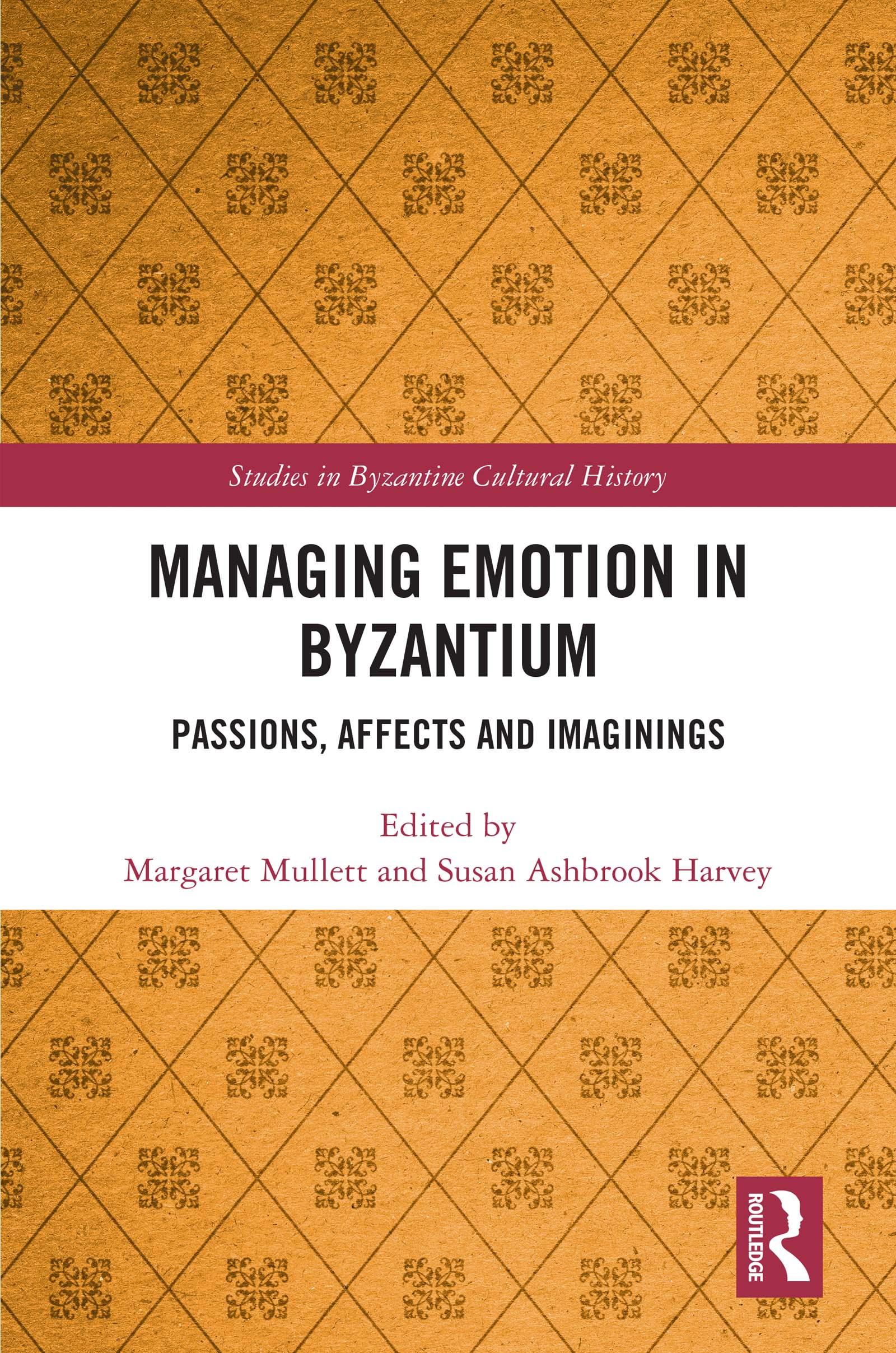
Byzantinists entered the study of emotion with Henry Maguire’s ground-breaking article on sorrow, published in 1977. Since then, classicists and western medievalists have developed new ways of understanding how emotional communities work and where the ancients’ concepts of emotion differ from our own, and Byzantinists have begun to consider emotions other than sorrow. It is time to look at what is distinctive about Byzantine emotion.
This volume is the first to look at the constellation of Byzantine emotions. Originating at an international colloquium at Dumbarton Oaks, these papers address issues such as power, gender, rhetoric, or asceticism in Byzantine society through the lens of a single emotion or cluster of emotions. Contributors focus not only on the construction of emotions with respect to perception and cognition but also explore how emotions were communicated and exchanged across broad (multi)linguistic, political and social boundaries. Priorities are twofold: to arrive at an understanding of what the Byzantines thought of as emotions and to comprehend how theory shaped their appraisal of reality.
Managing Emotion in Byzantium will appeal to researchers and students alike interested in Byzantine perceptions of emotion, Byzantine Culture, and medieval perceptions of emotion.
Płać wygodnie kartą, Klarną, Apple Pay lub Google Pay. Nie jesteś zadowolony? Zawsze masz 14-dniową gwarancję zwrotu pieniędzy. Więcej przeczytasz w naszych warunkach. Masz pytania? Napisz do nas na hello@memmo.org.
Memmo ułatwia naukę – gdziekolwiek jesteś na świecie. U nas znajdziesz podręczniki i sprytne narzędzia do nauki w jednym miejscu: streszczenia, quizy, podcasty i fiszki. A do tego Ted, Twój kumpel do nauki, który odpowie na wszystko, co Cię nurtuje. Ponad 50 000 studentów już tu się uczy – stworzone, byś uczył się szybciej i mniej stresował.