
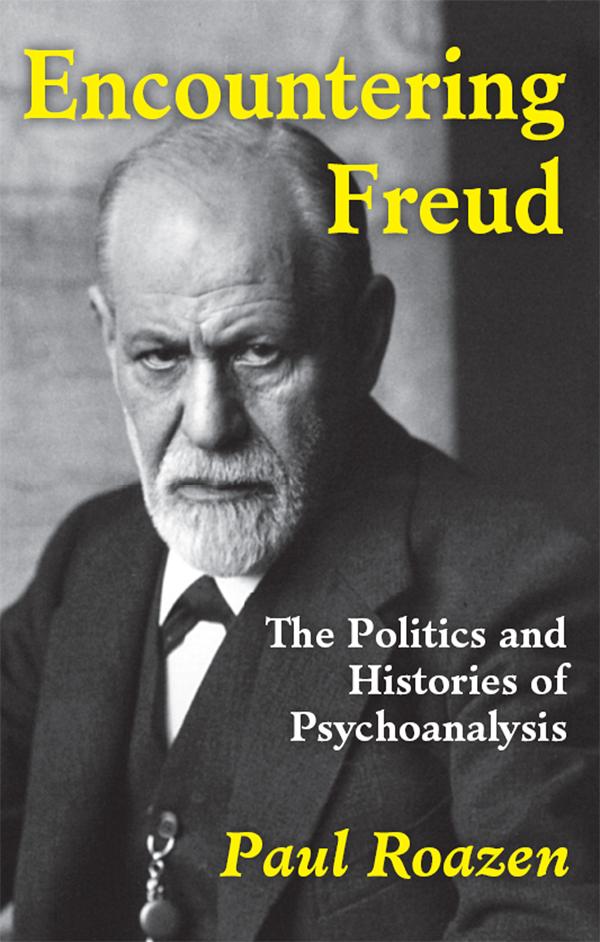
In this volume Paul Roazen examines different national responses to Freud and the beginnings of psychoanalysis. He examines Freud's work in the contexts of law, society, and class, as well as other forms of psychology.
Encountering Freud includes a brilliant essay on Freud and the question of psychoanalysis' contribution to radical thought, in contrast to the conservative tradition. Roazen takes up the extravagant claims of Marcuse and Reich, and sees the risks of then overglamorization of the beginnings of psychoanalysis as a profession. Roazen views the legacies of Harry Stack Sullivan, Helene Deutsch, and Erik H. Erikson as less rich because their work conformed to the social status quo. He sees Freud's inability to avoid an ambiguous outcome as a lack of concern with normality and a refusal to own up to the wide variety of psychological solutions he found both therapeutically tolerable and humanly desirable.
Roazen concludes with a series of explorations on the dichotomies Freud left behind: clinical discoveries versus philosophical standpoints; the relationship of normality to nihilism; and a defense of a therapeutic setting based on trained specialists versus a therapeutic approach encouraging self-expression. This is a volume that utilizes a sharp focus on Freud and his followers and dissenters to explore the question of political psychology at one end and psych-history at the other end of analysis.
Płać wygodnie kartą, Klarną, Apple Pay lub Google Pay. Nie jesteś zadowolony? Zawsze masz 14-dniową gwarancję zwrotu pieniędzy. Więcej przeczytasz w naszych warunkach. Masz pytania? Napisz do nas na hello@memmo.org.
Memmo ułatwia naukę – gdziekolwiek jesteś na świecie. U nas znajdziesz podręczniki i sprytne narzędzia do nauki w jednym miejscu: streszczenia, quizy, podcasty i fiszki. A do tego Ted, Twój kumpel do nauki, który odpowie na wszystko, co Cię nurtuje. Ponad 50 000 studentów już tu się uczy – stworzone, byś uczył się szybciej i mniej stresował.