
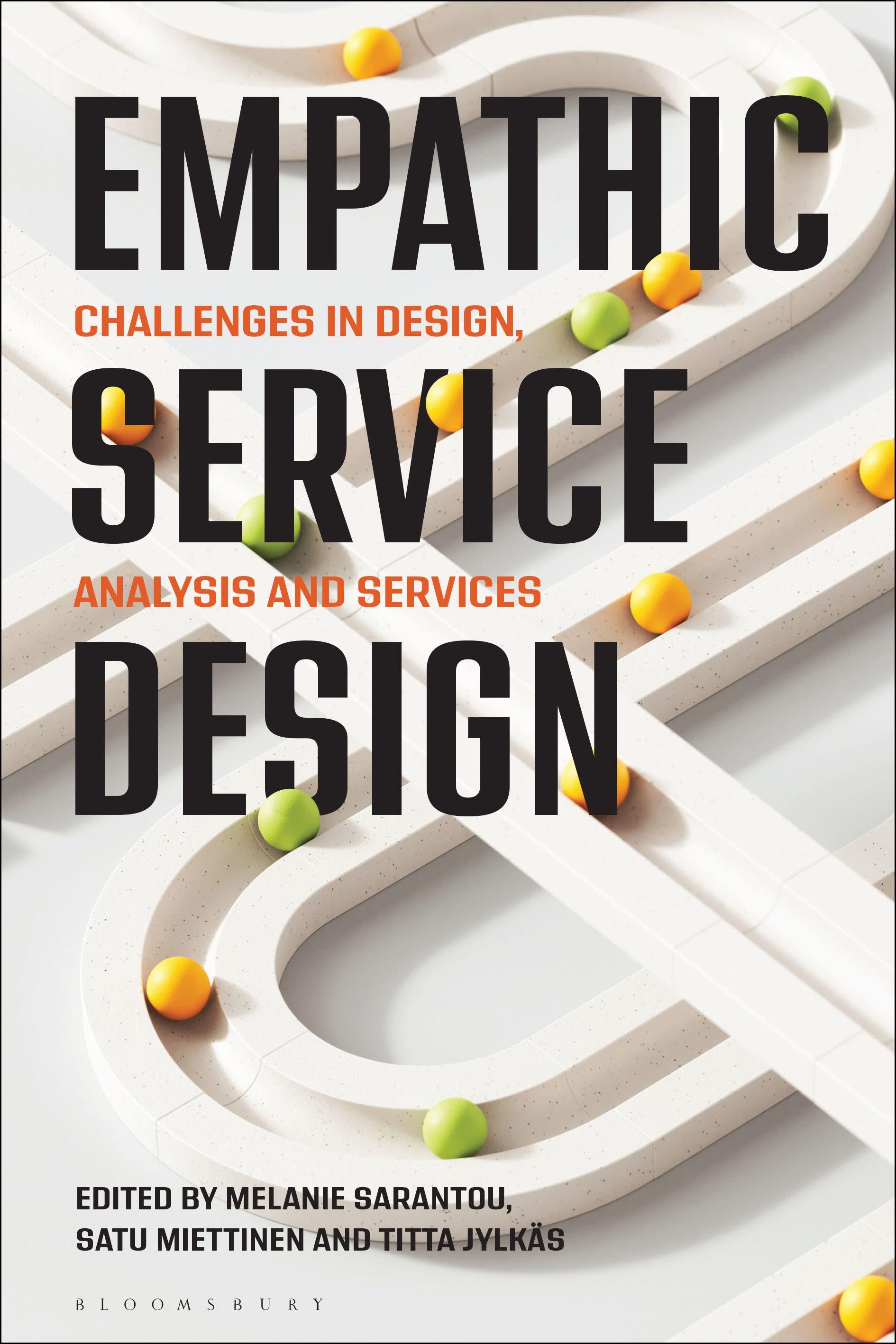
Through case studies from across the globe, this book helps designers understand how forward-looking service prototyping, analysis and tools can promote and create empathic, emotion-oriented and relevant services.
Despite services being at the core of organisations, to create service flows, designers, groups and their diverse stakeholders must negotiate ever more complex and hybrid interactions between human and more-than-human role players in service delivery. The challenge lies in delivering empathic, relevant and desirable services, despite these complexities. New knowledge is needed to bridge the gaps, uncertainties and even anxieties that organisations face in making their service delivery empathic and keeping them purposeful to users.
Addressing problems within service delivery like empathy fatigue, poor collaboration, and siloed work experiences that lead to poorly-functioning systems, the authors suggest concrete solutions for developing empathetic approaches and tools with consideration for the needs of participants. The book critically examines the role of empathy, and explores how compassionate understanding of the end-user is key to success.
Case studies include mapping of children's services, wearable technologies for pandemics, understanding cultural sensitivity, emojis and chat bots, and AI used in care settings.
Despite services being at the core of organisations, to create service flows, designers, groups and their diverse stakeholders must negotiate ever more complex and hybrid interactions between human and more-than-human role players in service delivery. The challenge lies in delivering empathic, relevant and desirable services, despite these complexities. New knowledge is needed to bridge the gaps, uncertainties and even anxieties that organisations face in making their service delivery empathic and keeping them purposeful to users.
Addressing problems within service delivery like empathy fatigue, poor collaboration, and siloed work experiences that lead to poorly-functioning systems, the authors suggest concrete solutions for developing empathetic approaches and tools with consideration for the needs of participants. The book critically examines the role of empathy, and explores how compassionate understanding of the end-user is key to success.
Case studies include mapping of children's services, wearable technologies for pandemics, understanding cultural sensitivity, emojis and chat bots, and AI used in care settings.
Płać wygodnie kartą, Klarną, Apple Pay lub Google Pay. Nie jesteś zadowolony? Zawsze masz 14-dniową gwarancję zwrotu pieniędzy. Więcej przeczytasz w naszych warunkach. Masz pytania? Napisz do nas na hello@memmo.org.
Memmo ułatwia naukę – gdziekolwiek jesteś na świecie. U nas znajdziesz podręczniki i sprytne narzędzia do nauki w jednym miejscu: streszczenia, quizy, podcasty i fiszki. A do tego Ted, Twój kumpel do nauki, który odpowie na wszystko, co Cię nurtuje. Ponad 50 000 studentów już tu się uczy – stworzone, byś uczył się szybciej i mniej stresował.