
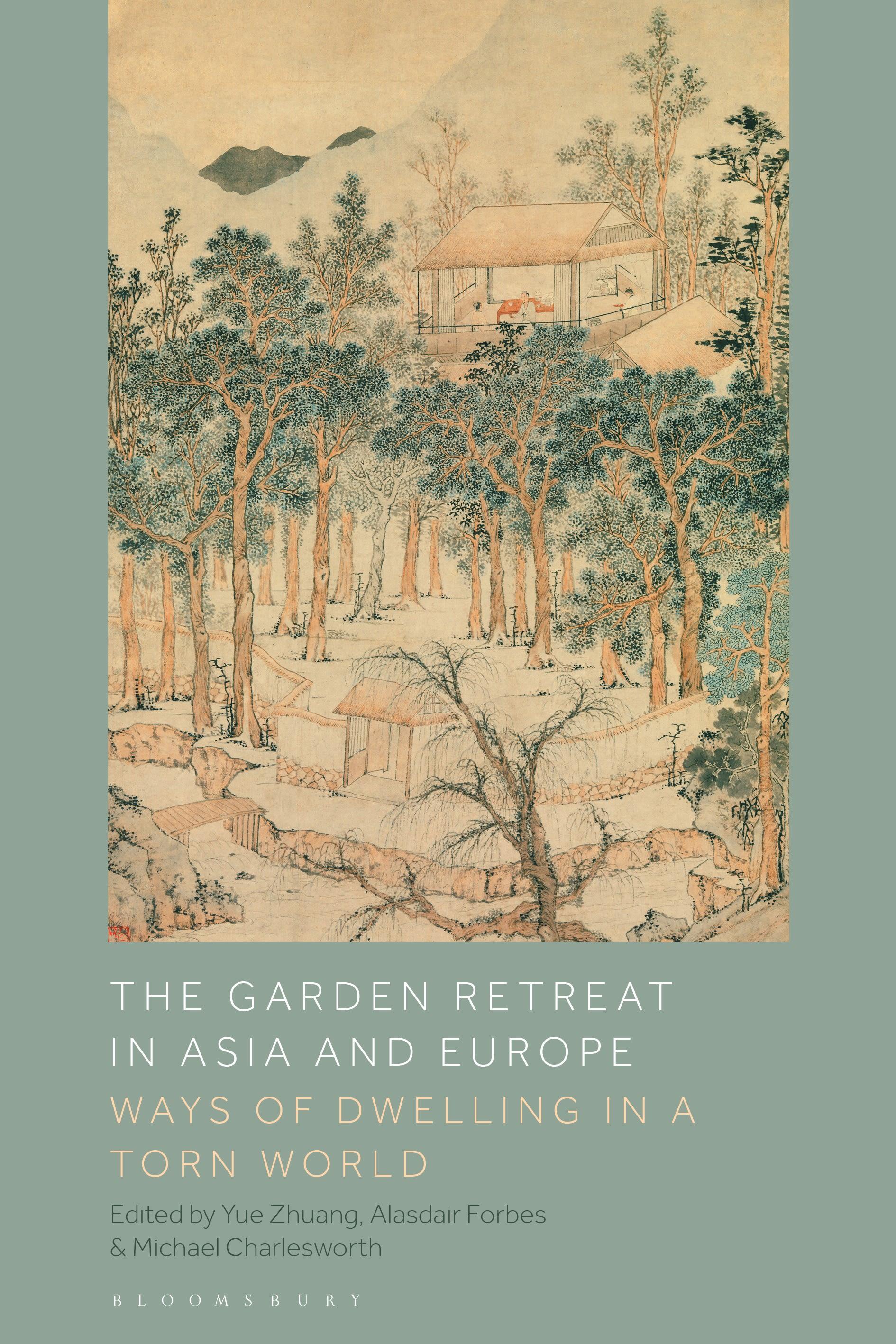
The Garden Retreat in Asia and Europe explores the meaning of gardens and designed landscapes as places of retreat and refuge in times of need or emergency.
In the current times of war, pandemic, climate change, and global anxiety, the value of the garden as a sanctuary, a space where we can find refuge in a natural environment, has taken on new and poignant meanings and has attracted increasing academic interest. Multidisciplinary and multicultural in scope, this book explores the meaning of gardens and designed landscapes as places of retreat and refuge in times of need or emergency. Examining perspectives from scholars including art historians, architects, philosophers, landscape architects and garden practitioners, it reassess the restorative impact of the garden, whether understood from an individual, cultural or environmental point of view.
Ranging widely across Asia and Europe, its chapters examine ideas, narratives and practices from the 4th-century Chinese poet Tao Yuanming, to the 12th century Iranian polymath Omar Khayyam, through to the late 20th-century British artist and film-maker Derek Jarman. Drawing upon traditional Asian philosophies like Buddhism, Daoism and Sufism and combining these with more recent western philosophies, the aim is to question how the unique virtues of gardens and designed landscapes can help to poise, educate, and possibly transform attitudes and behaviours in a time of personal, environmental, or cultural crisis.
At once poetic, scholarly, and rigorous, this book provides insightful reading for students and researchers in landscape architecture, garden history, architectural history, art history, and cultural history.
In the current times of war, pandemic, climate change, and global anxiety, the value of the garden as a sanctuary, a space where we can find refuge in a natural environment, has taken on new and poignant meanings and has attracted increasing academic interest. Multidisciplinary and multicultural in scope, this book explores the meaning of gardens and designed landscapes as places of retreat and refuge in times of need or emergency. Examining perspectives from scholars including art historians, architects, philosophers, landscape architects and garden practitioners, it reassess the restorative impact of the garden, whether understood from an individual, cultural or environmental point of view.
Ranging widely across Asia and Europe, its chapters examine ideas, narratives and practices from the 4th-century Chinese poet Tao Yuanming, to the 12th century Iranian polymath Omar Khayyam, through to the late 20th-century British artist and film-maker Derek Jarman. Drawing upon traditional Asian philosophies like Buddhism, Daoism and Sufism and combining these with more recent western philosophies, the aim is to question how the unique virtues of gardens and designed landscapes can help to poise, educate, and possibly transform attitudes and behaviours in a time of personal, environmental, or cultural crisis.
At once poetic, scholarly, and rigorous, this book provides insightful reading for students and researchers in landscape architecture, garden history, architectural history, art history, and cultural history.
Płać wygodnie kartą, Klarną, Apple Pay lub Google Pay. Nie jesteś zadowolony? Zawsze masz 14-dniową gwarancję zwrotu pieniędzy. Więcej przeczytasz w naszych warunkach. Masz pytania? Napisz do nas na hello@memmo.org.
Memmo ułatwia naukę – gdziekolwiek jesteś na świecie. U nas znajdziesz podręczniki i sprytne narzędzia do nauki w jednym miejscu: streszczenia, quizy, podcasty i fiszki. A do tego Ted, Twój kumpel do nauki, który odpowie na wszystko, co Cię nurtuje. Ponad 50 000 studentów już tu się uczy – stworzone, byś uczył się szybciej i mniej stresował.