
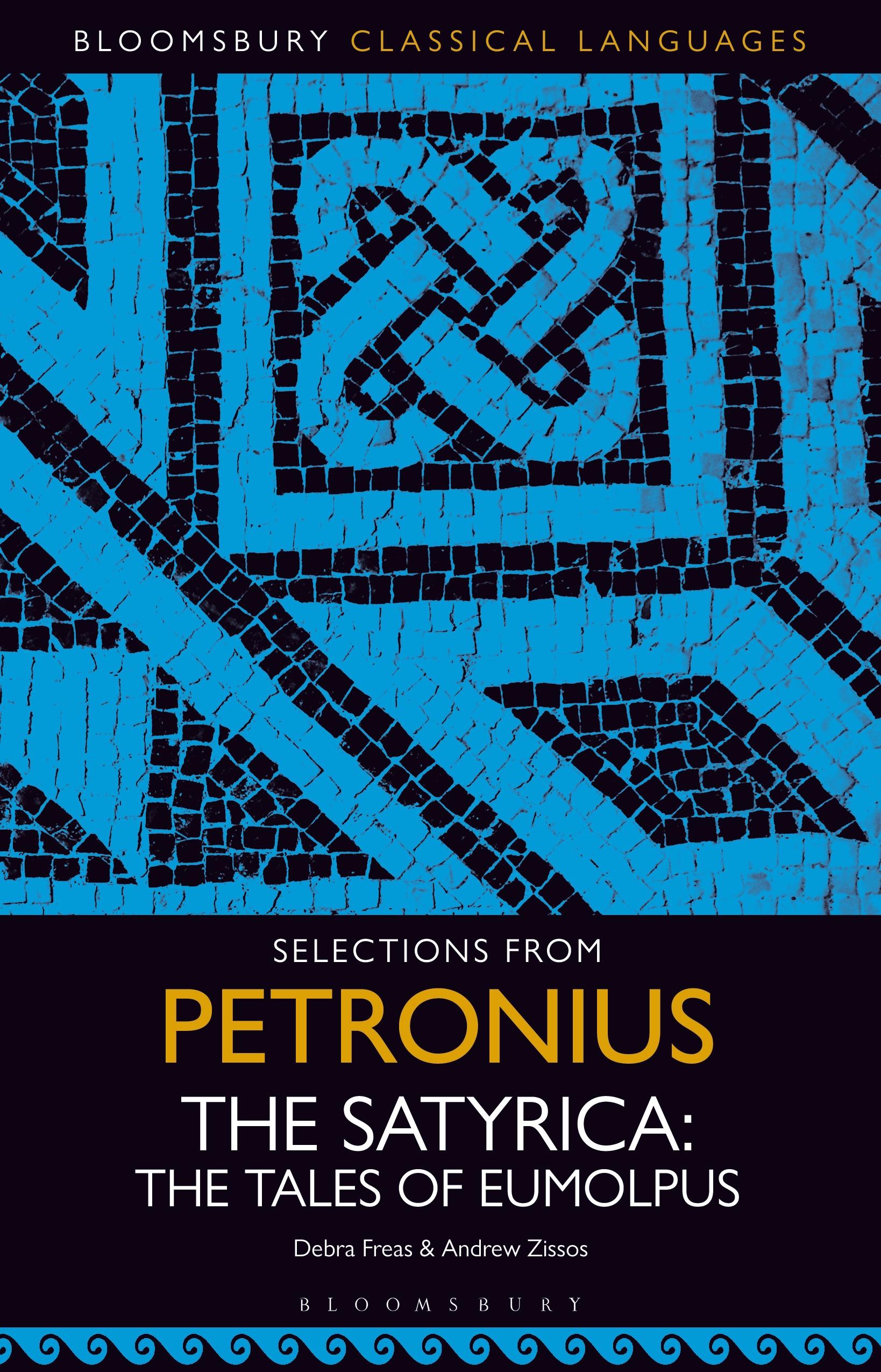
Taking the reader through the fragmentary text of Petronius' Satyrica in a coherent sequence, this book gives a deeper understanding of the fascinating aesthetic, literary and social issues raised within the text. Petronius' Satyrica has long been popular with readers of Latin: it is one of the few texts that offers a glimpse into non-elite society in the early Roman imperial period. It is also one of only a handful of ancient novels to survive in any form, and certainly the most racy and controversial. Supported by a detailed contextualising introduction and companion website resources, these selections from the Latin text are carefully annotated for students and a full vocabulary can be found at the end of the book.
The selections in this edition put at centre stage the figure of Eumolpus: poet, storyteller and would-be critic, as well as charlatan, swindler and lecher. He is one of the major characters in what survives of the Satyrica; he serves as an internal narrator for many of the longer embedded poems and stories; and he meditates on topics of great interest, not the least being the perceived decline of art, science and culture in the contemporary Graeco-Roman world. In this way,students are introduced to some of the best-known myths and tales of antiquity, including the Capture of Troy and the Widow of Ephesus, while affording the opportunity to translate both prose and verse passages, and to consider and evaluate the Satyrica's relationship to the literary tradition.
The selections in this edition put at centre stage the figure of Eumolpus: poet, storyteller and would-be critic, as well as charlatan, swindler and lecher. He is one of the major characters in what survives of the Satyrica; he serves as an internal narrator for many of the longer embedded poems and stories; and he meditates on topics of great interest, not the least being the perceived decline of art, science and culture in the contemporary Graeco-Roman world. In this way,students are introduced to some of the best-known myths and tales of antiquity, including the Capture of Troy and the Widow of Ephesus, while affording the opportunity to translate both prose and verse passages, and to consider and evaluate the Satyrica's relationship to the literary tradition.
Płać wygodnie kartą, Klarną, Apple Pay lub Google Pay. Nie jesteś zadowolony? Zawsze masz 14-dniową gwarancję zwrotu pieniędzy. Więcej przeczytasz w naszych warunkach. Masz pytania? Napisz do nas na hello@memmo.org.
Memmo ułatwia naukę – gdziekolwiek jesteś na świecie. U nas znajdziesz podręczniki i sprytne narzędzia do nauki w jednym miejscu: streszczenia, quizy, podcasty i fiszki. A do tego Ted, Twój kumpel do nauki, który odpowie na wszystko, co Cię nurtuje. Ponad 50 000 studentów już tu się uczy – stworzone, byś uczył się szybciej i mniej stresował.