
Shortlisted for the Association of Dress Historians Book of the Year Award, 2024
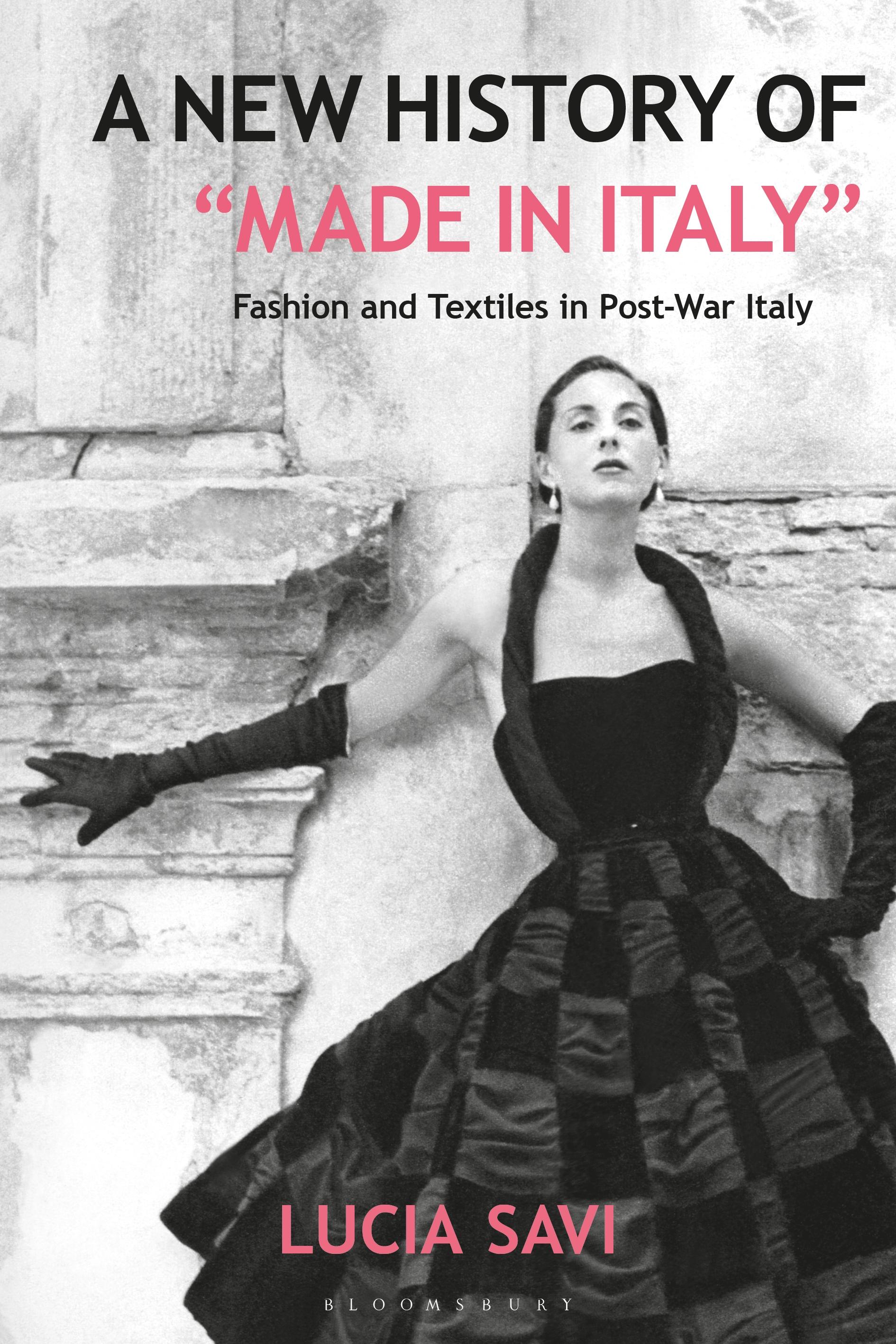
In the first book to examine the role played by textile manufacturing in the development of fashion in Italy, A New History of 'Made in Italy' investigates Italy's transition from a country of dressmakers, tailors and small-scale couturiers in the early post-Second World War period to a major producer of ready-to-wear fashion in the 1980s. It takes the reader from Italy's first internationally attended fashion show in 1951 to Time magazine's Giorgio Armani April 1982 cover story, which signalled the fashion designer's international arrival, and Milan's presence as the capital of ready-to-wear.
Chapters focus for the first time on the material substance of Italian fashion – textile – looking at questions including the importance of manufacturing quality, design innovation, composition, production techniques, commerce and the role of textile on the country's overall fashion system. Through these, Lucia Savi brings to light the importance of synthetic fibres, previously little-known players, such as the carnettisti (a type of textile wholesalers) as well as re-investigating well-known couturiers and designers such as Simonetta, Gianfranco Ferré and Gianni Versace.
By looking at how things are made, by whom, and where, this book seeks to unpack the 'Made in Italy' label through a focus on making. Informed by extensive archival materials retrieved from a wide range of sources, it brings together the often-separated disciplines of fashion, textile and design history.
In the first book to examine the role played by textile manufacturing in the development of fashion in Italy, A New History of 'Made in Italy' investigates Italy's transition from a country of dressmakers, tailors and small-scale couturiers in the early post-Second World War period to a major producer of ready-to-wear fashion in the 1980s. It takes the reader from Italy's first internationally attended fashion show in 1951 to Time magazine's Giorgio Armani April 1982 cover story, which signalled the fashion designer's international arrival, and Milan's presence as the capital of ready-to-wear.
Chapters focus for the first time on the material substance of Italian fashion – textile – looking at questions including the importance of manufacturing quality, design innovation, composition, production techniques, commerce and the role of textile on the country's overall fashion system. Through these, Lucia Savi brings to light the importance of synthetic fibres, previously little-known players, such as the carnettisti (a type of textile wholesalers) as well as re-investigating well-known couturiers and designers such as Simonetta, Gianfranco Ferré and Gianni Versace.
By looking at how things are made, by whom, and where, this book seeks to unpack the 'Made in Italy' label through a focus on making. Informed by extensive archival materials retrieved from a wide range of sources, it brings together the often-separated disciplines of fashion, textile and design history.
Płać wygodnie kartą, Klarną, Apple Pay lub Google Pay. Nie jesteś zadowolony? Zawsze masz 14-dniową gwarancję zwrotu pieniędzy. Więcej przeczytasz w naszych warunkach. Masz pytania? Napisz do nas na hello@memmo.org.
Memmo ułatwia naukę – gdziekolwiek jesteś na świecie. U nas znajdziesz podręczniki i sprytne narzędzia do nauki w jednym miejscu: streszczenia, quizy, podcasty i fiszki. A do tego Ted, Twój kumpel do nauki, który odpowie na wszystko, co Cię nurtuje. Ponad 50 000 studentów już tu się uczy – stworzone, byś uczył się szybciej i mniej stresował.