
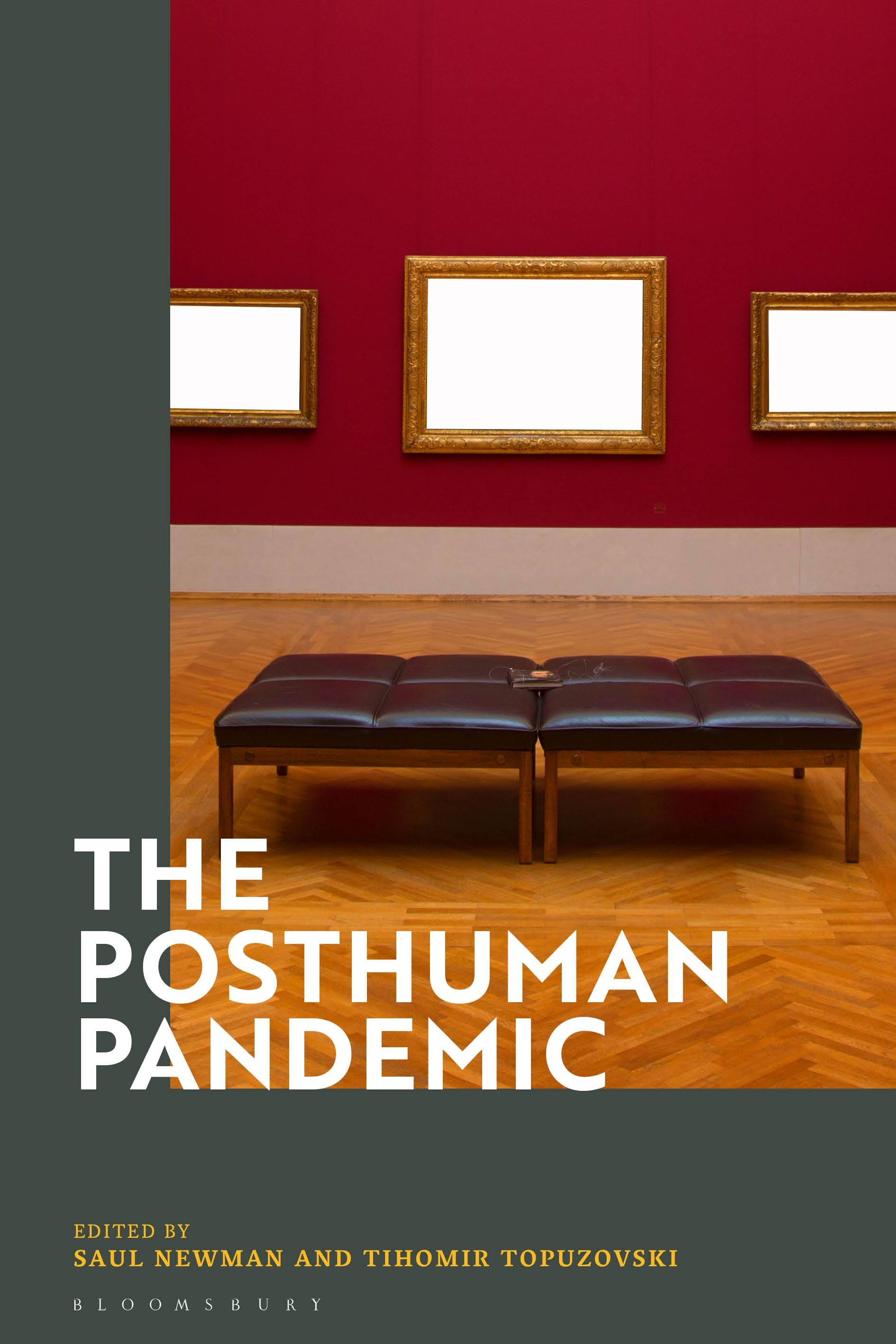
With the COVID-19 crisis forcing us to reflect in a dramatic way on the limits of the human and the implications of the Anthropocene Age, this timely volume addresses these concerns through an exploration of post-humanism as represented in philosophy, politics and aesthetics.
Global pandemics bring into sharp focus the bankruptcy of the neoliberal economic paradigm, the future of the arts sector in society, and our dependence upon political forces outside our control. In response to the recent state of emergency, The Posthuman Pandemic highlights the urgent need to rethink our anthropocentrism and develop new political models, aesthetic practices and ways of living.
Central to these discussions is the idea of post-humanism, a philosophy that can help us grapple with the crisis, as it takes seriously the unstable ecosystems on which we depend and the precarious nature of our long-cherished notions of agency and sovereignty. Bringing together international philosophers, political theorists and media and art theorists, all of whom engage with the posthuman, this volume explores a range of vital subjects, from the inequality revealed by COVID-19 survival rates to museums' role in spreading human-centric understandings of a world struck by human fragility.
Facing up to the realities that the coronavirus outbreak has uncovered, The Posthuman Pandemic combines both breadth and depth of analysis to take on the posthuman challenges confronting us today.
Global pandemics bring into sharp focus the bankruptcy of the neoliberal economic paradigm, the future of the arts sector in society, and our dependence upon political forces outside our control. In response to the recent state of emergency, The Posthuman Pandemic highlights the urgent need to rethink our anthropocentrism and develop new political models, aesthetic practices and ways of living.
Central to these discussions is the idea of post-humanism, a philosophy that can help us grapple with the crisis, as it takes seriously the unstable ecosystems on which we depend and the precarious nature of our long-cherished notions of agency and sovereignty. Bringing together international philosophers, political theorists and media and art theorists, all of whom engage with the posthuman, this volume explores a range of vital subjects, from the inequality revealed by COVID-19 survival rates to museums' role in spreading human-centric understandings of a world struck by human fragility.
Facing up to the realities that the coronavirus outbreak has uncovered, The Posthuman Pandemic combines both breadth and depth of analysis to take on the posthuman challenges confronting us today.
Płać wygodnie kartą, Klarną, Apple Pay lub Google Pay. Nie jesteś zadowolony? Zawsze masz 14-dniową gwarancję zwrotu pieniędzy. Więcej przeczytasz w naszych warunkach. Masz pytania? Napisz do nas na hello@memmo.org.
Memmo ułatwia naukę – gdziekolwiek jesteś na świecie. U nas znajdziesz podręczniki i sprytne narzędzia do nauki w jednym miejscu: streszczenia, quizy, podcasty i fiszki. A do tego Ted, Twój kumpel do nauki, który odpowie na wszystko, co Cię nurtuje. Ponad 50 000 studentów już tu się uczy – stworzone, byś uczył się szybciej i mniej stresował.