
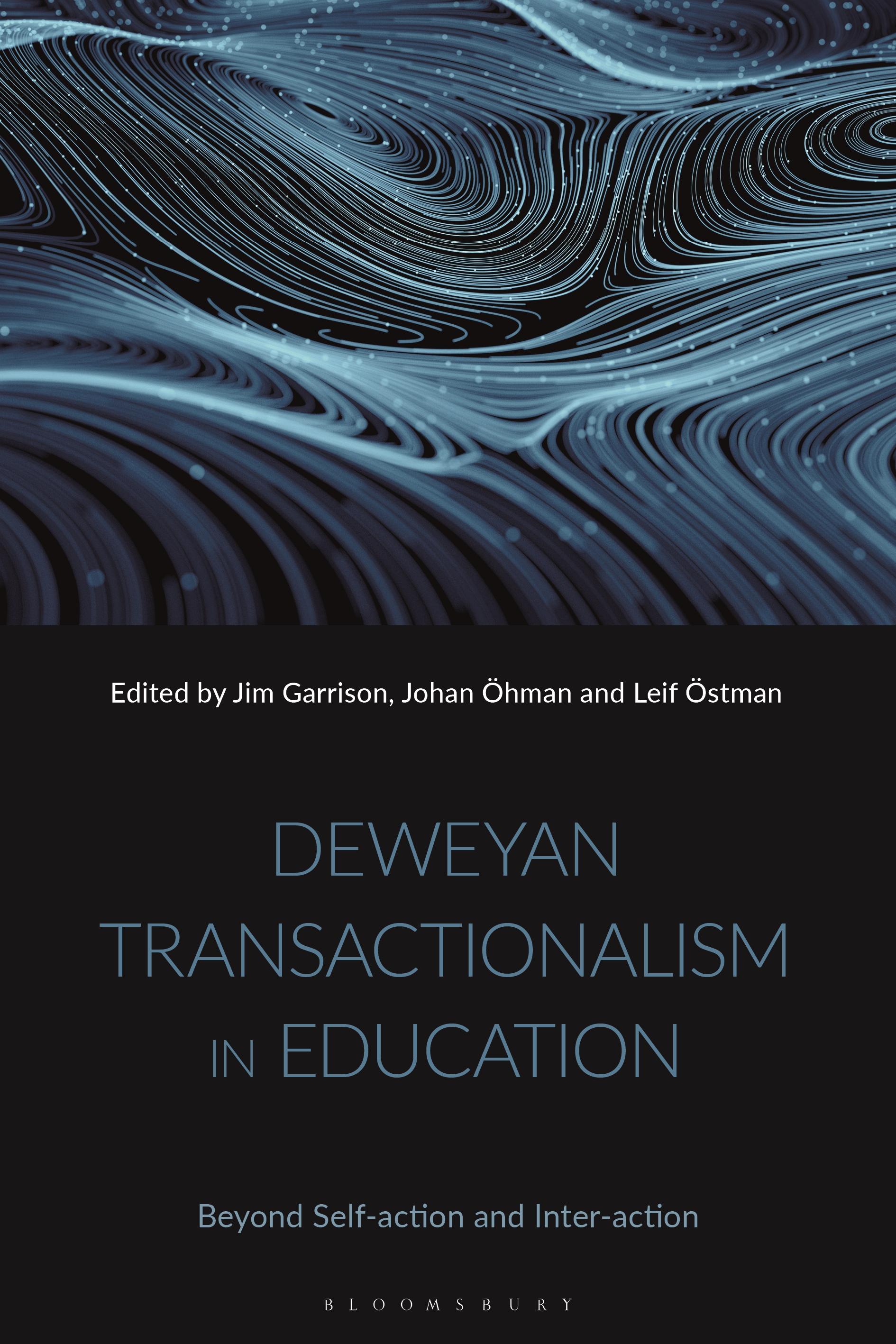
Philosophers of education are largely unaware of Dewey's concept of transactionalism, yet it is implicit in much of his philosophy, educational or otherwise from the late 1890s onwards. Written by scholars from Belgium, Italy, Norway, Sweden, and the USA, this book shows how transactionalism can offer an entirely new way of understanding teaching and learning, the individual and sociocultural dimension of education, and educational research. The contributors show how the concept helps us to see beyond an array of false dualisms, such as mind versus body, self versus society, and organism versus environment, as well as an equally vast array of binaries, such as inside-outside, presence-absence, and male-female. They introduce the key critical ideas that transactionalism represents including emergence; living in a world without a within; the temporally and extensionally distributed nature of meaning, mind, and self. The use and elaboration of transactionalism is grounded in philosophical inquires and in empirical analyses of practices in formal and informal settings including values education, early childhood education, biology education, museum education, coding and computer science, Oceanographic and Atmospheric study, policy reform, play, and the Covid-19 pandemic.
Płać wygodnie kartą, Klarną, Apple Pay lub Google Pay. Nie jesteś zadowolony? Zawsze masz 14-dniową gwarancję zwrotu pieniędzy. Więcej przeczytasz w naszych warunkach. Masz pytania? Napisz do nas na hello@memmo.org.
Memmo ułatwia naukę – gdziekolwiek jesteś na świecie. U nas znajdziesz podręczniki i sprytne narzędzia do nauki w jednym miejscu: streszczenia, quizy, podcasty i fiszki. A do tego Ted, Twój kumpel do nauki, który odpowie na wszystko, co Cię nurtuje. Ponad 50 000 studentów już tu się uczy – stworzone, byś uczył się szybciej i mniej stresował.