
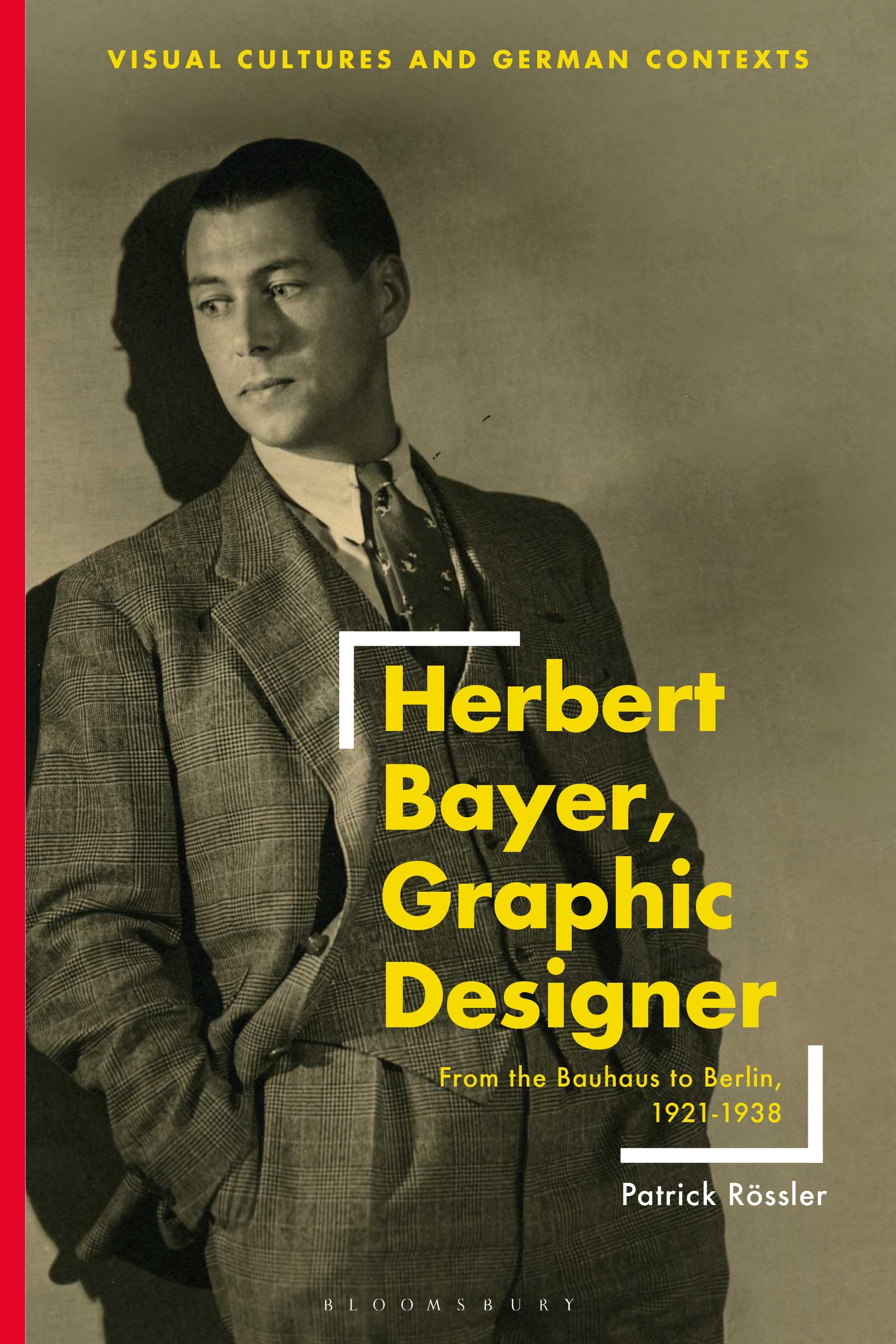
Herbert Bayer was one of the most extraordinary artists associated with the Bauhaus school. A true multimedia artist, he united graphic design, art, and architecture in a unique style that came to represent the bold aesthetic approach of the movement. A teacher with the school until 1928, Bayer went on to become a highly successful graphic designer in Germany, and later one of the most prominent figures in the 20th-century art scene of the United States.
This broad biographical account, which presents previously unseen archival photographs and episodes from the life of Bayer and other influential Bauhaus artists such as Walter Gropius, Marcel Breuer and László Moholy-Nagy, follows Bayer through the Weimar Republic, Nazi Germany and finally to his exile in the United States. Specifically, Patrick Rössler reveals for the first time Bayer's unique experience of 1930s Germany, where, with his commercial and artistic life shattered by terror and censorship, he distracted himself with leading a hedonistic life. Shining a light on Bayer's time in Berlin during the Weimar Republic, and his route out of the Nazi state, Rössler provides rich new insights into how Bauhaus artists navigated a protracted period of social upheaval and dictatorship, where commercial success was fraught with a deep hostility towards the regime and the temptations of emigration.
Revealing the tensions of an avant-garde artist struggling to practice during a period of repression, Herbert Bayer, Graphic Designer speaks to both the memory of those who left Nazi Germany, but also the perseverance of artists and intellectuals throughout history who have worked under authoritarian regimes. Drawing on never before interpreted documents, letters and archival material, Rössler tells Bayer's compelling story – documenting the life of a unique artist and offering a valuable contribution to research in émigré experiences.
This broad biographical account, which presents previously unseen archival photographs and episodes from the life of Bayer and other influential Bauhaus artists such as Walter Gropius, Marcel Breuer and László Moholy-Nagy, follows Bayer through the Weimar Republic, Nazi Germany and finally to his exile in the United States. Specifically, Patrick Rössler reveals for the first time Bayer's unique experience of 1930s Germany, where, with his commercial and artistic life shattered by terror and censorship, he distracted himself with leading a hedonistic life. Shining a light on Bayer's time in Berlin during the Weimar Republic, and his route out of the Nazi state, Rössler provides rich new insights into how Bauhaus artists navigated a protracted period of social upheaval and dictatorship, where commercial success was fraught with a deep hostility towards the regime and the temptations of emigration.
Revealing the tensions of an avant-garde artist struggling to practice during a period of repression, Herbert Bayer, Graphic Designer speaks to both the memory of those who left Nazi Germany, but also the perseverance of artists and intellectuals throughout history who have worked under authoritarian regimes. Drawing on never before interpreted documents, letters and archival material, Rössler tells Bayer's compelling story – documenting the life of a unique artist and offering a valuable contribution to research in émigré experiences.
Płać wygodnie kartą, Klarną, Apple Pay lub Google Pay. Nie jesteś zadowolony? Zawsze masz 14-dniową gwarancję zwrotu pieniędzy. Więcej przeczytasz w naszych warunkach. Masz pytania? Napisz do nas na hello@memmo.org.
Memmo ułatwia naukę – gdziekolwiek jesteś na świecie. U nas znajdziesz podręczniki i sprytne narzędzia do nauki w jednym miejscu: streszczenia, quizy, podcasty i fiszki. A do tego Ted, Twój kumpel do nauki, który odpowie na wszystko, co Cię nurtuje. Ponad 50 000 studentów już tu się uczy – stworzone, byś uczył się szybciej i mniej stresował.