
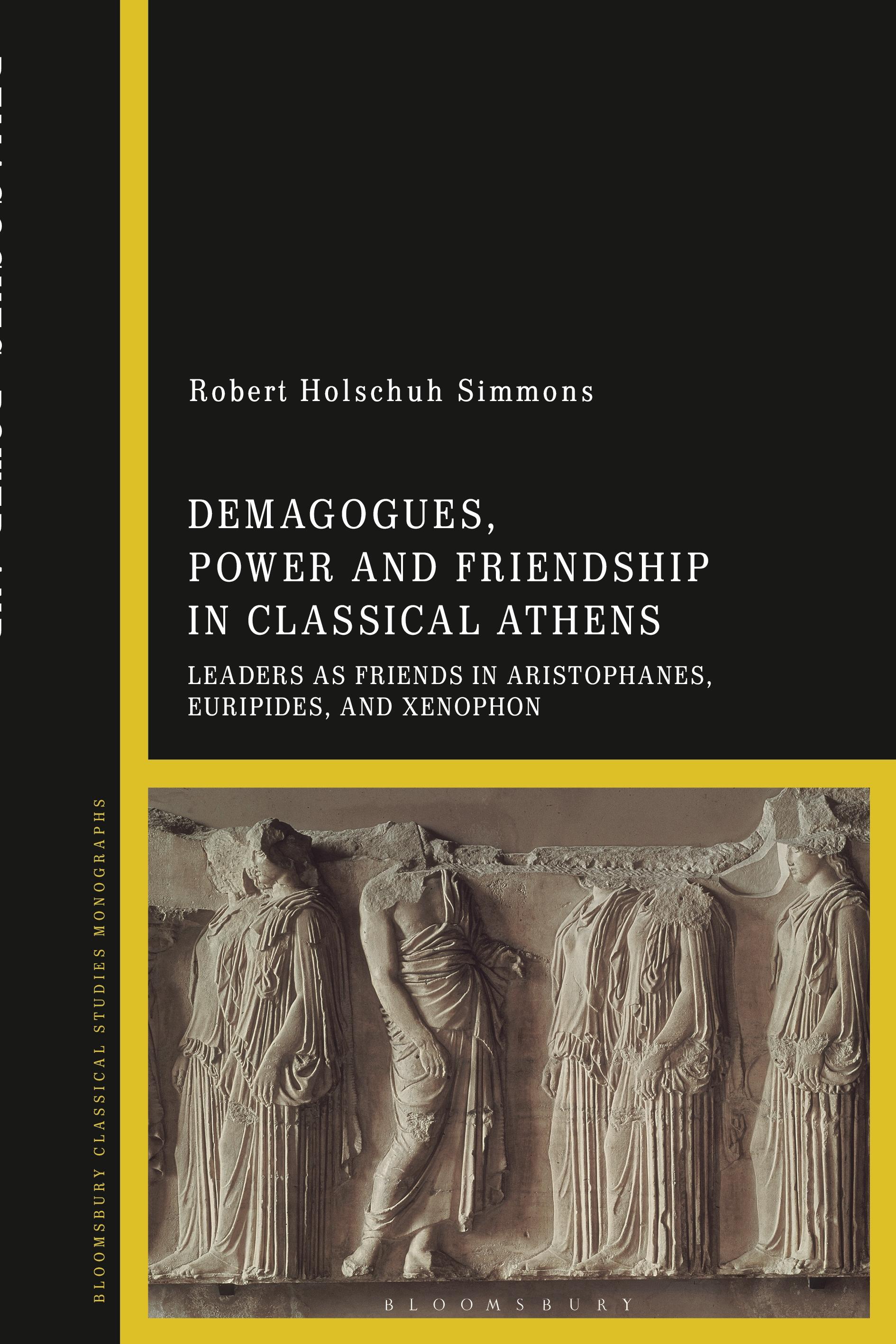
What makes a demagogue? A much more friendly touch, or more importantly, a perception of a friendly touch, than has previously been explored. Demagogues, Power and Friendship in Classical Athens examines the ways in which a demagogic leadership style based on personal connection became ingrained in this period, drawing on close study of several genres of literature of the late 5th and early-to-mid 4th centuries BCE. Such connection was particularly effective with lower classes of Athenians, who had been accustomed to being excluded from politicians' friendship-based approaches to coalition-building.
Comedies of Aristophanes (particularly Knights), tragedies of Euripides (particularly Iphigenia in Aulis), and historical biographies of Xenophon (particularly Anabasis and Cyropaedia) depict demagogues, or characters exhibiting demagogic characteristics, using a style of outreach to members of neglected classes that involved provoking feelings of friendship with individuals in these classes, whether the demagogues and individual supporters actually interacted closely or not. These leaders employed techniques, such as propinquity, homophily, and transitivity, that both contemporary sociologists (and, in some cases, Aristotle) recognize as effective for such purposes. Particular attention is paid to discrepancies in Aristophanes' Knights between how the demagogue Cleon is hyperbolically portrayed (as a pederastic lover of the Athenian people) and how his language and actions make him out – as a friend of theirs, as he likely portrayed himself.
Comedies of Aristophanes (particularly Knights), tragedies of Euripides (particularly Iphigenia in Aulis), and historical biographies of Xenophon (particularly Anabasis and Cyropaedia) depict demagogues, or characters exhibiting demagogic characteristics, using a style of outreach to members of neglected classes that involved provoking feelings of friendship with individuals in these classes, whether the demagogues and individual supporters actually interacted closely or not. These leaders employed techniques, such as propinquity, homophily, and transitivity, that both contemporary sociologists (and, in some cases, Aristotle) recognize as effective for such purposes. Particular attention is paid to discrepancies in Aristophanes' Knights between how the demagogue Cleon is hyperbolically portrayed (as a pederastic lover of the Athenian people) and how his language and actions make him out – as a friend of theirs, as he likely portrayed himself.
Płać wygodnie kartą, Klarną, Apple Pay lub Google Pay. Nie jesteś zadowolony? Zawsze masz 14-dniową gwarancję zwrotu pieniędzy. Więcej przeczytasz w naszych warunkach. Masz pytania? Napisz do nas na hello@memmo.org.
Memmo ułatwia naukę – gdziekolwiek jesteś na świecie. U nas znajdziesz podręczniki i sprytne narzędzia do nauki w jednym miejscu: streszczenia, quizy, podcasty i fiszki. A do tego Ted, Twój kumpel do nauki, który odpowie na wszystko, co Cię nurtuje. Ponad 50 000 studentów już tu się uczy – stworzone, byś uczył się szybciej i mniej stresował.