
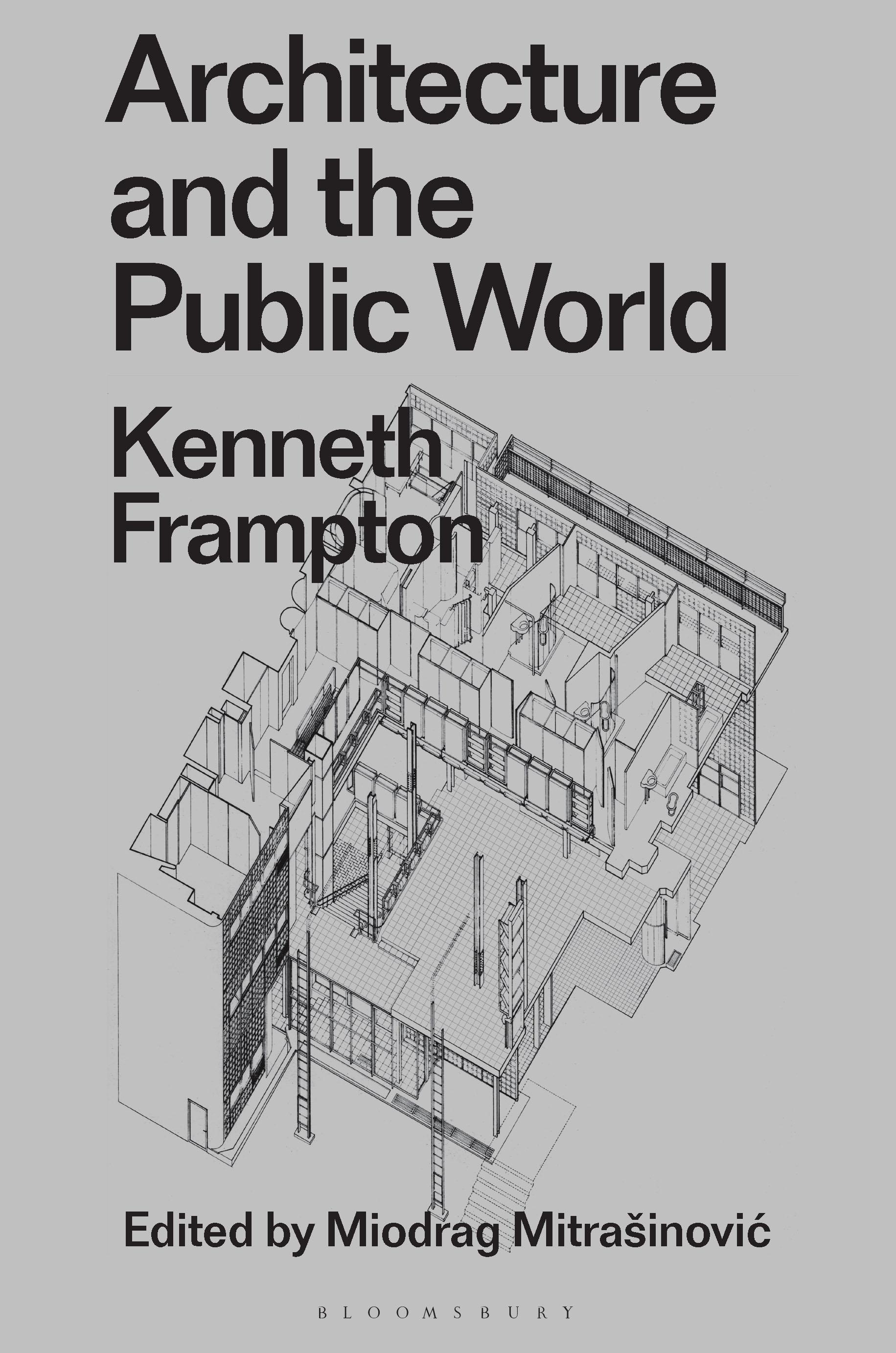
This book brings together Kenneth Frampton's essays from the 1960s to today which epitomize his reflections on the historical–theoretical entanglements of architecture with place, the public realm, cultural identity, urban landscape and environment, and the political question of the “predicament” of architecture in the new Millennium.
The essays explore Frampton's contention that architecture's imperative is to assume a significant responsibility for the edification and stewardship of the Arendtian 'public world.' One of the most theoretically sophisticated and politically committed architectural thinkers, Frampton's work breaks emphatically with the limits and norms of much contemporary practice and restores a sense of richness and social consequence of architecture's 'unfinished project,' while offering abiding lessons not only for architecture but for social, cultural, and design criticism alike.
The essays explore Frampton's contention that architecture's imperative is to assume a significant responsibility for the edification and stewardship of the Arendtian 'public world.' One of the most theoretically sophisticated and politically committed architectural thinkers, Frampton's work breaks emphatically with the limits and norms of much contemporary practice and restores a sense of richness and social consequence of architecture's 'unfinished project,' while offering abiding lessons not only for architecture but for social, cultural, and design criticism alike.
Płać wygodnie kartą, Klarną, Apple Pay lub Google Pay. Nie jesteś zadowolony? Zawsze masz 14-dniową gwarancję zwrotu pieniędzy. Więcej przeczytasz w naszych warunkach. Masz pytania? Napisz do nas na hello@memmo.org.
Memmo ułatwia naukę – gdziekolwiek jesteś na świecie. U nas znajdziesz podręczniki i sprytne narzędzia do nauki w jednym miejscu: streszczenia, quizy, podcasty i fiszki. A do tego Ted, Twój kumpel do nauki, który odpowie na wszystko, co Cię nurtuje. Ponad 50 000 studentów już tu się uczy – stworzone, byś uczył się szybciej i mniej stresował.