
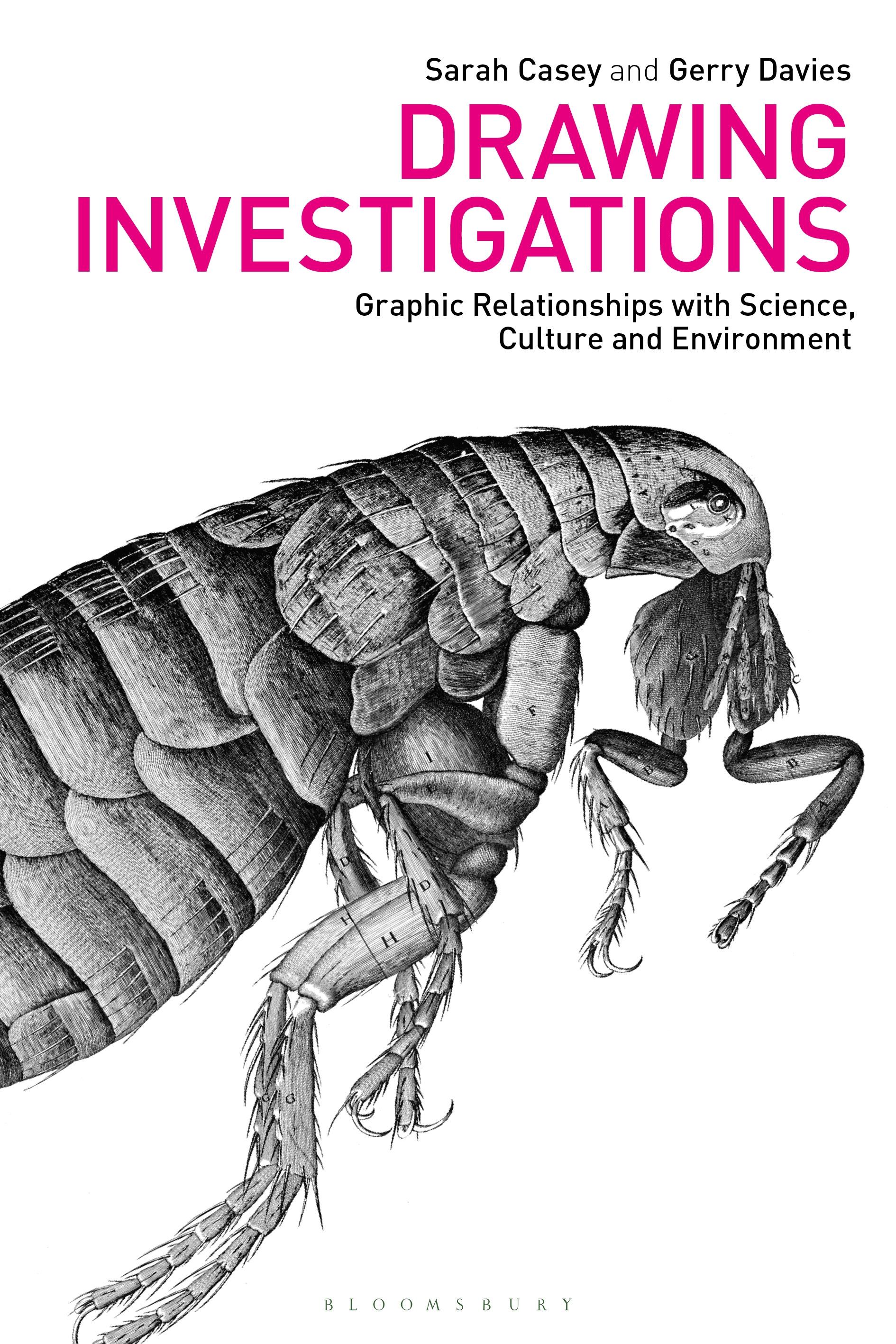
Using close visual analysis of drawings, artist interviews, critical analysis and exegesis, Drawing Investigations examines how artists use drawing as an investigative tool to reveal information that would otherwise remain unseen and unnoticed.
How does drawing add shape to ideas? How does the artist accommodate to challenges and restraints of a particular environment? To what extent is a drawing complementary and continuous with its subject and where is it disruptive and provocative? Casey and Davies address these questions while focusing on artists working collaboratively and the use of drawing in challenging or unexpected environments.
Drawing Investigations evaluates the emergence of a way of thinking among an otherwise disconnected group of artists by exploring commonalities in the application of analytical drawing to the natural world, urban environment, social forces and lived experience. Examples represent a spectrum of research in international contexts: an oceanographic Institute in California, the archives of Amsterdam's Rijksmuseum, the Antarctic Survey, geothermal research in Japan and the Kurdish diaspora in Iraq. Issues are situated in the contemporary theory and practice of drawing including relationships to historical precedents.
By exploring drawing's capacity to capture and describe experience, to sharpen visual faculties and to bridge embodied and conceptual knowledge, Drawing Investigations offers a fresh critical perspective on contemporary drawing practice.
How does drawing add shape to ideas? How does the artist accommodate to challenges and restraints of a particular environment? To what extent is a drawing complementary and continuous with its subject and where is it disruptive and provocative? Casey and Davies address these questions while focusing on artists working collaboratively and the use of drawing in challenging or unexpected environments.
Drawing Investigations evaluates the emergence of a way of thinking among an otherwise disconnected group of artists by exploring commonalities in the application of analytical drawing to the natural world, urban environment, social forces and lived experience. Examples represent a spectrum of research in international contexts: an oceanographic Institute in California, the archives of Amsterdam's Rijksmuseum, the Antarctic Survey, geothermal research in Japan and the Kurdish diaspora in Iraq. Issues are situated in the contemporary theory and practice of drawing including relationships to historical precedents.
By exploring drawing's capacity to capture and describe experience, to sharpen visual faculties and to bridge embodied and conceptual knowledge, Drawing Investigations offers a fresh critical perspective on contemporary drawing practice.
Płać wygodnie kartą, Klarną, Apple Pay lub Google Pay. Nie jesteś zadowolony? Zawsze masz 14-dniową gwarancję zwrotu pieniędzy. Więcej przeczytasz w naszych warunkach. Masz pytania? Napisz do nas na hello@memmo.org.
Memmo ułatwia naukę – gdziekolwiek jesteś na świecie. U nas znajdziesz podręczniki i sprytne narzędzia do nauki w jednym miejscu: streszczenia, quizy, podcasty i fiszki. A do tego Ted, Twój kumpel do nauki, który odpowie na wszystko, co Cię nurtuje. Ponad 50 000 studentów już tu się uczy – stworzone, byś uczył się szybciej i mniej stresował.