
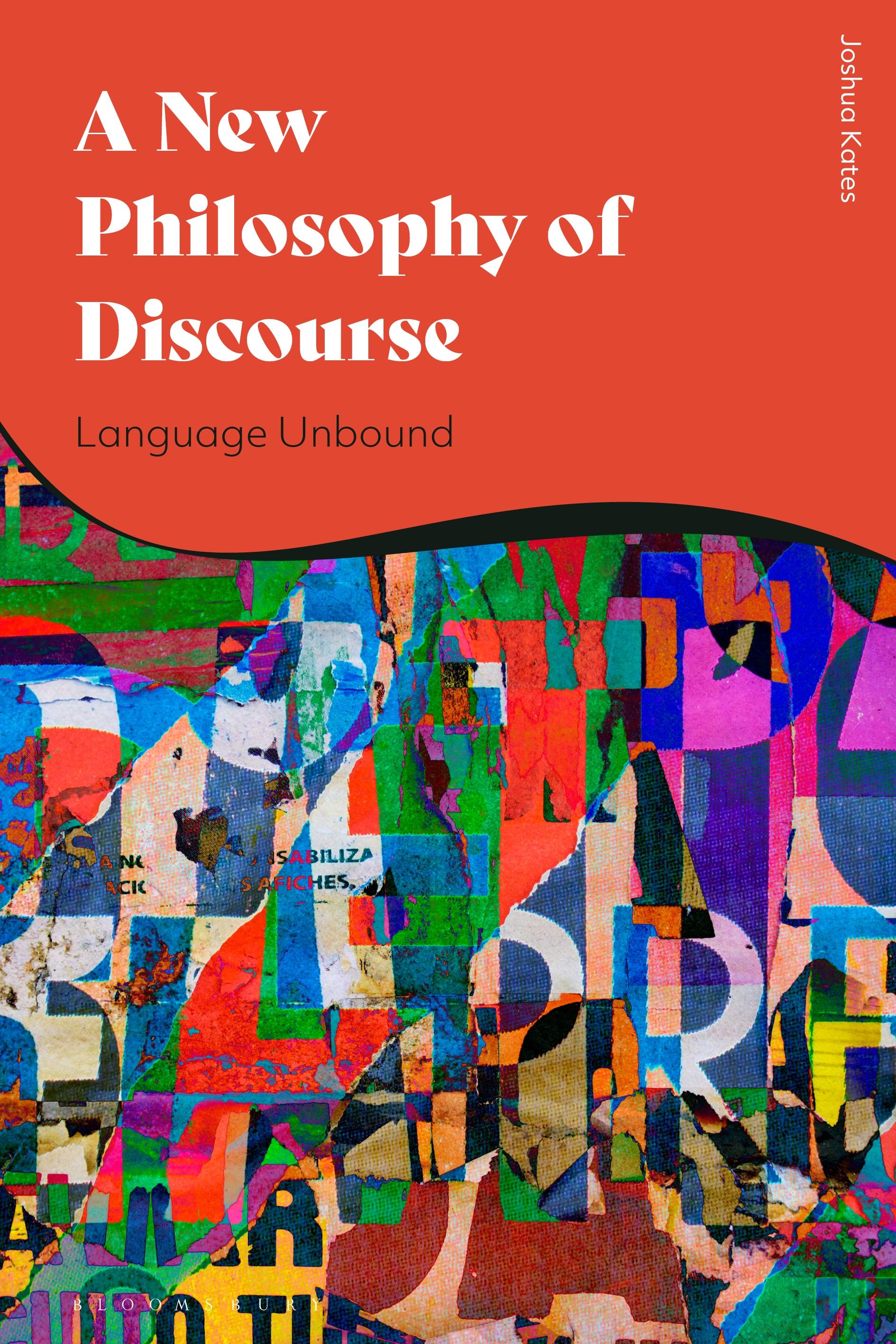
What would happen if structures, forms, and other stand-alone entities thought to comprise our intellectual toolkit-words, meanings, signs-were jettisoned? How would a work written in a purportedly dead language, like The Iliad, or penned in a foreign tongue be approached if deemed legible without structures such as meaning-bearing signs or grammatical rules?
A New Philosophy of Discourse charts a novel course in response to these questions, coining an original concept of discourse, or talk!, that Joshua Kates presents as more fundamental than language. In Kates' conception of discourse, writing and speech take shape entirely as events, situated within histories, contexts, and traditions themselves always in the making. Combining literary theory, literary criticism, and philosophy, to reveal a new perspective on discourse, Kates focuses on literary criticism, literary texts by Charles Bernstein and Stanley Elkin, and the philosophical writings of Stanley Cavell, Hans-Georg Gadamer, Donald Davidson and Martin Heidegger.
This ground-breaking study bridges the analytical/continental divide, by working through concrete problems using novel and extended interpretations with wide-ranging implications for the humanities.
A New Philosophy of Discourse charts a novel course in response to these questions, coining an original concept of discourse, or talk!, that Joshua Kates presents as more fundamental than language. In Kates' conception of discourse, writing and speech take shape entirely as events, situated within histories, contexts, and traditions themselves always in the making. Combining literary theory, literary criticism, and philosophy, to reveal a new perspective on discourse, Kates focuses on literary criticism, literary texts by Charles Bernstein and Stanley Elkin, and the philosophical writings of Stanley Cavell, Hans-Georg Gadamer, Donald Davidson and Martin Heidegger.
This ground-breaking study bridges the analytical/continental divide, by working through concrete problems using novel and extended interpretations with wide-ranging implications for the humanities.
Płać wygodnie kartą, Klarną, Apple Pay lub Google Pay. Nie jesteś zadowolony? Zawsze masz 14-dniową gwarancję zwrotu pieniędzy. Więcej przeczytasz w naszych warunkach. Masz pytania? Napisz do nas na hello@memmo.org.
Memmo ułatwia naukę – gdziekolwiek jesteś na świecie. U nas znajdziesz podręczniki i sprytne narzędzia do nauki w jednym miejscu: streszczenia, quizy, podcasty i fiszki. A do tego Ted, Twój kumpel do nauki, który odpowie na wszystko, co Cię nurtuje. Ponad 50 000 studentów już tu się uczy – stworzone, byś uczył się szybciej i mniej stresował.