
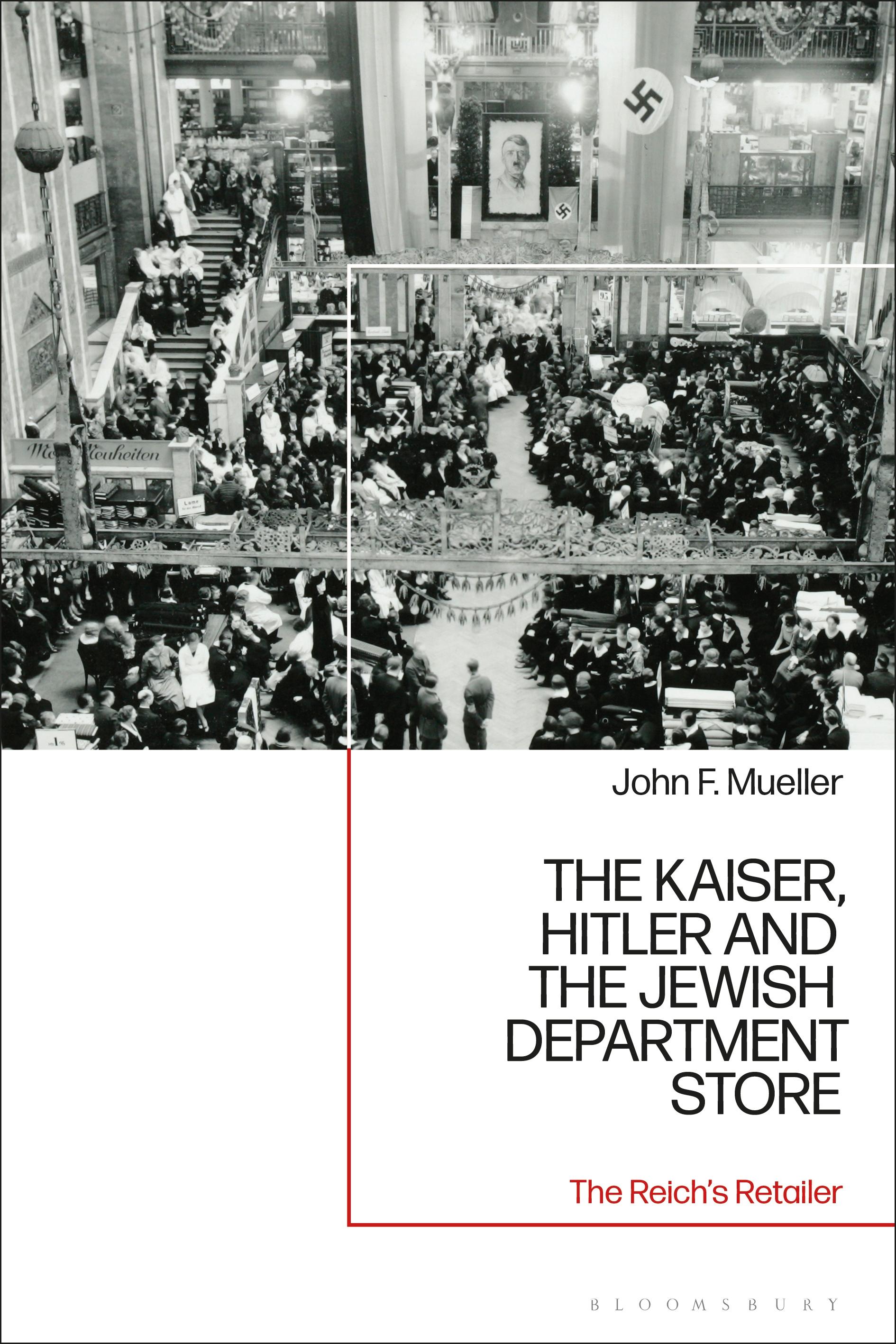
From the emergence of department stores in the late 19th century to the financial disasters of the years following the end of World War I, the history of large-scale retailing in Germany was dominated by a pioneering generation of German-Jewish entrepreneurs who found fortune and influence only to have their livelihoods taken by Hitler and the Nazis in the 1930s.
Drawing on a range of archival sources and private collections, The Kaiser, Hitler and the Jewish Department Store reveals how, contrary to Nazi claims, Jewish-owned department stores were decent employers, popular with customers, and well integrated into the economy. In fact, such institutions were so integral to German society that, when Hitler came to power in 1933, the Nazis were forced to abandon their pledge to abolish them. As this revelatory history argues, the end of the Jewish-run store cannot solely be attributed to the rise of antisemitism: it was also the consequence of financial mismanagement and the indifference of the German people.
John F. Mueller reveals the German-Jewish department store as a powerful force in society and politics as well as a leader in architecture and design. His book challenges common assumptions about the relationship between consumer culture, the German-Jewish business community and the rise of Nazism, providing fresh insights into the social history of modern Germany.
Drawing on a range of archival sources and private collections, The Kaiser, Hitler and the Jewish Department Store reveals how, contrary to Nazi claims, Jewish-owned department stores were decent employers, popular with customers, and well integrated into the economy. In fact, such institutions were so integral to German society that, when Hitler came to power in 1933, the Nazis were forced to abandon their pledge to abolish them. As this revelatory history argues, the end of the Jewish-run store cannot solely be attributed to the rise of antisemitism: it was also the consequence of financial mismanagement and the indifference of the German people.
John F. Mueller reveals the German-Jewish department store as a powerful force in society and politics as well as a leader in architecture and design. His book challenges common assumptions about the relationship between consumer culture, the German-Jewish business community and the rise of Nazism, providing fresh insights into the social history of modern Germany.
Płać wygodnie kartą, Klarną, Apple Pay lub Google Pay. Nie jesteś zadowolony? Zawsze masz 14-dniową gwarancję zwrotu pieniędzy. Więcej przeczytasz w naszych warunkach. Masz pytania? Napisz do nas na hello@memmo.org.
Memmo ułatwia naukę – gdziekolwiek jesteś na świecie. U nas znajdziesz podręczniki i sprytne narzędzia do nauki w jednym miejscu: streszczenia, quizy, podcasty i fiszki. A do tego Ted, Twój kumpel do nauki, który odpowie na wszystko, co Cię nurtuje. Ponad 50 000 studentów już tu się uczy – stworzone, byś uczył się szybciej i mniej stresował.