
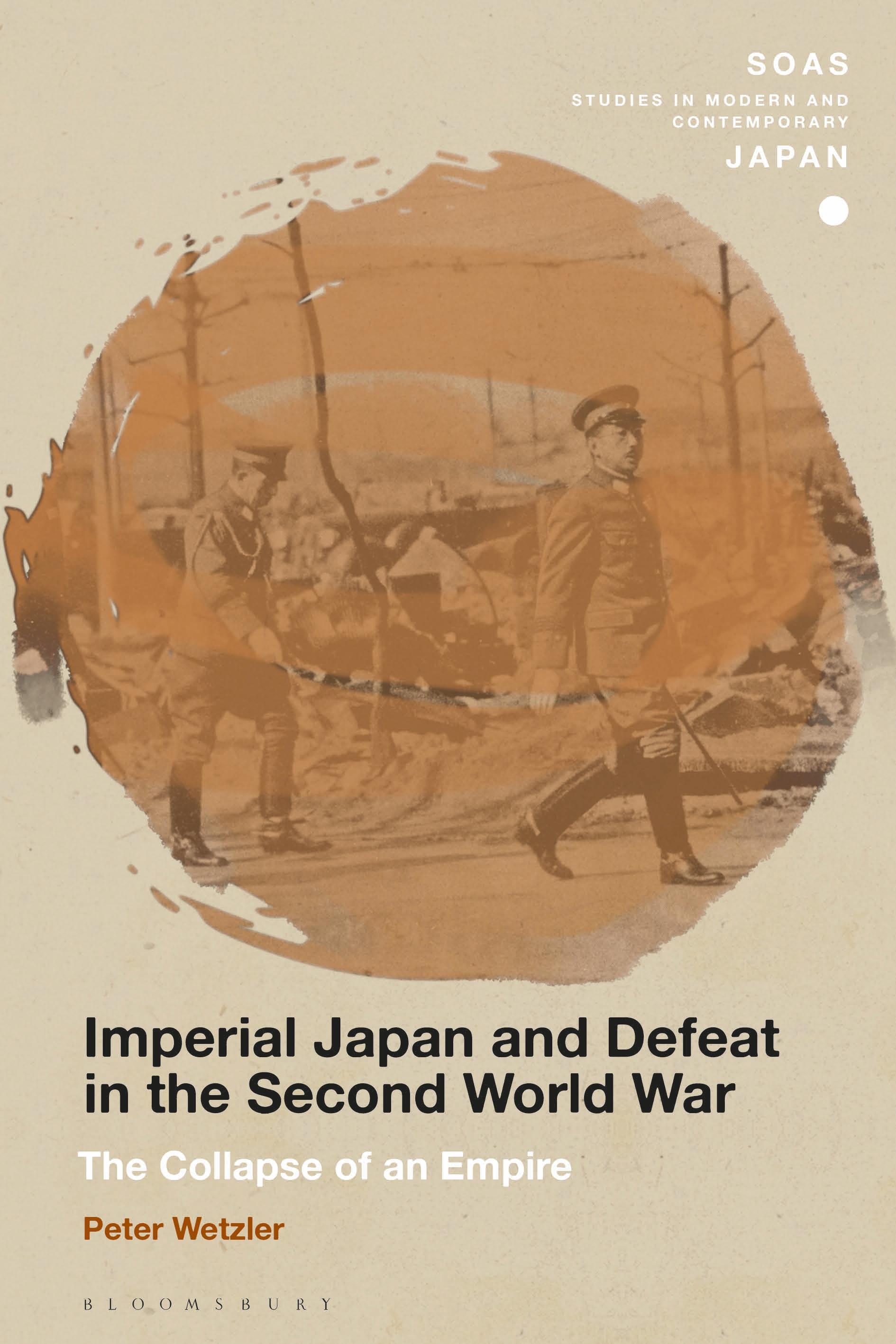
Informed Western understanding of Imperial Japan still often conjures up images of militarism, blind devotion to leaders, and fanatical pride in the country. But, as Imperial Japan and Defeat in the Second World War reveals, Western imagination is often reductive in its explanation of the Japanese Empire and its collapse. In his analysis of the Emperor, Imperial Japanese Army and Navy during the Second World War, Peter Wetzler examines the disconnect between nation and state during wartime Japan and in doing so offers a much-needed nuanced and sensitive corrective to existing Western scholarship.
Rooted in the perspective of the Japanese, Wetzler makes available to readers vital primary and secondary Japanese archival sources; most notably, this book provides the first English assessment of the recently-released Actual Record of the Showa Emperor. This book is an important advance in English-language studies of the Second World War in Asia, and is thus essential reading for all those wishing to understand this crucial period in Japanese history.
Rooted in the perspective of the Japanese, Wetzler makes available to readers vital primary and secondary Japanese archival sources; most notably, this book provides the first English assessment of the recently-released Actual Record of the Showa Emperor. This book is an important advance in English-language studies of the Second World War in Asia, and is thus essential reading for all those wishing to understand this crucial period in Japanese history.
Płać wygodnie kartą, Klarną, Apple Pay lub Google Pay. Nie jesteś zadowolony? Zawsze masz 14-dniową gwarancję zwrotu pieniędzy. Więcej przeczytasz w naszych warunkach. Masz pytania? Napisz do nas na hello@memmo.org.
Memmo ułatwia naukę – gdziekolwiek jesteś na świecie. U nas znajdziesz podręczniki i sprytne narzędzia do nauki w jednym miejscu: streszczenia, quizy, podcasty i fiszki. A do tego Ted, Twój kumpel do nauki, który odpowie na wszystko, co Cię nurtuje. Ponad 50 000 studentów już tu się uczy – stworzone, byś uczył się szybciej i mniej stresował.