
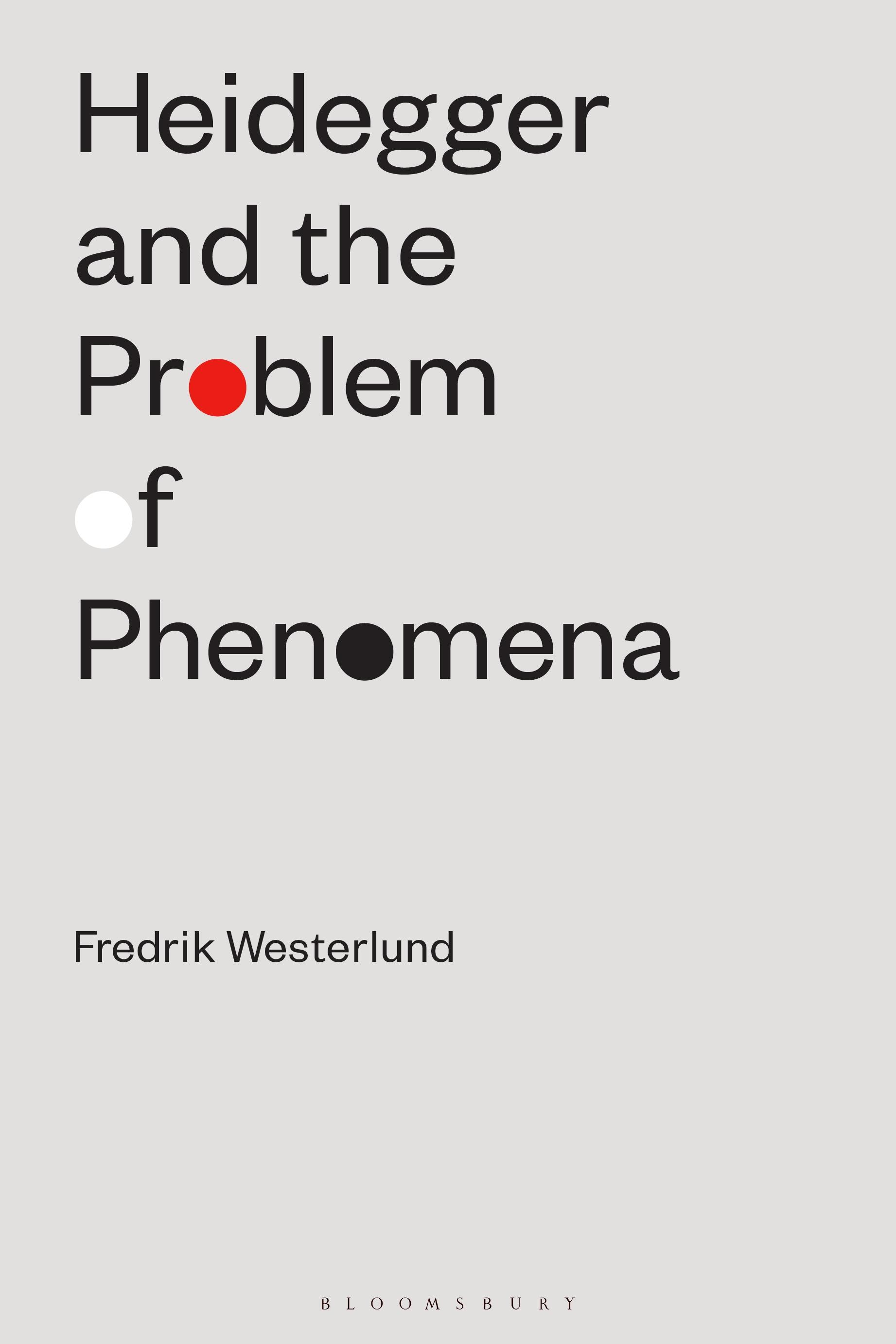
This book offers a broad critical study of Heidegger's lifelong effort to come to terms with the problem of phenomena and the nature of phenomenology: How do we experience beings as meaningful phenomena? What does it mean to phenomenologically describe and explicate our experience of phenomena?
The book is a chronological investigation of how Heidegger's struggle with the problem of phenomena unfolds during the main stages of his philosophical development: from the early Freiburg lecture courses 1919-1923, over the Marburg-period and the publication of Being and Time in 1927, up to his later thinking stretching from the 1930s to the early 1970s. A central theme of the book is the tension between, on the one hand, Heidegger's effort to elaborate Husserl's phenomenological approach by applying it to our pre-theoretical experience of existentially charged phenomena, and, on the other hand, his drive towards a radically historicist form of thinking. Heidegger's main critical engagements with Husserl are examined and assessed along the way.
Besides offering a new comprehensive interpretation of Heidegger's philosophical development, the book critically examines the philosophical power and problems of Heidegger's successive attempts to account for the structure of phenomena and the possibility of phenomenology. In particular, it develops a critique of Heidegger's radical historicism, arguing that it ultimately makes Heidegger unable to account either for the truth of our understanding or for the ethical-existential significance of other persons. The book also contains a chapter which probes the philosophical commitments that motivate Heidegger's political engagement in National Socialism.
The book is a chronological investigation of how Heidegger's struggle with the problem of phenomena unfolds during the main stages of his philosophical development: from the early Freiburg lecture courses 1919-1923, over the Marburg-period and the publication of Being and Time in 1927, up to his later thinking stretching from the 1930s to the early 1970s. A central theme of the book is the tension between, on the one hand, Heidegger's effort to elaborate Husserl's phenomenological approach by applying it to our pre-theoretical experience of existentially charged phenomena, and, on the other hand, his drive towards a radically historicist form of thinking. Heidegger's main critical engagements with Husserl are examined and assessed along the way.
Besides offering a new comprehensive interpretation of Heidegger's philosophical development, the book critically examines the philosophical power and problems of Heidegger's successive attempts to account for the structure of phenomena and the possibility of phenomenology. In particular, it develops a critique of Heidegger's radical historicism, arguing that it ultimately makes Heidegger unable to account either for the truth of our understanding or for the ethical-existential significance of other persons. The book also contains a chapter which probes the philosophical commitments that motivate Heidegger's political engagement in National Socialism.
Płać wygodnie kartą, Klarną, Apple Pay lub Google Pay. Nie jesteś zadowolony? Zawsze masz 14-dniową gwarancję zwrotu pieniędzy. Więcej przeczytasz w naszych warunkach. Masz pytania? Napisz do nas na hello@memmo.org.
Memmo ułatwia naukę – gdziekolwiek jesteś na świecie. U nas znajdziesz podręczniki i sprytne narzędzia do nauki w jednym miejscu: streszczenia, quizy, podcasty i fiszki. A do tego Ted, Twój kumpel do nauki, który odpowie na wszystko, co Cię nurtuje. Ponad 50 000 studentów już tu się uczy – stworzone, byś uczył się szybciej i mniej stresował.