
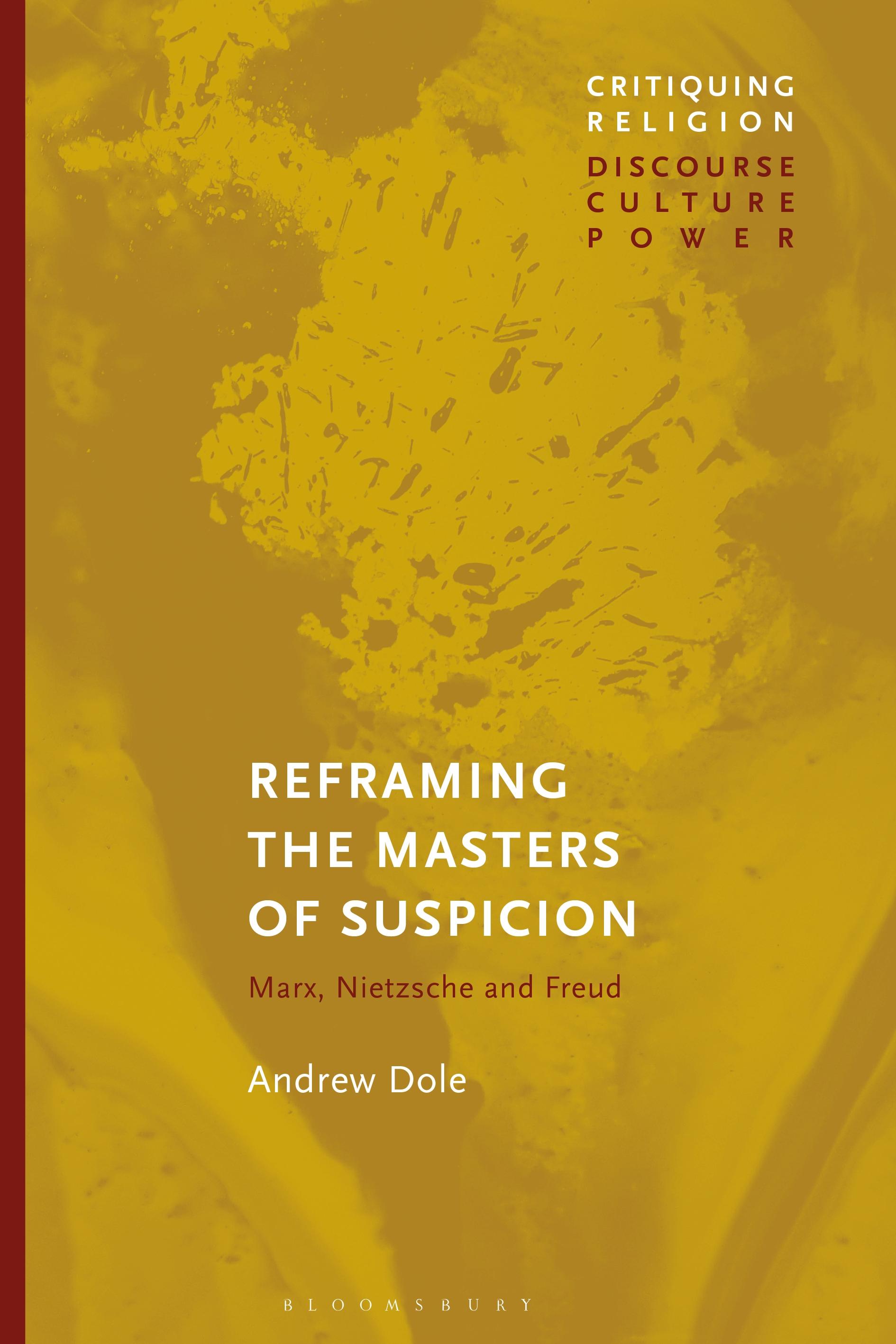
This book revisits Paul Ricoeur's classification of Karl Marx, Friedrich Nietzsche, and Sigmund Freud as the “masters of suspicion”, and provides a thought-provoking critique for critical religious studies scholars, as well as anyone working in critical theory more broadly. Whereas Ricoeur saw suspicion as a mode of interpretation, Andrew Dole argues that the method common to his “masters” is better understood as a mode of explanation. Dole replaces Ricoeur's hermeneutics of suspicion with suspicious explanation, which claims the existence of hidden phenomena that are bad in some recognizable way. Each of the masters, Dole argues, offered a distinct kind of suspicious explanation.
Reconstructing Marx, Nietzsche, and Freud in this way brings their work into conversation with conspiracy theories, which are themselves a type of suspicious explanation. Dole argues that conspiracy theories and other types of suspicious explanation are “cognitively ensnaring”, to borrow a term from Pascal Boyer. If they are true they are importantly true, but their truth or falsity can be very difficult to ascertain.
Reconstructing Marx, Nietzsche, and Freud in this way brings their work into conversation with conspiracy theories, which are themselves a type of suspicious explanation. Dole argues that conspiracy theories and other types of suspicious explanation are “cognitively ensnaring”, to borrow a term from Pascal Boyer. If they are true they are importantly true, but their truth or falsity can be very difficult to ascertain.
Płać wygodnie kartą, Klarną, Apple Pay lub Google Pay. Nie jesteś zadowolony? Zawsze masz 14-dniową gwarancję zwrotu pieniędzy. Więcej przeczytasz w naszych warunkach. Masz pytania? Napisz do nas na hello@memmo.org.
Memmo ułatwia naukę – gdziekolwiek jesteś na świecie. U nas znajdziesz podręczniki i sprytne narzędzia do nauki w jednym miejscu: streszczenia, quizy, podcasty i fiszki. A do tego Ted, Twój kumpel do nauki, który odpowie na wszystko, co Cię nurtuje. Ponad 50 000 studentów już tu się uczy – stworzone, byś uczył się szybciej i mniej stresował.