
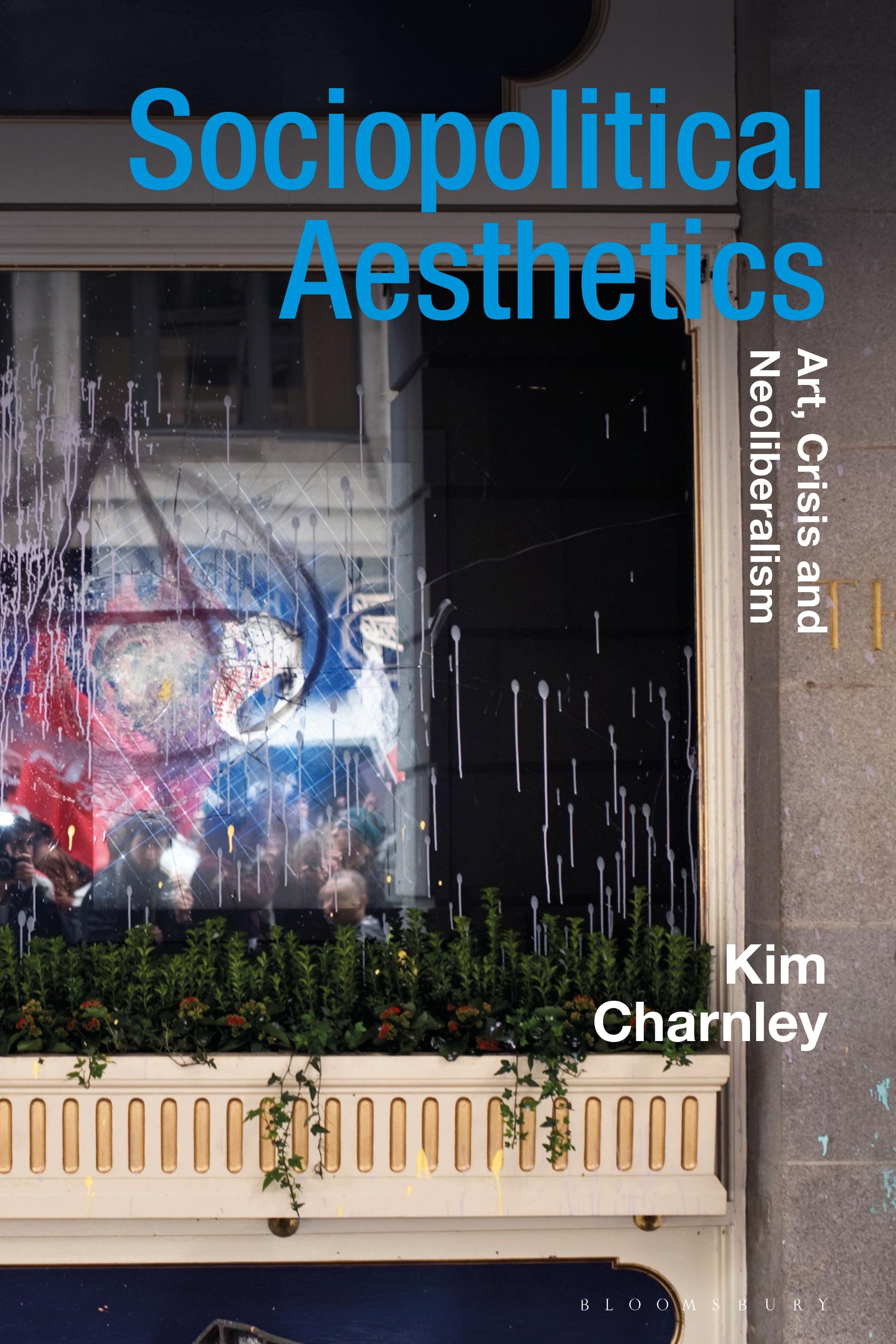
Since the turn of the millennium, protests, meetings, schoolrooms, reading groups and many other social forms have been proposed as artworks or, more ambiguously, as interventions that are somewhere between art and politics. This book surveys the resurgence of politicized art, tracing key currents of theory and practice, and mapping them against the dominant experience of the last decade: crisis.
Drawing upon leading artists and theorists within this field – including Hito Steyerl, Marina Vishmidt, Art & Language, Gregory Sholette, John Roberts and Dave Beech – this book argues for a new interpretation of the relationship between socially-engaged art and neoliberalism. Kim Charnley explores the possibility that neoliberalism has destabilized the art system so that it is no longer able to absorb and neutralize dissent. As a result, the relationship between aesthetics and politics is experienced with fresh urgency and militancy.
Drawing upon leading artists and theorists within this field – including Hito Steyerl, Marina Vishmidt, Art & Language, Gregory Sholette, John Roberts and Dave Beech – this book argues for a new interpretation of the relationship between socially-engaged art and neoliberalism. Kim Charnley explores the possibility that neoliberalism has destabilized the art system so that it is no longer able to absorb and neutralize dissent. As a result, the relationship between aesthetics and politics is experienced with fresh urgency and militancy.
Płać wygodnie kartą, Klarną, Apple Pay lub Google Pay. Nie jesteś zadowolony? Zawsze masz 14-dniową gwarancję zwrotu pieniędzy. Więcej przeczytasz w naszych warunkach. Masz pytania? Napisz do nas na hello@memmo.org.
Memmo ułatwia naukę – gdziekolwiek jesteś na świecie. U nas znajdziesz podręczniki i sprytne narzędzia do nauki w jednym miejscu: streszczenia, quizy, podcasty i fiszki. A do tego Ted, Twój kumpel do nauki, który odpowie na wszystko, co Cię nurtuje. Ponad 50 000 studentów już tu się uczy – stworzone, byś uczył się szybciej i mniej stresował.