
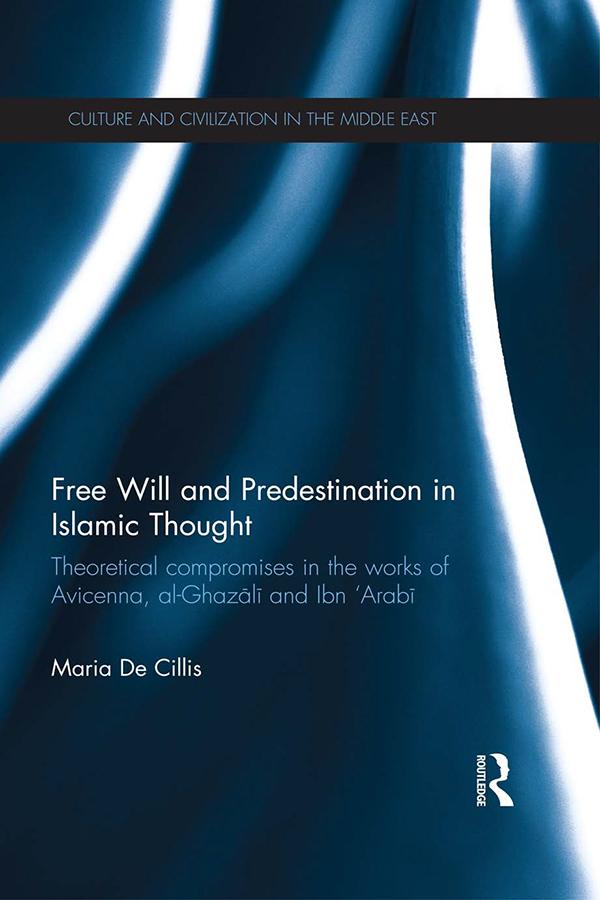
The subject of "human free-will" versus "divine predestination" is one of the most contentious topics in classical Islamic thought. By focusing on a theme of central importance to any philosophy of religion, and to Islam in particular, this book offers a critical study of the intellectual contributions offered to this discourse by three key medieval Islamic thinkers: Avicenna, al-Ghāzālī and Ibn ʿArabī.
Through investigation of primary sources, Free Will and Predestination in Islamic Thought establishes the historical, political and intellectual circumstances which prompted Avicenna, al-Ghāzālī and Ibn ʿArabī’s attempts at harmonization. By analysing the theoretical and linguistic ‘techniques’ which were employed to convey these endeavours, this book demonstrates that the three individuals were committed to compromise between philosophical, theological and mystical outlooks.
Arguing that the three scholars’ treatments of the so-called qaḍā wa’l-qadar (decree and destiny) and ikhtiyār (free-will) issues were innovative, influential and fundamentally more complex than hitherto recognized, this book contributes to a fuller understanding of Islamic intellectual history and culture and will be useful to researchers interested in Islamic Studies, Religion and Islamic Mysticism.
Płać wygodnie kartą, Klarną, Apple Pay lub Google Pay. Nie jesteś zadowolony? Zawsze masz 14-dniową gwarancję zwrotu pieniędzy. Więcej przeczytasz w naszych warunkach. Masz pytania? Napisz do nas na hello@memmo.org.
Memmo ułatwia naukę – gdziekolwiek jesteś na świecie. U nas znajdziesz podręczniki i sprytne narzędzia do nauki w jednym miejscu: streszczenia, quizy, podcasty i fiszki. A do tego Ted, Twój kumpel do nauki, który odpowie na wszystko, co Cię nurtuje. Ponad 50 000 studentów już tu się uczy – stworzone, byś uczył się szybciej i mniej stresował.