
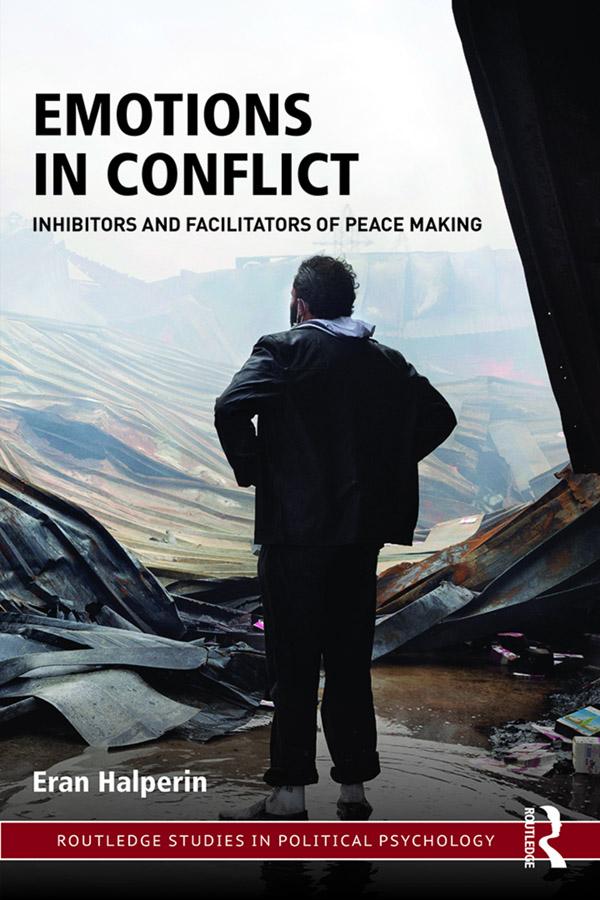
Social and political psychologists have attempted to reveal the reasons why individuals and societies that acknowledge that peace would improve their personal and collective well-being, and are aware of the required actions needed to promote it, are simply incapable of making this step forward. Some social psychologists have advocated the idea that certain societal beliefs and collective memories about the nature of the opponent, the in-group, the history, and the current state of the conflict distort the perceptions of society members and prevent them from identifying opportunities for peace. But these cognitive barriers capture only part of the picture.
Could identifying the role of discrete emotions in conflicts and conflict resolution potentially provide a wide platform for developing pinpoint conflict resolution interventions?
Using a vast array of primary sources, critical literature analysis, and firsthand personal experiences in various conflict zones (Middle East, Cyprus, Bosnia, and Northern Ireland), Eran Halperin introduces a new perspective on psychological barriers to peace. Halperin focuses on various emotional mechanisms that hamper peace processes, even when parties face real opportunities for conflict resolution. More specifically, he explores how hatred, anger, fear, angst, hope, despair, empathy, guilt, and shame, combined with various emotion regulation strategies, provide emotions-based explanations for people's attitudinal and behavioral reactions to peace-related events during the ongoing process of conflict resolution.
Written in a clear and accessible style, Emotions in Conflict offers a thought-provoking and pioneering insight into the role discrete intergroup emotions play in impeding, as well as facilitating, peace processes in intractable conflicts. This book is essential reading for those who study intractable conflicts and their resolutions, and those who are interested in the ‘real-world’ implication of recent theories and findings on emotion and emotion regulation.
Płać wygodnie kartą, Klarną, Apple Pay lub Google Pay. Nie jesteś zadowolony? Zawsze masz 14-dniową gwarancję zwrotu pieniędzy. Więcej przeczytasz w naszych warunkach. Masz pytania? Napisz do nas na hello@memmo.org.
Memmo ułatwia naukę – gdziekolwiek jesteś na świecie. U nas znajdziesz podręczniki i sprytne narzędzia do nauki w jednym miejscu: streszczenia, quizy, podcasty i fiszki. A do tego Ted, Twój kumpel do nauki, który odpowie na wszystko, co Cię nurtuje. Ponad 50 000 studentów już tu się uczy – stworzone, byś uczył się szybciej i mniej stresował.