
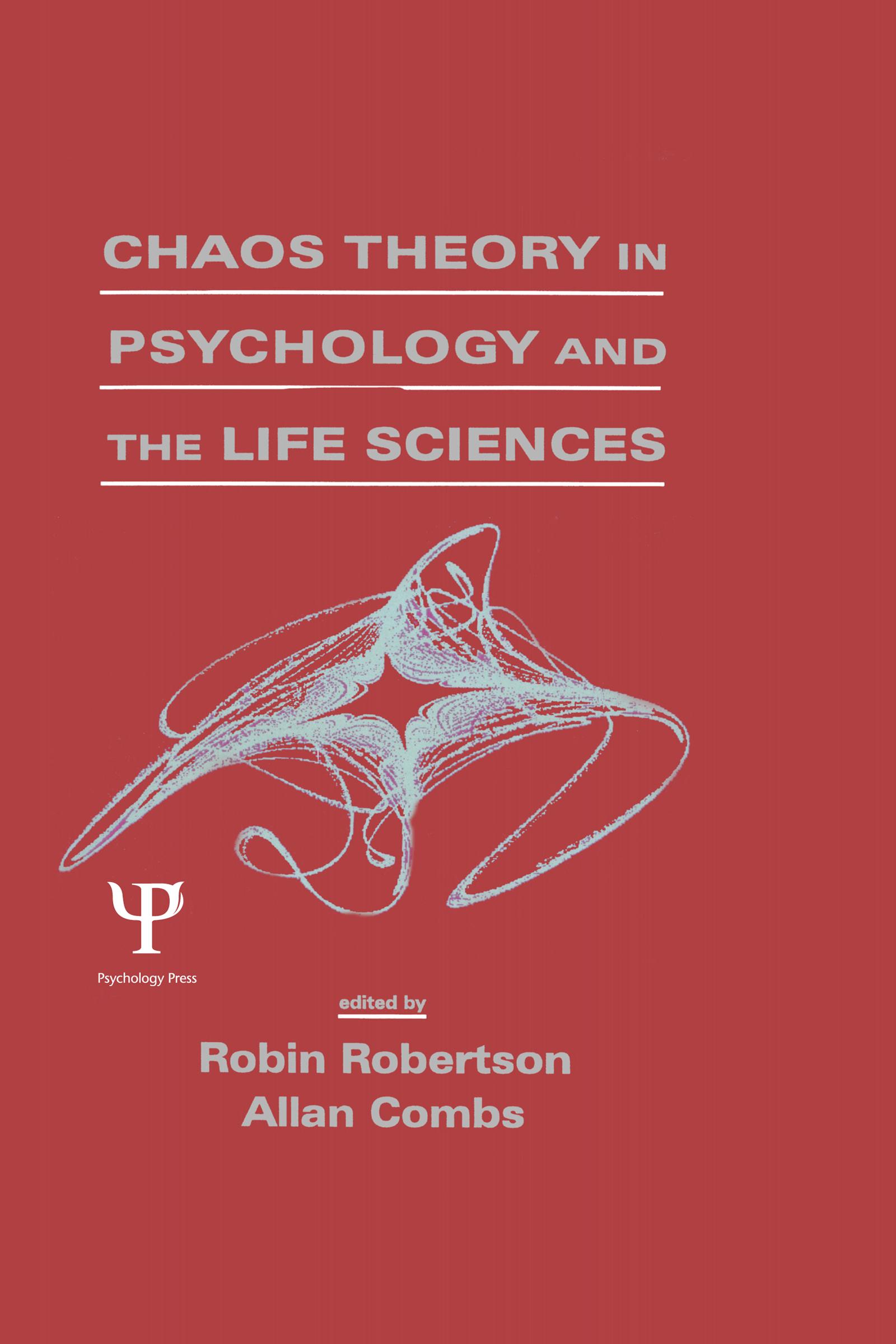
This book represents the best of the first three years of the Society for Chaos Theory in Psychology conferences. While chaos theory has been a topic of considerable interest in the physical and biological sciences, its applications in psychology and related fields have been obscured until recently by its complexity. Nevertheless, a small but rapidly growing community of psychologists, neurobiologists, sociologists, mathematicians, and philosophers have been coming together to discuss its implications and explore its research possibilities.
Chaos theory has been termed the first authentic paradigm shift since the advent of quantum physics. Whether this is true or not, it unquestionably bears profound implications for many fields of thought. These include the cognitive analysis of the mind, the nature of personality, the dynamics of psychotherapy and counseling, understanding brain events and behavioral records, the dynamics of social organization, and the psychology of prediction. To each of these topics, chaos theory brings the perspective of dynamic self-organizing processes of exquisite complexity. Behavior, the nervous system, and social processes exhibit many of the classical characteristics of chaotic systems -- they are deterministic and globally predictable and yet do not submit to precise predictability.
This volume is the first to explore ideas from chaos theory in a broad, psychological perspective. Its introduction, by the prominent neuroscientist Walter Freeman, sets the tone for diverse discussions of the role of chaos theory in behavioral research, the study of personality, psychotherapy and counseling, mathematical cognitive psychology, social organization, systems philosophy, and the understanding of the brain.
Płać wygodnie kartą, Klarną, Apple Pay lub Google Pay. Nie jesteś zadowolony? Zawsze masz 14-dniową gwarancję zwrotu pieniędzy. Więcej przeczytasz w naszych warunkach. Masz pytania? Napisz do nas na hello@memmo.org.
Memmo ułatwia naukę – gdziekolwiek jesteś na świecie. U nas znajdziesz podręczniki i sprytne narzędzia do nauki w jednym miejscu: streszczenia, quizy, podcasty i fiszki. A do tego Ted, Twój kumpel do nauki, który odpowie na wszystko, co Cię nurtuje. Ponad 50 000 studentów już tu się uczy – stworzone, byś uczył się szybciej i mniej stresował.