
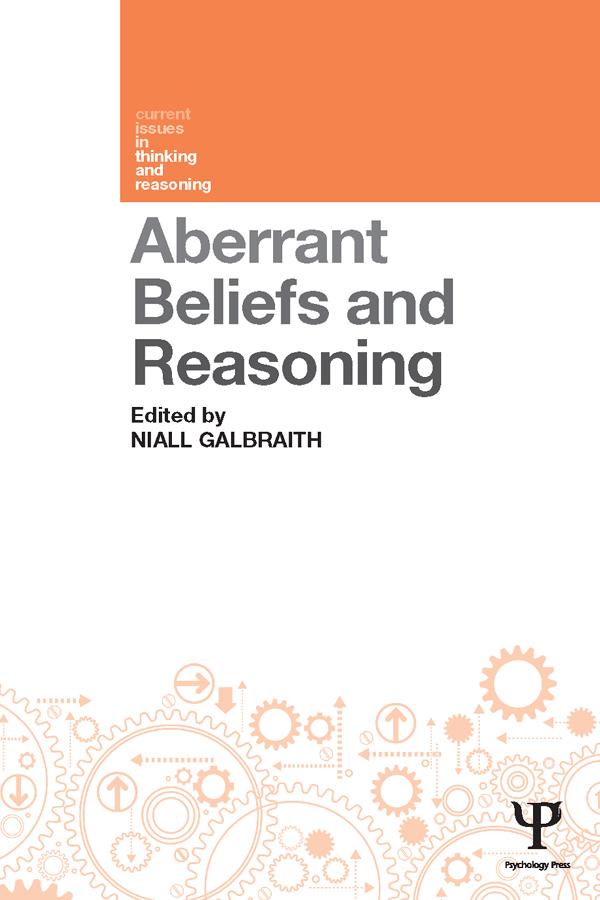
An aberrant belief is extreme or unusual in nature. In the most serious cases these beliefs cause emotional distress in those who hold them, and typify the core symptoms of psychological disorders. Each of the chapters in this volume seeks to examine the role that biases in reasoning can play in the formation of aberrant beliefs.
The chapters consider several conjectures about the role of reasoning in aberrant belief, including the role of the jumping to conclusion bias in delusional beliefs, the probabilistic bias in paranormal beliefs, the role of danger confirming reasoning in phobias, and the controversial notion that people with schizophrenia do not succumb to specific forms of reasoning bias. There are also chapters evaluating different theoretical perspectives, and suggestions for future research.
Aberrant Beliefs and Reasoning is the first volume presenting an overview of contemporary research in this growing subject area. It will be essential reading for academics and students in the fields of human reasoning, cognitive psychology and philosophy, and will also be of great interest to clinicians and psychiatrists.
Płać wygodnie kartą, Klarną, Apple Pay lub Google Pay. Nie jesteś zadowolony? Zawsze masz 14-dniową gwarancję zwrotu pieniędzy. Więcej przeczytasz w naszych warunkach. Masz pytania? Napisz do nas na hello@memmo.org.
Memmo ułatwia naukę – gdziekolwiek jesteś na świecie. U nas znajdziesz podręczniki i sprytne narzędzia do nauki w jednym miejscu: streszczenia, quizy, podcasty i fiszki. A do tego Ted, Twój kumpel do nauki, który odpowie na wszystko, co Cię nurtuje. Ponad 50 000 studentów już tu się uczy – stworzone, byś uczył się szybciej i mniej stresował.