
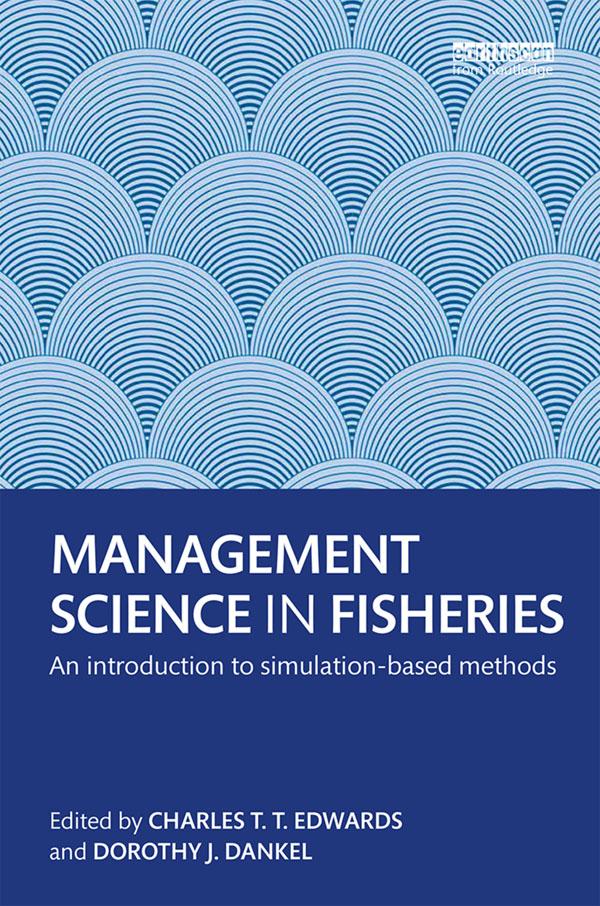
A key goal of fisheries management is to regulate extractive pressure on a resource so as to ensure social, economic and ecological sustainability. This text provides an accessible entry point for students and professionals to management science as developed in fisheries, in order to facilitate uptake of the latest ideas and methods.
Traditional management approaches have relied upon a stock assessment based on existing understanding of resource status and dynamics, and a prediction of the likely future response to a static management proposal. However all such predictions include an inherent degree of uncertainty, and the last few decades have seen the emergence of an adaptive approach that uses feedback control to account for unknown future behaviour. Feedback is achieved via a control rule, which defines a relationship between perceived status of the resource and a management action. Evaluations of such rules usually include computer simulation testing across a broad range of uncertainties, so that an appropriate and robust rule can be selected by stakeholders and managers. The book focuses on this approach, which is usually referred to as Management Strategy Evaluation.
The book is enriched by case study examples from different parts of the world, as well as insights into the theory and practice from those actively involved in the science of fisheries management.
Płać wygodnie kartą, Klarną, Apple Pay lub Google Pay. Nie jesteś zadowolony? Zawsze masz 14-dniową gwarancję zwrotu pieniędzy. Więcej przeczytasz w naszych warunkach. Masz pytania? Napisz do nas na hello@memmo.org.
Memmo ułatwia naukę – gdziekolwiek jesteś na świecie. U nas znajdziesz podręczniki i sprytne narzędzia do nauki w jednym miejscu: streszczenia, quizy, podcasty i fiszki. A do tego Ted, Twój kumpel do nauki, który odpowie na wszystko, co Cię nurtuje. Ponad 50 000 studentów już tu się uczy – stworzone, byś uczył się szybciej i mniej stresował.