
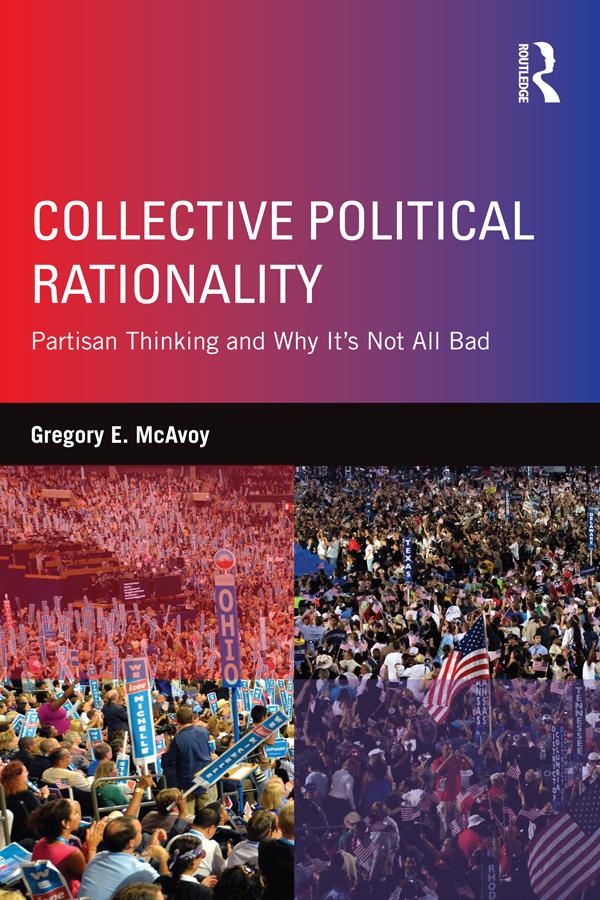
Amidst the polarization of contemporary politics, partisan loyalties among citizens are regarded as one contributor to political stalemate. Partisan loyalties lead Democrats and Republicans to look at the same economic information but to come to strikingly different conclusions about the state of the economy and the performance of the president in managing it. As a result, many observers argue that democratic politics would work better if citizens would shed their party loyalty and more dispassionately assess political and economic news.
In this book, Gregory E. McAvoy argues—contra this conventional wisdom; that partisanship is a necessary feature of modern politics, making it feasible for citizens to make some sense of the vast number of issues that make their way onto the political agenda. Using unique data, he shows that the biases and distortions that partisanship introduces to collective opinion are real, but despite them, collective opinion changes meaningfully in response to economic and political news. In a comparison of the public’s assessment of the economy to those of economic experts, he finds a close correspondence between the two over time, and that in modern democracies an informed public will also necessarily be partisan.
Modernizing the study of collective opinion, McAvoy's book is essential reading for scholars of American Public Opinion and Political Behavior.
Płać wygodnie kartą, Klarną, Apple Pay lub Google Pay. Nie jesteś zadowolony? Zawsze masz 14-dniową gwarancję zwrotu pieniędzy. Więcej przeczytasz w naszych warunkach. Masz pytania? Napisz do nas na hello@memmo.org.
Memmo ułatwia naukę – gdziekolwiek jesteś na świecie. U nas znajdziesz podręczniki i sprytne narzędzia do nauki w jednym miejscu: streszczenia, quizy, podcasty i fiszki. A do tego Ted, Twój kumpel do nauki, który odpowie na wszystko, co Cię nurtuje. Ponad 50 000 studentów już tu się uczy – stworzone, byś uczył się szybciej i mniej stresował.