
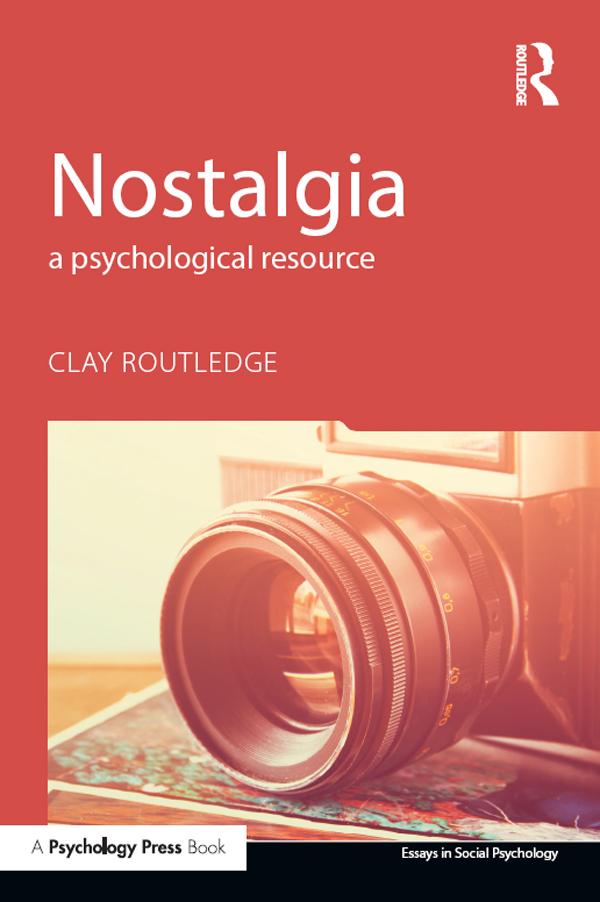
Nostalgia is a topic that most lay people are familiar with, but, until recently, few social scientists understood. Once viewed as a disease, nostalgia is now considered to be an important psychological resource. It involves revisiting personally cherished memories that involve close others. When people engage in nostalgia, they experience a boost in positive psychological states such as positive mood, feelings of social connectedness, self-esteem, self-continuity, and perceptions of meaning in life. Since nostalgia promotes these positive states, when people experience negative states (such as loneliness or meaninglessness), they use nostalgia to regulate distress.
This book explains in detail what nostalgia is, how views of it have changed over time, and how it has been studied by social scientists. It explores issues like how common nostalgia is and whether people differ in their tendency to be nostalgic. It looks at the triggers and inspiration for nostalgia, and the emotional states that are associated with it. Finally, the psychological, social, and behavioral effects of engaging in nostalgia are discussed.
This volume provides the most comprehensive overview to date of the social scientific research into the complex and intriguing phenomenon of nostalgia. It will be of interest to a range of students and researchers in psychology and beyond, and its accessible writing style and engaging anecdotes will also be appreciated by a wider, non-academic audience.
Płać wygodnie kartą, Klarną, Apple Pay lub Google Pay. Nie jesteś zadowolony? Zawsze masz 14-dniową gwarancję zwrotu pieniędzy. Więcej przeczytasz w naszych warunkach. Masz pytania? Napisz do nas na hello@memmo.org.
Memmo ułatwia naukę – gdziekolwiek jesteś na świecie. U nas znajdziesz podręczniki i sprytne narzędzia do nauki w jednym miejscu: streszczenia, quizy, podcasty i fiszki. A do tego Ted, Twój kumpel do nauki, który odpowie na wszystko, co Cię nurtuje. Ponad 50 000 studentów już tu się uczy – stworzone, byś uczył się szybciej i mniej stresował.