
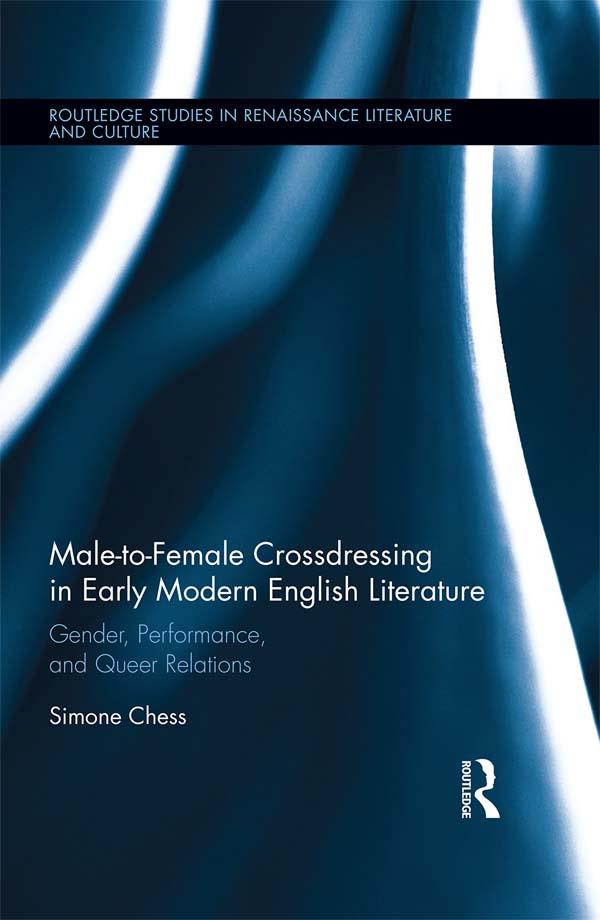
This volume examines and theorizes the oft-ignored phenomenon of male-to-female (MTF) crossdressing in early modern drama, prose, and poetry, inviting MTF crossdressing episodes to take a fuller place alongside instances of female-to-male crossdressing and boy actors’ crossdressing, which have long held the spotlight in early modern gender studies. The author argues that MTF crossdressing episodes are especially rich sources for socially-oriented readings of queer gender—that crossdressers’ genders are constructed and represented in relation to romantic partners, communities, and broader social structures like marriage, economy, and sexuality. Further, she argues that these relational representations show that the crossdresser and his/her allies often benefit financially, socially, and erotically from his/her queer gender presentation, a corrective to the dominant idea that queer gender has always been associated with shame, containment, and correction. By attending to these relational and beneficial representations of MTF crossdressers in early modern literature, the volume helps to make a larger space for queer, genderqueer, male-bodied and queer-feminine representations in our conversations about early modern gender and sexuality.
Płać wygodnie kartą, Klarną, Apple Pay lub Google Pay. Nie jesteś zadowolony? Zawsze masz 14-dniową gwarancję zwrotu pieniędzy. Więcej przeczytasz w naszych warunkach. Masz pytania? Napisz do nas na hello@memmo.org.
Memmo ułatwia naukę – gdziekolwiek jesteś na świecie. U nas znajdziesz podręczniki i sprytne narzędzia do nauki w jednym miejscu: streszczenia, quizy, podcasty i fiszki. A do tego Ted, Twój kumpel do nauki, który odpowie na wszystko, co Cię nurtuje. Ponad 50 000 studentów już tu się uczy – stworzone, byś uczył się szybciej i mniej stresował.