
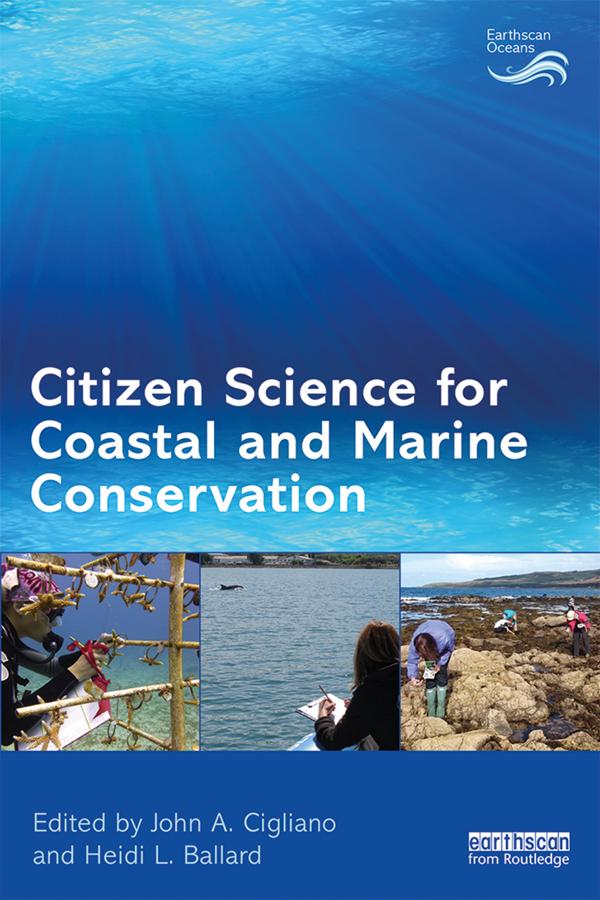
In recent years, citizen science has emerged as a powerful new concept to enable the general public, students, and volunteers to become involved in scientific research. A prime example is in biodiversity conservation, where data collection and monitoring can be greatly enhanced through citizen participation. This is the first book to provide much needed guidance and case studies from marine and coastal conservation.
The novelty and rapid expansion of the field has created a demand for the discussion of key issues and the development of best practices. The book demonstrates the utility and feasibility, as well as limitations, of using marine and coastal citizen science for conservation, and by providing critical considerations (i.e.which questions and systems are best suited for citizen science), presents recommendations for best practices for successful marine and coastal citizen science projects.
A range of case studies, for example, on monitoring of seabird populations, invasive species, plastics pollution, and the impacts of climate change, from different parts of the world, is included. Also included are discussions on engaging youth, indigenous communities, and divers and snorkelers as citizen scientists, as well as best practices on communication within citizen science, building trust with stakeholders, and informing marine policy as part of this exciting and empowering way of improving marine and coastal conservation.
.
Płać wygodnie kartą, Klarną, Apple Pay lub Google Pay. Nie jesteś zadowolony? Zawsze masz 14-dniową gwarancję zwrotu pieniędzy. Więcej przeczytasz w naszych warunkach. Masz pytania? Napisz do nas na hello@memmo.org.
Memmo ułatwia naukę – gdziekolwiek jesteś na świecie. U nas znajdziesz podręczniki i sprytne narzędzia do nauki w jednym miejscu: streszczenia, quizy, podcasty i fiszki. A do tego Ted, Twój kumpel do nauki, który odpowie na wszystko, co Cię nurtuje. Ponad 50 000 studentów już tu się uczy – stworzone, byś uczył się szybciej i mniej stresował.