
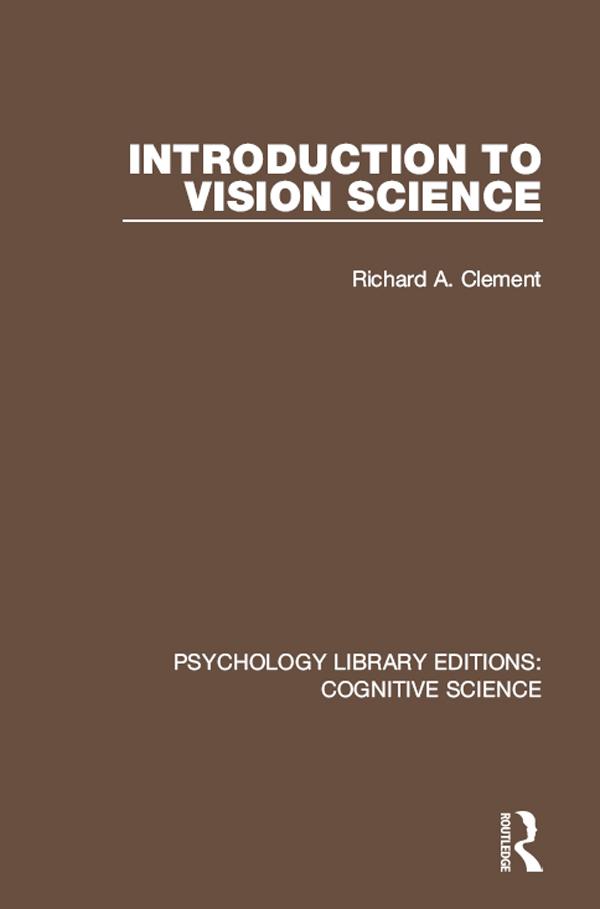
Different animals have different visual systems and so presumably have different ways of seeing. How does the way in which we see depend on the optical, neural and motor components of our visual systems? Originally published in 1993, the mathematical tools needed to answer this question are introduced in this book. Elementary linear algebra is used to describe the transformations of the stimulus that occur in the formation of the optical, neural and motor images in the human visual system. The distinctive feature of the approach is that transformations are specified with enough rigour for readers to be able to set up their own models and generate predictions from them.
Underlying the approach of this book is the goal of providing a self-contained source for the derivation of the basic equations of vision science. An introductory section on vector and matrix algebra covers the mathematical techniques which are applied to both sensory and motor aspects of the visual system, and the intervening steps in the mathematical arguments are given in full, in order to make the derivation of the equations easier to follow.
A subsidiary goal of this book is to demonstrate the utility of current desktop computer packages which make the application of mathematics very easy. All the numerical results were produced using only a spreadsheet or mathematics package, and example calculations are included in the text.
Płać wygodnie kartą, Klarną, Apple Pay lub Google Pay. Nie jesteś zadowolony? Zawsze masz 14-dniową gwarancję zwrotu pieniędzy. Więcej przeczytasz w naszych warunkach. Masz pytania? Napisz do nas na hello@memmo.org.
Memmo ułatwia naukę – gdziekolwiek jesteś na świecie. U nas znajdziesz podręczniki i sprytne narzędzia do nauki w jednym miejscu: streszczenia, quizy, podcasty i fiszki. A do tego Ted, Twój kumpel do nauki, który odpowie na wszystko, co Cię nurtuje. Ponad 50 000 studentów już tu się uczy – stworzone, byś uczył się szybciej i mniej stresował.