
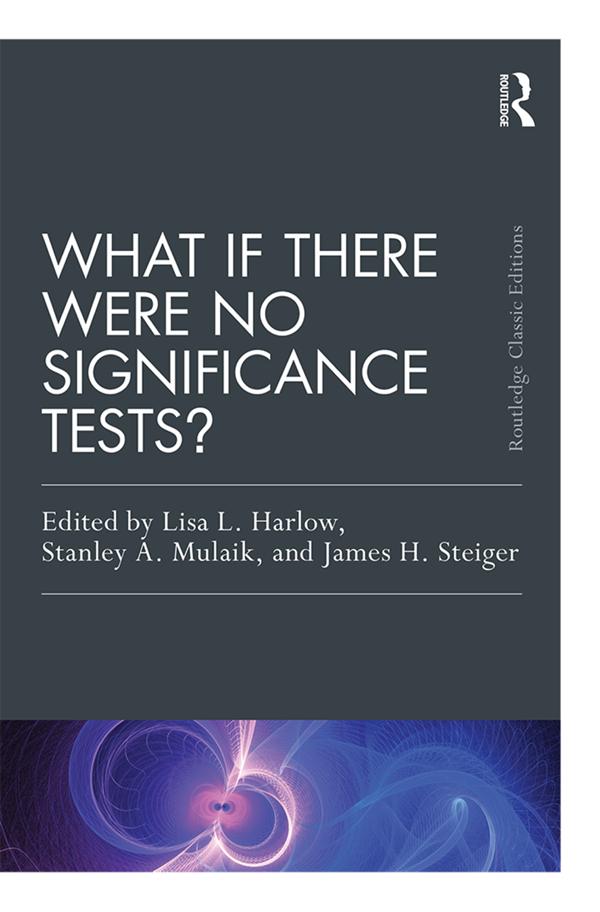
The classic edition of What If There Were No Significance Tests? highlights current statistical inference practices. Four areas are featured as essential for making inferences: sound judgment, meaningful research questions, relevant design, and assessing fit in multiple ways. Other options (data visualization, replication or meta-analysis), other features (mediation, moderation, multiple levels or classes), and other approaches (Bayesian analysis, simulation, data mining, qualitative inquiry) are also suggested.
The Classic Edition’s new Introduction demonstrates the ongoing relevance of the topic and the charge to move away from an exclusive focus on NHST, along with new methods to help make significance testing more accessible to a wider body of researchers to improve our ability to make more accurate statistical inferences. Part 1 presents an overview of significance testing issues. The next part discusses the debate in which significance testing should be rejected or retained. The third part outlines various methods that may supplement significance testing procedures. Part 4 discusses Bayesian approaches and methods and the use of confidence intervals versus significance tests. The book concludes with philosophy of science perspectives.
Rather than providing definitive prescriptions, the chapters are largely suggestive of general issues, concerns, and application guidelines. The editors allow readers to choose the best way to conduct hypothesis testing in their respective fields. For anyone doing research in the social sciences, this book is bound to become "must" reading. Ideal for use as a supplement for graduate courses in statistics or quantitative analysis taught in psychology, education, business, nursing, medicine, and the social sciences, the book also benefits independent researchers in the behavioral and social sciences and those who teach statistics.
Płać wygodnie kartą, Klarną, Apple Pay lub Google Pay. Nie jesteś zadowolony? Zawsze masz 14-dniową gwarancję zwrotu pieniędzy. Więcej przeczytasz w naszych warunkach. Masz pytania? Napisz do nas na hello@memmo.org.
Memmo ułatwia naukę – gdziekolwiek jesteś na świecie. U nas znajdziesz podręczniki i sprytne narzędzia do nauki w jednym miejscu: streszczenia, quizy, podcasty i fiszki. A do tego Ted, Twój kumpel do nauki, który odpowie na wszystko, co Cię nurtuje. Ponad 50 000 studentów już tu się uczy – stworzone, byś uczył się szybciej i mniej stresował.