
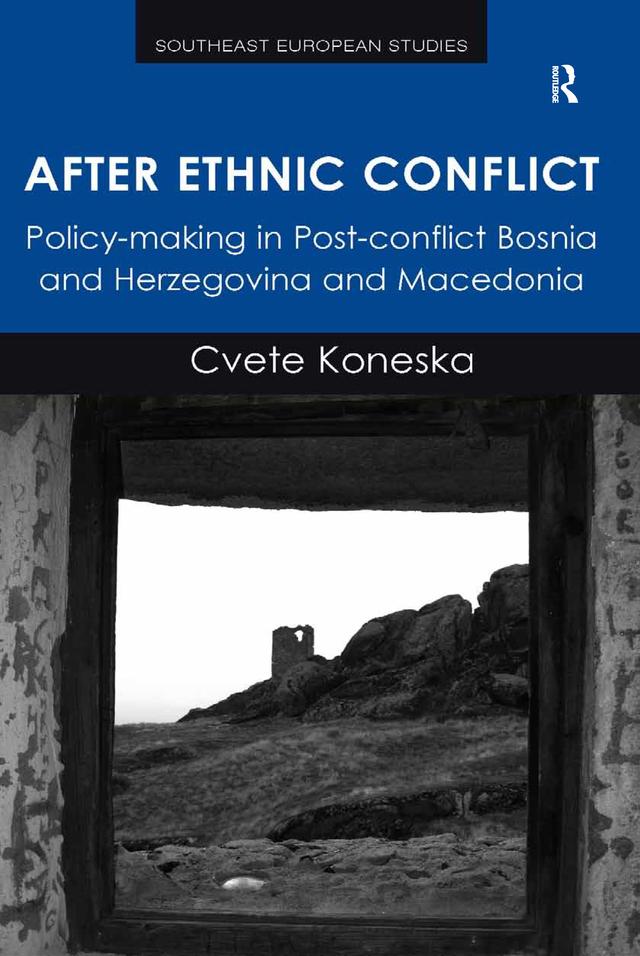
After Ethnic Conflict: Policy-making in Post-conflict Bosnia and Herzegovina and Macedonia investigates how sensitive policy issues can be resolved in the aftermath of war by investigating how political elites interact and make decisions in ethnically divided societies. Focussing on the interactions between political elites and attempts to reach agreement across ethnic lines in Bosnia and Macedonia the book examines the impact that institutional factors can have on political actors and the decisions they make. Examining domestic factors and external influence in politics, Cvete Koneska identifies four key drivers of post-conflict cooperation: cross-cutting identities, minority veto powers, territorial autonomy, and informal practices to explain inter-ethnic political accommodation. By looking beyond the immediate post-conflict landscape, created by foreign peace negotiators and aid missions, to the internal political process she shows the real reasons political actors cooperate and how competing ethnic tensions are reconciled following ethnic conflict. Delving deeper into specific policy areas to compare successful and unsuccessful attempts at ethnic accommodation this book explores the factors behind the different policy outcomes that sustain or undermine peace and ethnic cooperation in ethnically divided societies.
Płać wygodnie kartą, Klarną, Apple Pay lub Google Pay. Nie jesteś zadowolony? Zawsze masz 14-dniową gwarancję zwrotu pieniędzy. Więcej przeczytasz w naszych warunkach. Masz pytania? Napisz do nas na hello@memmo.org.
Memmo ułatwia naukę – gdziekolwiek jesteś na świecie. U nas znajdziesz podręczniki i sprytne narzędzia do nauki w jednym miejscu: streszczenia, quizy, podcasty i fiszki. A do tego Ted, Twój kumpel do nauki, który odpowie na wszystko, co Cię nurtuje. Ponad 50 000 studentów już tu się uczy – stworzone, byś uczył się szybciej i mniej stresował.
Może Ci się spodobać
Kup książkę0