
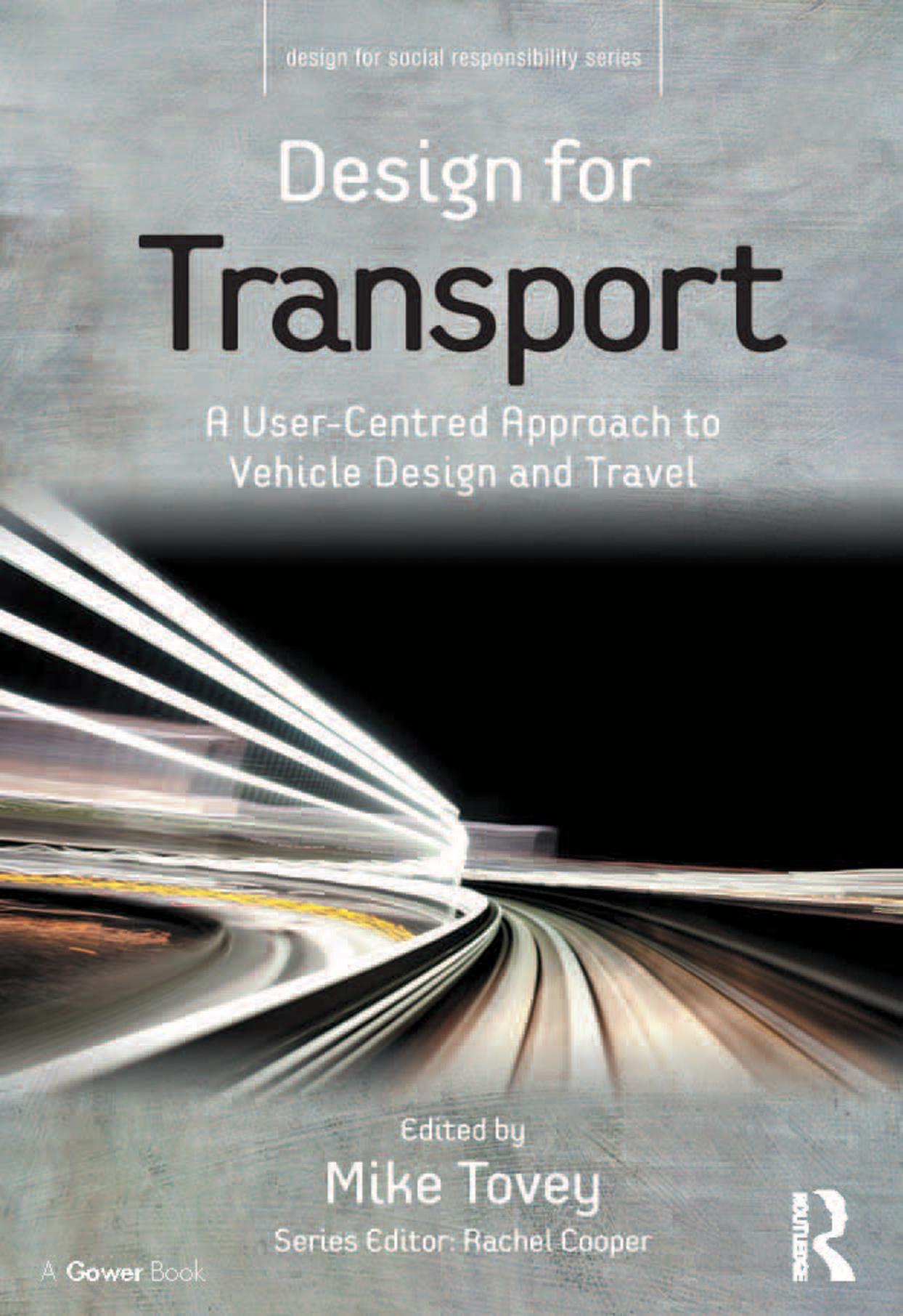
The central premise of Design for Transport is that the designer's role is to approach design for transport from the point of view of the user. People have a collection of wants and needs and a significant proportion of them are to do with their requirements for mobility. The authors show how creative designers can take a user-focused approach for a wide range of types of transport products and systems. In so doing their starting point is one of creative dissatisfaction with what is currently available, and their specialist capability is in imagining and developing new solutions which respond to that opportunity. How this is tackled varies depending on the context, and the variety of solutions produced reflects the different aspirations and needs of the people they are designing for. The chapters cover user needs and transport, design and the transport system, transport design case studies, and the case for the automobile. A conclusion briefly signals what the future for transport design might be. Lavishly illustrated throughout in four-colour, Design for Transport, is an imaginative and rigorous guide to how designers can take a user-centred and socially responsible approach to tackling a range of types of transport, from systems to products and from bicycles to automobiles, demonstrating a rich array of solutions through case studies.
Płać wygodnie kartą, Klarną, Apple Pay lub Google Pay. Nie jesteś zadowolony? Zawsze masz 14-dniową gwarancję zwrotu pieniędzy. Więcej przeczytasz w naszych warunkach. Masz pytania? Napisz do nas na hello@memmo.org.
Memmo ułatwia naukę – gdziekolwiek jesteś na świecie. U nas znajdziesz podręczniki i sprytne narzędzia do nauki w jednym miejscu: streszczenia, quizy, podcasty i fiszki. A do tego Ted, Twój kumpel do nauki, który odpowie na wszystko, co Cię nurtuje. Ponad 50 000 studentów już tu się uczy – stworzone, byś uczył się szybciej i mniej stresował.
Może Ci się spodobać
Kup książkę0