
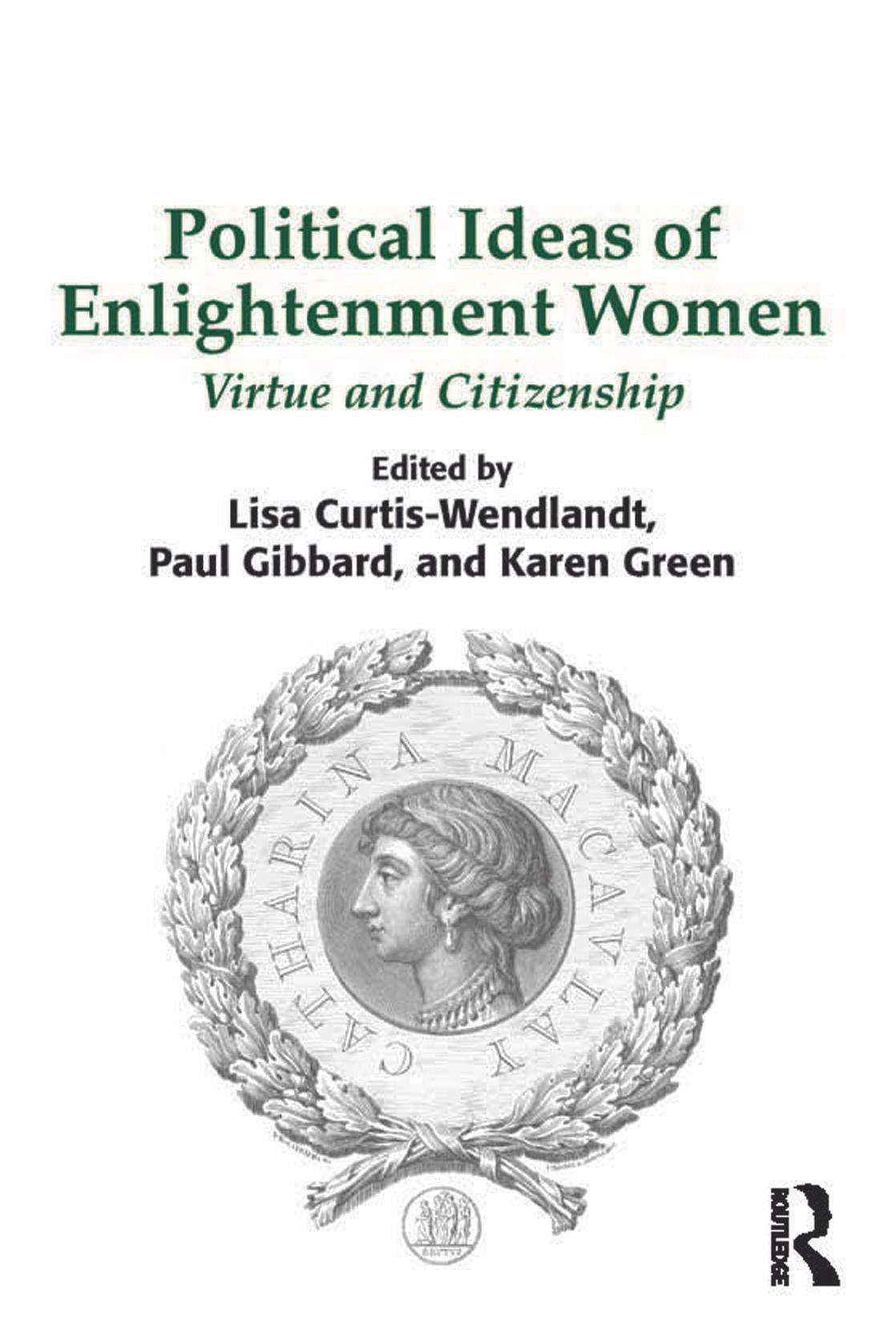
This edited collection showcases the contribution of women to the development of political ideas during the Enlightenment, and presents an alternative to the male-authored canon of philosophy and political thought. Over the course of the eighteenth century increasing numbers of women went into print, and they exploited both new and traditional forms to convey their political ideas: from plays, poems, and novels to essays, journalism, annotated translations, and household manuals, as well as dedicated political tracts. Recently, considerable scholarly attention has been paid to women’s literary writing and their role in salon society, but their participation in political debates is less well studied. This volume offers new perspectives on some better known authors such as Mary Wollstonecraft, Catharine Macaulay, and Anna Laetitia Barbauld, as well as neglected figures from the British Isles and continental Europe. The collection advances discussion of how best to understand women’s political contributions during the period, the place of salon sociability in the political development of Europe, and the interaction between discourses on slavery and those on women’s rights. It will interest scholars and researchers working in women’s intellectual history and Enlightenment thought and serve as a useful adjunct to courses in political theory, women’s studies, the history of feminism, and European history.
Płać wygodnie kartą, Klarną, Apple Pay lub Google Pay. Nie jesteś zadowolony? Zawsze masz 14-dniową gwarancję zwrotu pieniędzy. Więcej przeczytasz w naszych warunkach. Masz pytania? Napisz do nas na hello@memmo.org.
Memmo ułatwia naukę – gdziekolwiek jesteś na świecie. U nas znajdziesz podręczniki i sprytne narzędzia do nauki w jednym miejscu: streszczenia, quizy, podcasty i fiszki. A do tego Ted, Twój kumpel do nauki, który odpowie na wszystko, co Cię nurtuje. Ponad 50 000 studentów już tu się uczy – stworzone, byś uczył się szybciej i mniej stresował.
Może Ci się spodobać
Kup książkę0