
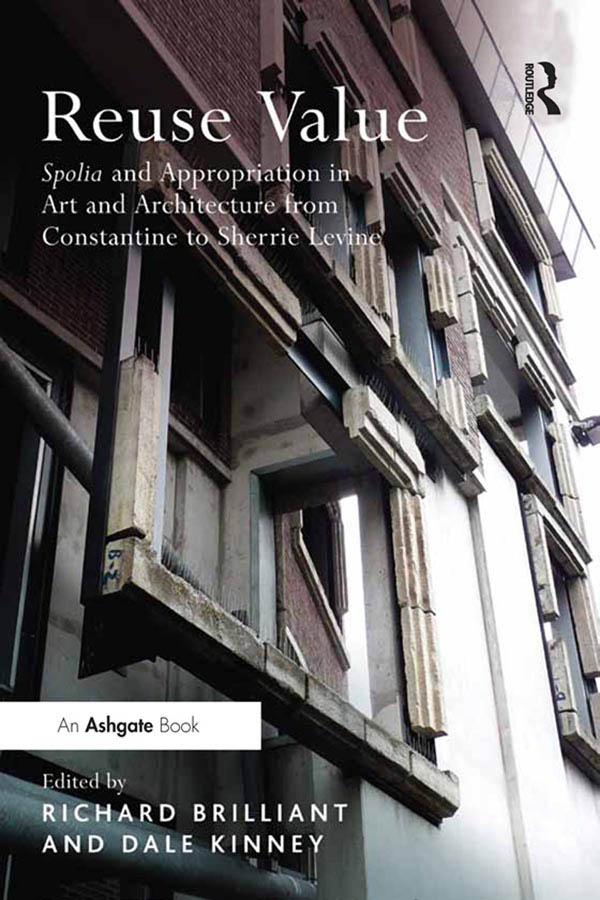
This book offers a range of views on spolia and appropriation in art and architecture from fourth-century Rome to the late twentieth century. Using case studies from different historical moments and cultures, contributors test the limits of spolia as a critical category and seek to define its specific character in relation to other forms of artistic appropriation. Several authors explore the ethical issues raised by spoliation and their implications for the evaluation and interpretation of new work made with spolia. The contemporary fascination with spolia is part of a larger cultural preoccupation with reuse, recycling, appropriation and re-presentation in the Western world. All of these practices speak to a desire to make use of pre-existing artifacts (objects, images, expressions) for contemporary purposes. Several essays in this volume focus on the distinction between spolia and other forms of reused objects. While some authors prefer to elide such distinctions, others insist that spolia entail some form of taking, often violent, and a diminution of the source from which they are removed. The book opens with an essay by the scholar most responsible for the popularity of spolia studies in the later twentieth century, Arnold Esch, whose seminal article 'Spolien' was published in 1969. Subsequent essays treat late Roman antiquity, the Eastern Mediterranean and the Western Middle Ages, medieval and modern attitudes to spolia in Southern Asia, the Italian Renaissance, the European Enlightenment, modern America, and contemporary architecture and visual culture.
Płać wygodnie kartą, Klarną, Apple Pay lub Google Pay. Nie jesteś zadowolony? Zawsze masz 14-dniową gwarancję zwrotu pieniędzy. Więcej przeczytasz w naszych warunkach. Masz pytania? Napisz do nas na hello@memmo.org.
Memmo ułatwia naukę – gdziekolwiek jesteś na świecie. U nas znajdziesz podręczniki i sprytne narzędzia do nauki w jednym miejscu: streszczenia, quizy, podcasty i fiszki. A do tego Ted, Twój kumpel do nauki, który odpowie na wszystko, co Cię nurtuje. Ponad 50 000 studentów już tu się uczy – stworzone, byś uczył się szybciej i mniej stresował.
Może Ci się spodobać
Kup książkę0