
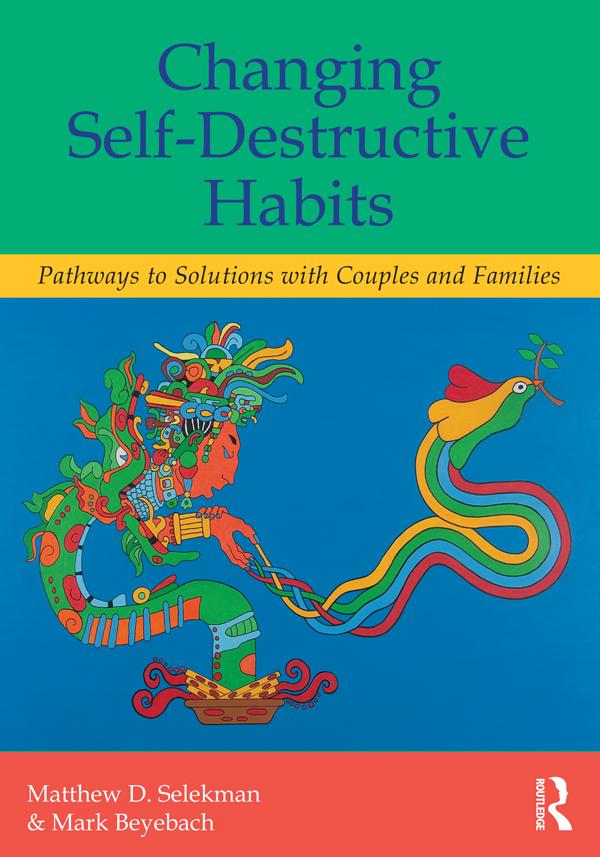
For the first time in one volume self-harm, substance abuse, eating-disordered behavior, gambling, and Internet and cyber sex abuse—five crippling, self-destructive behaviors—are given a common conceptual framework to help with therapeutic intervention. Matthew Selekman and Mark Beyebach, two internationally-recognized therapists, know first-hand that therapists see clients who have problems with several of these habits in varying contexts. They maintain an optimistic, positive, solution-focused approach while carefully addressing problems and risks. The difficulties of change, the risk of slips and relapses, and the ups-and-downs of therapeutic processes are widely acknowledged and addressed.
Readers will find useful, hands-on therapeutic strategies and techniques that they can use in both individual and conjoint sessions during couple, family, and one-on-one therapy. Detailed case examples provide windows to therapeutic processes and the complexities in these cases. Clinical interventions are put in a wider research context, while research is reviewed and used to extract key implications of empirical findings. This allows for a flexible and open therapeutic approach that therapists can use to integrate techniques and procedures from a variety of approaches and intervention programs.
Płać wygodnie kartą, Klarną, Apple Pay lub Google Pay. Nie jesteś zadowolony? Zawsze masz 14-dniową gwarancję zwrotu pieniędzy. Więcej przeczytasz w naszych warunkach. Masz pytania? Napisz do nas na hello@memmo.org.
Memmo ułatwia naukę – gdziekolwiek jesteś na świecie. U nas znajdziesz podręczniki i sprytne narzędzia do nauki w jednym miejscu: streszczenia, quizy, podcasty i fiszki. A do tego Ted, Twój kumpel do nauki, który odpowie na wszystko, co Cię nurtuje. Ponad 50 000 studentów już tu się uczy – stworzone, byś uczył się szybciej i mniej stresował.
Może Ci się spodobać
Kup książkę0