
A Single Cohesive Framework of Tools and Procedures for Psychometrics and Assessment
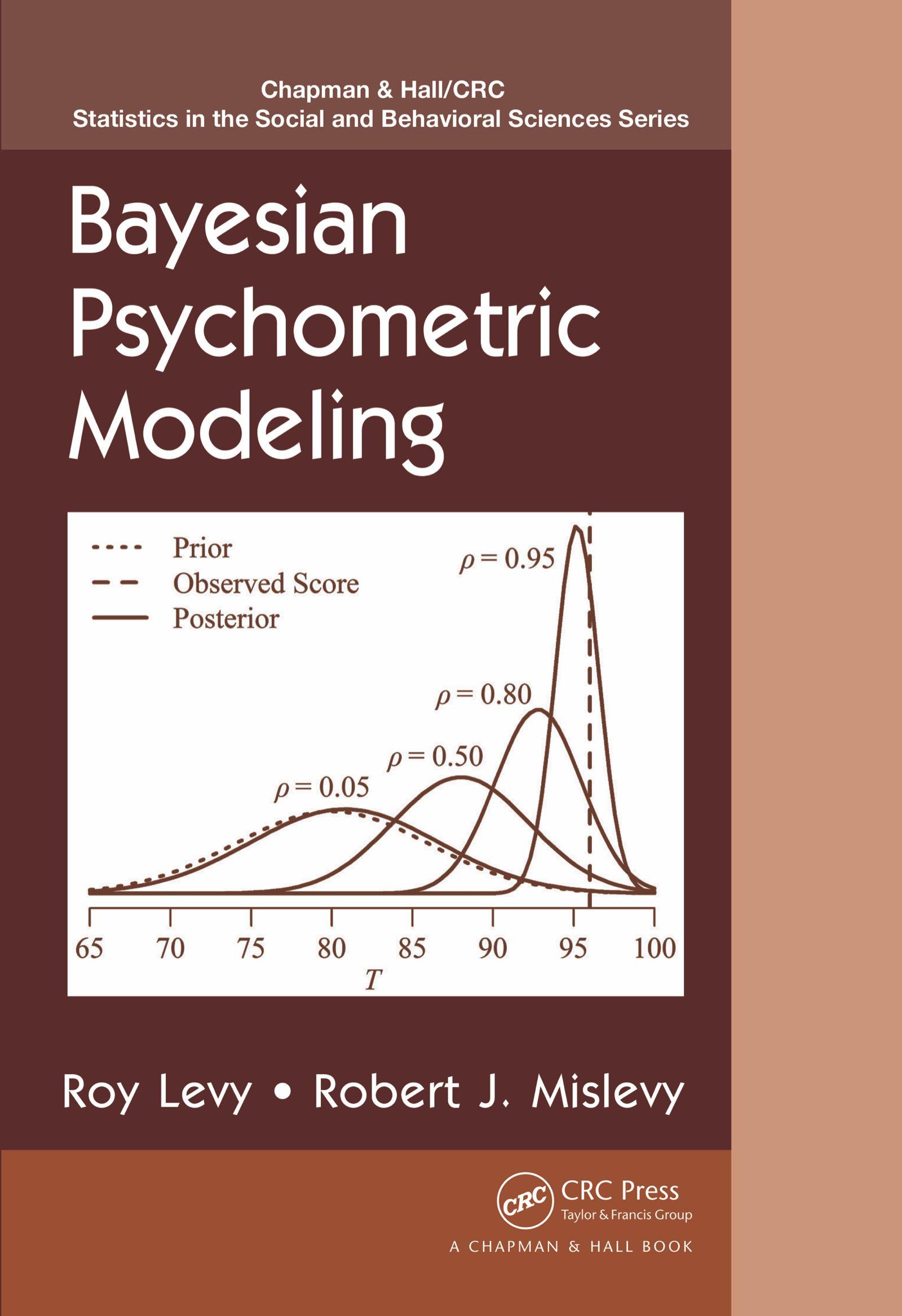
Bayesian Psychometric Modeling presents a unified Bayesian approach across traditionally separate families of psychometric models. It shows that Bayesian techniques, as alternatives to conventional approaches, offer distinct and profound advantages in achieving many goals of psychometrics.
Adopting a Bayesian approach can aid in unifying seemingly disparate—and sometimes conflicting—ideas and activities in psychometrics. This book explains both how to perform psychometrics using Bayesian methods and why many of the activities in psychometrics align with Bayesian thinking.
The first part of the book introduces foundational principles and statistical models, including conceptual issues, normal distribution models, Markov chain Monte Carlo estimation, and regression. Focusing more directly on psychometrics, the second part covers popular psychometric models, including classical test theory, factor analysis, item response theory, latent class analysis, and Bayesian networks. Throughout the book, procedures are illustrated using examples primarily from educational assessments. A supplementary website provides the datasets, WinBUGS code, R code, and Netica files used in the examples.
Płać wygodnie kartą, Klarną, Apple Pay lub Google Pay. Nie jesteś zadowolony? Zawsze masz 14-dniową gwarancję zwrotu pieniędzy. Więcej przeczytasz w naszych warunkach. Masz pytania? Napisz do nas na hello@memmo.org.
Memmo ułatwia naukę – gdziekolwiek jesteś na świecie. U nas znajdziesz podręczniki i sprytne narzędzia do nauki w jednym miejscu: streszczenia, quizy, podcasty i fiszki. A do tego Ted, Twój kumpel do nauki, który odpowie na wszystko, co Cię nurtuje. Ponad 50 000 studentów już tu się uczy – stworzone, byś uczył się szybciej i mniej stresował.