
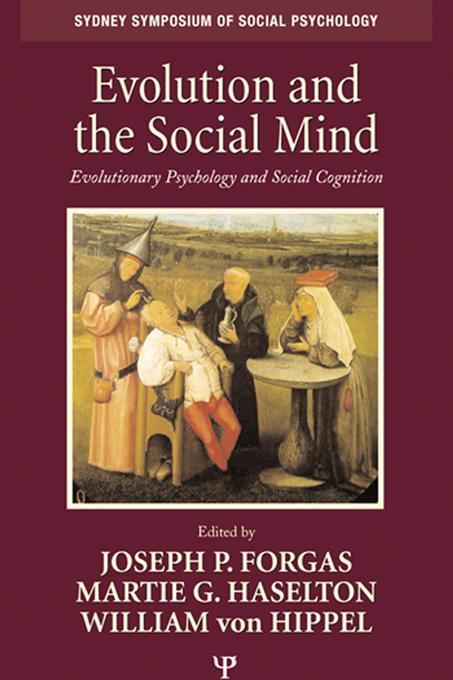
This book seeks to combine the study of human social cognition - the way we think, decide, plan and analyze social situations - with an evolutionary framework that considers these activities in light of evolutionary adaptations for solving problems of survival faced by our ancestors over thousands of generations. The chapters report recent research and theories illustrating how evolutionary principles can shed new light on the subtle and often subconscious ways that cognitive mechanisms guide peoples’ thoughts, memories, judgments, attitudes and behaviors in social life.
The contributors to this volume, who are leading researchers in their fields, seek answers to such intriguing questions as: how can evolutionary principles help to explain human beliefs, attitudes, judgments, prejudice, and group preferences? Are there benefits to behaving unpredictably? Why are prototypical faces more attractive than atypical ones? How do men and women think about, and select potential mates? What are the adaptive functions of negative affect? What are the evolutionary influences on the way people think about and respond to social exclusion and ostracism?
Evolution and the Social Mind offers a highly integrated and representative coverage of this emerging field, and is suitable as a textbook in advanced courses dealing with social cognition and evolutionary psychology.
Płać wygodnie kartą, Klarną, Apple Pay lub Google Pay. Nie jesteś zadowolony? Zawsze masz 14-dniową gwarancję zwrotu pieniędzy. Więcej przeczytasz w naszych warunkach. Masz pytania? Napisz do nas na hello@memmo.org.
Memmo ułatwia naukę – gdziekolwiek jesteś na świecie. U nas znajdziesz podręczniki i sprytne narzędzia do nauki w jednym miejscu: streszczenia, quizy, podcasty i fiszki. A do tego Ted, Twój kumpel do nauki, który odpowie na wszystko, co Cię nurtuje. Ponad 50 000 studentów już tu się uczy – stworzone, byś uczył się szybciej i mniej stresował.